Binghamton Researchers Devise Wordle Strategy That Wins 99% of the Time, Ruining the Fun for Everyone
Binghamton University researchers have optimized all the fun out of Wordle with a 99% win-rate strategy that prioritizes information theory over guesswork.
Millions of people wake up each morning to confront a five-letter word in the New York Times' Wordle, armed with six guesses and a prayer. Researchers at Binghamton University, State University of New York, have now developed a mathematical approach that solves the puzzle with a 99% success rate - because apparently, even our morning word games must be optimized.
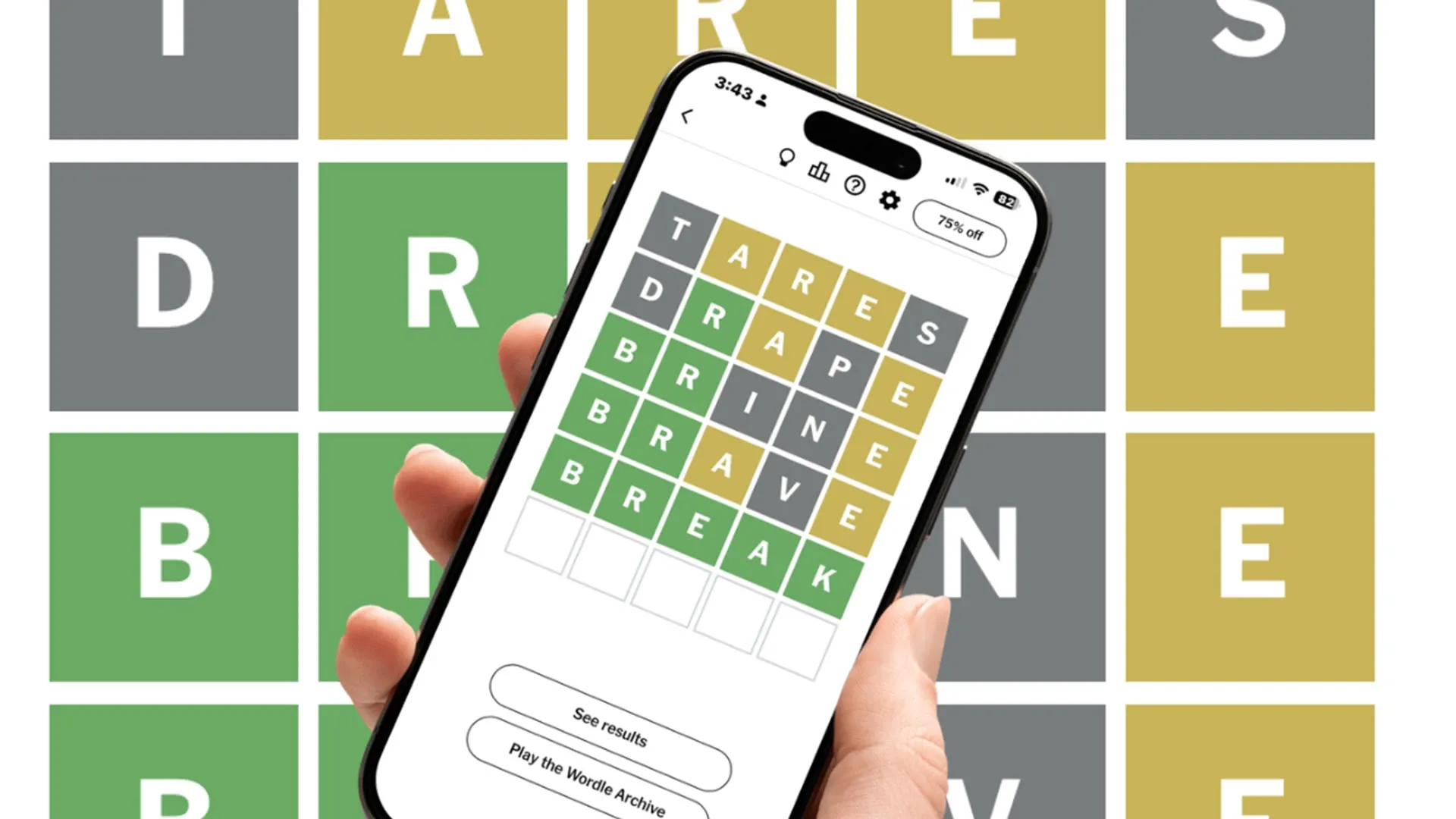
The game is simple: players guess five-letter words, and the game responds with colored tiles - green for correct letter in the right spot, yellow for correct letter in the wrong spot, gray for not in the word at all. Players have six tries to turn all squares green.
Assistant Professor Congyu "Peter" Wu and his team turned to Shannon entropy, a concept from information theory that measures uncertainty. Instead of guessing words likely to be correct, the method picks guesses that extract the most information and eliminate the most possibilities.
"Let's say you're at a certain guess. The previous guesses will eliminate a whole bunch of options, and based on the remaining options, guessing some words will send you into a trajectory where information gain is speedier," Wu explained.
Donald Stephens, a doctoral student and co-author, noted: "A subtle but important insight from the paper is that a guess doesn't have to be the most likely answer; it simply has to be informative. By applying Shannon entropy, the objective shifts to maximizing the expected reduction in uncertainty rather than the probability of being right."
In practice, players would run a separate script, enter the color-coded feedback after each guess, and receive a recommendation for the next word. The strategy can seem random because it prioritizes information gathering over direct pursuit of the answer.
In computer simulations, the information theory method solved 99% of Wordle puzzles, compared to about 90% for a conventional strategy emphasizing common letters like A, E, and R.
The project began as a class assignment - Wu challenged students to apply information theory to a real-world problem. That exercise evolved into a published paper in the Northeast Journal of Complex Systems.
Co-author Talal Aladaileh said the coursework at Binghamton's School of Systems Science and Industrial Engineering pushes students to apply concepts in ways that have "real, lasting impact."
Wu praised the team's creativity: "What is especially creative and valuable about the team's intellectual contribution is that it transformed a static measurement (Shannon entropy) in a scientific domain into a dynamic solution that helps accomplish a popular task better."
So the next time you're staring at five gray squares, remember: science has already won. You're just playing for second place.
The Good Times
News in your inbox.
One sardonic roundup, delivered on your schedule. Free. Unsubscribe whenever your tolerance for wit runs out.
Already subscribed but we never reach your inbox? Check your spam folder and hit 'Not spam' (or 'Remove from spam') to bust us out of junk-mail purgatory. You'll be helping everyone else too.
Don't open any of our emails for a month and you'll be automatically removed from the mailing list.
Rewrite Article
Select parts to regenerate with a fresh AI pass. Translations will be updated automatically.
Generate AI Image
Creates a sardonic version of the article image using OpenAI.