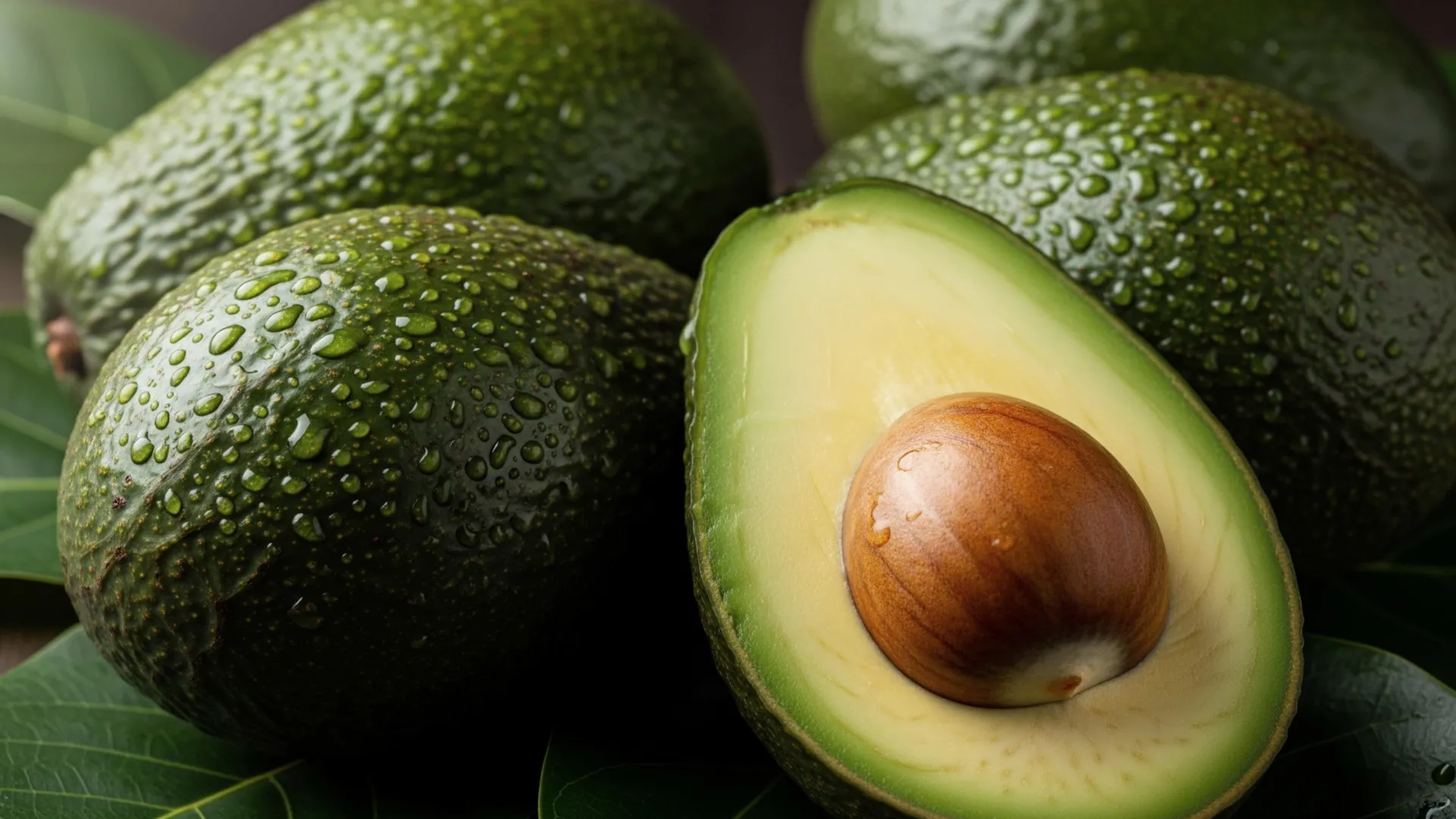
In a groundbreaking development that will shock absolutely no one who has ever seen a wellness influencer's Instagram, scientists at Penn State have confirmed that eating an avocado a day might be slightly good for you. The study, published in the Journal of Clinical Lipidology, found that daily avocado consumption was associated with a modest reduction in heart disease risk - specifically, a 4% decrease, which is the kind of number that makes you wonder if it's worth the guacamole cleanup.
The research, led by Janhavi Damani, a postdoctoral scholar at Penn State, examined data from 786 participants in the Habitual Diet and Avocado Trial, a six-month study involving adults aged 25 and older. Participants were required to have a certain amount of abdominal real estate: men with waist circumferences greater than 40 inches, and women exceeding 35 inches - because if you're going to study avocados, you might as well focus on people who might actually need them.
Half the participants ate one avocado daily while maintaining their usual diets and exercise routines. The other half just went about their lives, presumably wondering if they were missing out on the avocado revolution. Blood samples taken before and after revealed that the avocado eaters had LDL particle concentrations drop by 49 nanomoles per liter. For those keeping score at home, LDL particles are the little protein balloons that carry cholesterol through your bloodstream - not to be confused with LDL cholesterol itself, which is the "bad" kind. Particle concentration matters because more particles, especially smaller ones, can sneak into artery walls and cause plaque buildup, like tiny, cholesterol-laden burglars.
Damani offered a helpful analogy: "Imagine two people with the same high levels of LDL cholesterol. Person A carries their cholesterol in fewer, larger LDL particles, and Person B carries their cholesterol in more, smaller LDL particles. Person B's heart disease risk would be higher." So it's not just how much cholesterol you have, but how it's packaged. Think of it as the difference between carrying groceries in a few sturdy bags versus many flimsy ones - except the flimsy bags are your arteries.
The 4% reduction might sound paltry compared to the 14-29% risk reduction from overhauling your entire diet, but Damani says it's a step in the right direction. "If people want to improve the quality of their diet, making one small change might be a more feasible strategy than attempting to change their entire diet," she said, channeling the spirit of every New Year's resolution that lasted until January 3rd.
Earlier findings from the same trial showed that daily avocados didn't lead to weight loss or a smaller waist - so no, avocados aren't magic fat-melting fruits. But they do lower LDL cholesterol levels, and now we know they also reduce LDL particle counts. The benefits were consistent across sex, race, ethnicity, age, and body mass index, suggesting that people of all shapes and sizes can potentially benefit, as long as they're willing to fork over extra cash at the grocery store.
The researchers note that this is the first study to show these benefits in the "real world," where people's diets are about as predictable as a cat's mood. Previous Penn State research controlled participants' diets entirely, but this time, people just ate avocados on top of their regular, chaotic eating habits. Senior author Kristina Petersen said, "In the course of people's normal lives, avocado consumption still contributes to a healthier diet." So go ahead, add avocado to your burger - it's basically a salad, right?
Of course, the researchers advise talking to a registered dietitian or physician before making dietary changes, because apparently common sense isn't a substitute for professional advice. The Avocado Nutrition Center funded this research, which is a bit like a tobacco company funding a study on smoking, but we'll let that slide since avocados are objectively delicious.
So, in conclusion: if you're obese and want to slightly reduce your heart disease risk, eat an avocado a day. It won't fix everything, but it might help, and you'll have a great excuse to eat guacamole.
The Good Times
News in your inbox.
One sardonic roundup, delivered on your schedule. Free. Unsubscribe whenever your tolerance for wit runs out.
Already subscribed but we never reach your inbox? Check your spam folder and hit 'Not spam' (or 'Remove from spam') to bust us out of junk-mail purgatory. You'll be helping everyone else too.
Don't open any of our emails for a month and you'll be automatically removed from the mailing list.
Rewrite Article
Select parts to regenerate with a fresh AI pass. Translations will be updated automatically.
Generate AI Image
Creates a sardonic version of the article image using OpenAI.