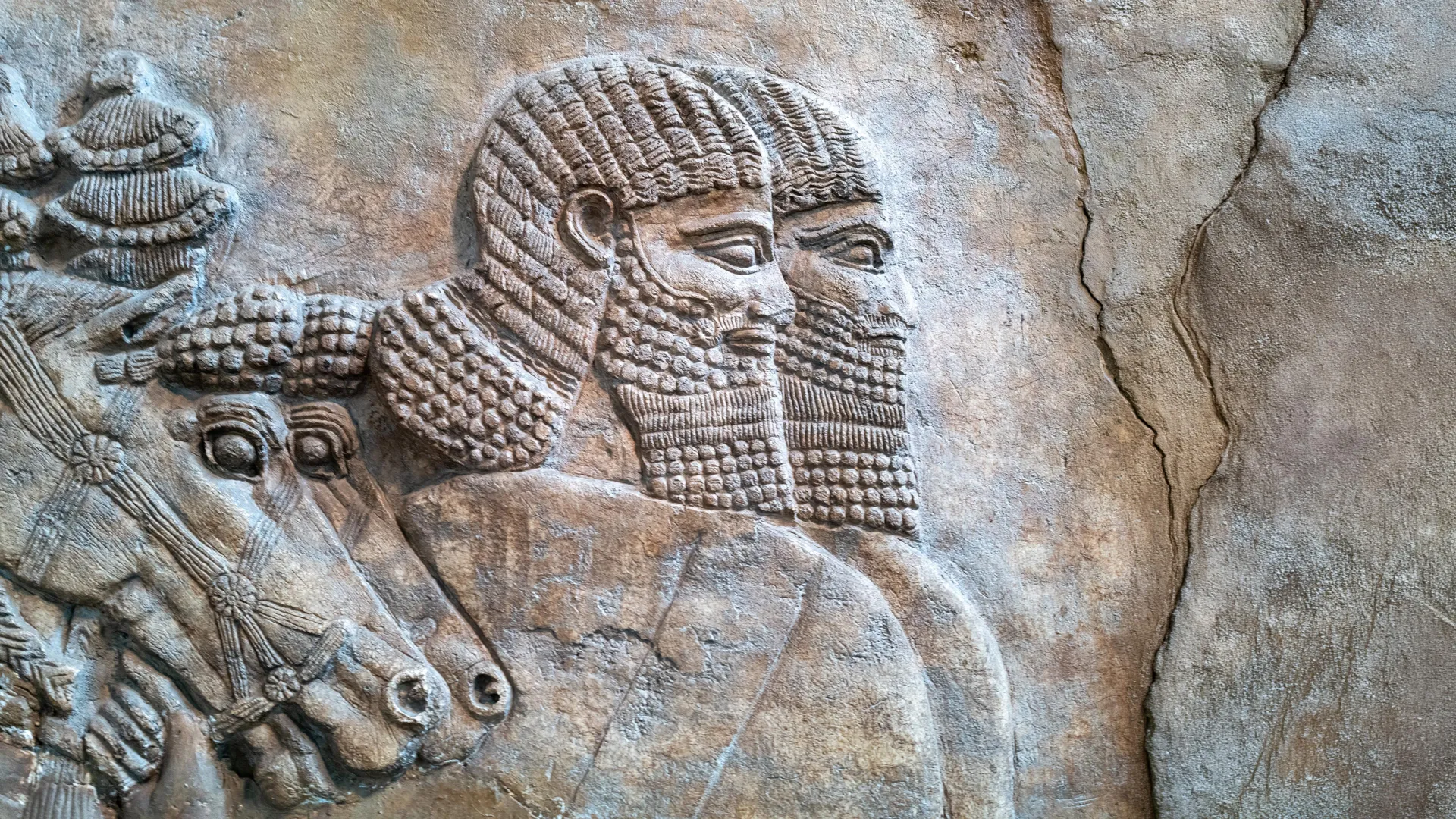
For roughly a century, scholars have treated the Assyrian King List (AKL) as the definitive record of who ruled the Assyrian Empire and in what order - especially for the later, more dramatic chapters. But a new study in the Journal of Cuneiform Studies, cheekily titled "Three New Kings of Assyria," suggests the list might have been less an impartial ledger and more a curated highlight reel.
Alexander Johannes Edmonds and Eckart Frahm argue that three rulers - conveniently omitted from the official list - can be reconstructed from other surviving evidence. Their findings suggest that "early Neo-Assyrian political history was much messier, but also more interesting, than has so far been recognized." Because nothing says 'empire' like a few inconvenient relatives.
First up: a Tiglath-pileser who apparently borrowed the name of an earlier king. This guy seems to have ruled concurrently with his nephew, the officially recognized Aššur-dān III, and made a power grab following a solar eclipse - because nothing says 'divine mandate' like a celestial event. Evidence for his short-lived administration survives on a clay tablet now in the British Museum, which records a royal grant and suggests he ruled from roughly 763-762 BCE before being unceremoniously deposed.
Then there's the mystery of a stela discovered in 1894 at Tell 'Abta, Iraq, where the original king's name was chiseled off and replaced with another "Tiglath-pileser." Edmonds and Frahm propose that a previously unknown King Shalmaneser ruled immediately before Tiglath-pileser III took power in 745 BCE - explaining why someone felt the need to erase his name.
Finally, a cuneiform text from King Tukultī-Ninurta II references a libation vessel originally made by Tukultī-Ninurta I and later restored by an Aššur-uballiṭ - but the AKL lists no king of that name in between. The researchers suggest a previously unrecognized Aššur-uballiṭ ruled from 913-912 BCE, which would also explain a damaged statue at Aššur, whose head was removed and royal insignia worn away. Sounds like someone didn't make the cut.
These findings raise a rather inconvenient question: What was the Assyrian King List actually for? Rather than an "impartial chronographic work," it may have been "a legitimizing canon of kings, which was periodically updated to remove short-lived or parallel Neo-Assyrian rulers." In other words, ancient Assyria had its own version of Wikipedia edit wars.
Edmonds and Frahm ask: "What and who determined a king's 'canonicity'? How did this intersect with Assyrian cultural memory or notions of kingship? Was the AKL's function at all practical, or solely ceremonial?" With three hidden royal histories now coming to light, the list itself has become a subject of investigation - proving that even the world's first empire couldn't resist a bit of historical revisionism.
Materials provided by University of Chicago Press Journals. Note: Content may be edited for style and length.
The Good Times
News in your inbox.
One sardonic roundup, delivered on your schedule. Free. Unsubscribe whenever your tolerance for wit runs out.
Already subscribed but we never reach your inbox? Check your spam folder and hit 'Not spam' (or 'Remove from spam') to bust us out of junk-mail purgatory. You'll be helping everyone else too.
Don't open any of our emails for a month and you'll be automatically removed from the mailing list.
Rewrite Article
Select parts to regenerate with a fresh AI pass. Translations will be updated automatically.
Generate AI Image
Creates a sardonic version of the article image using OpenAI.