Aggressive 'Hulk' Lizards Wrecking Millions of Years of Evolutionary Peace
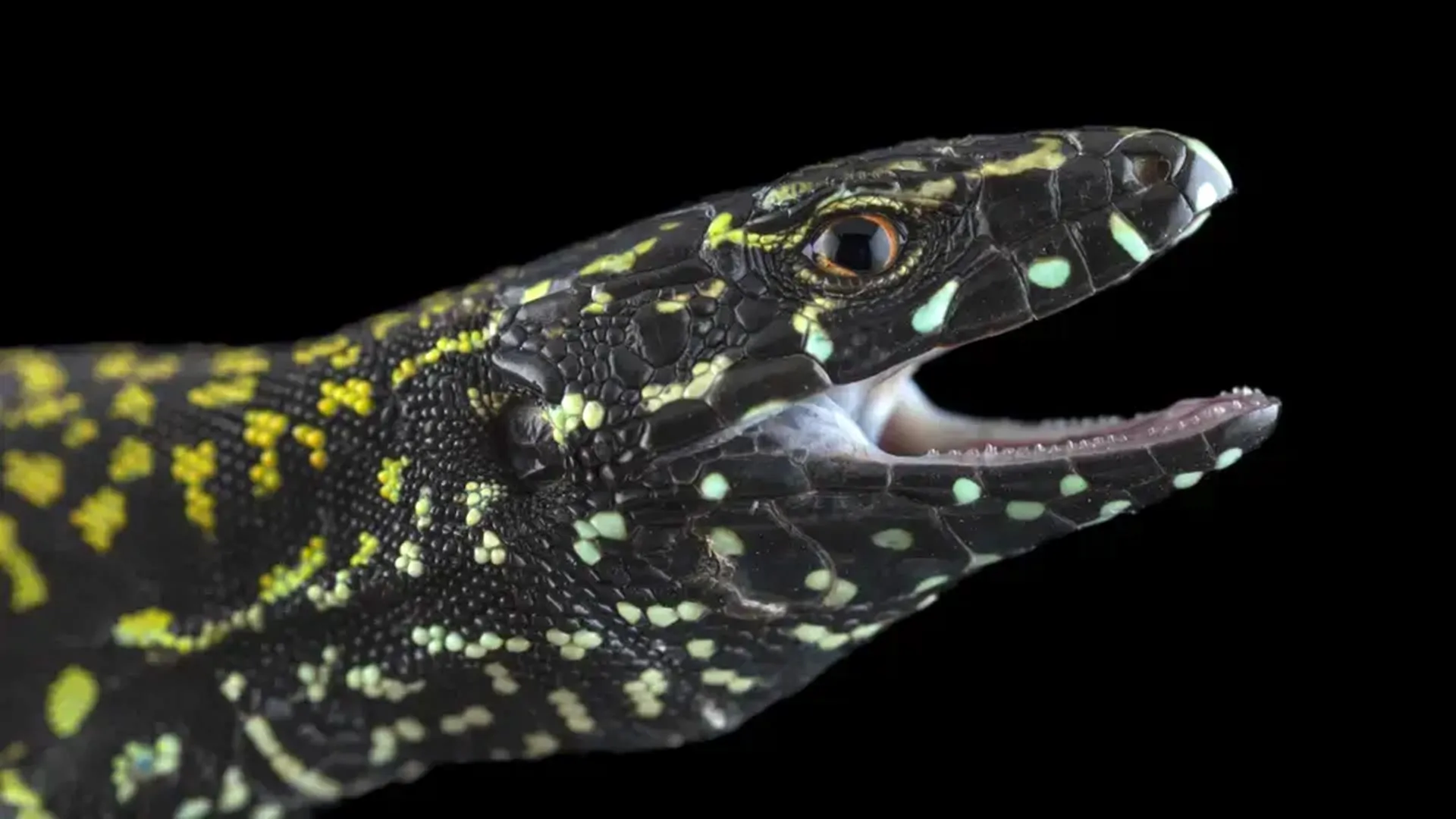
A gang of aggressive green 'Hulk' wall lizards is bulldozing through millennia of evolutionary diversity, leaving only the white-throated survivors in their wake.
For millions of years, a vibrant mix of colors persisted within a single lizard species. Now, much of that diversity has vanished in a remarkably short time. Researchers point to an unexpected cause: a bold green, highly aggressive, and dominant wall lizard that has rapidly eliminated several color forms within its own species.
In many animal species, distinct color types, known as color morphs, are more than just visual differences. These variations often reflect different approaches to survival, such as how individuals compete for territory or attract mates. Each color can represent a unique strategy that helps maintain balance within a population.
The common wall lizard (Podarcis muralis), found widely across the Mediterranean, has long been a classic example of this balance. Individuals typically display one of three throat colors: white, yellow, or orange. For millions of years, these color morphs coexisted within the same populations, maintaining a stable evolutionary system.
That stability is now breaking down. A new study published in Science, led by researchers at Lund University, reveals that this once reliable balance has been disrupted.
"We are seeing how the coexistence of several different color morphs, something that has been stable for millions of years, is being lost over a very short evolutionary time scale," says Tobias Uller, professor of evolutionary biology at Lund University.
To understand what is happening, researchers examined color patterns across about 240 populations, analyzing more than 10,000 individual lizards. The findings were clear. A group informally known as "Hulk" lizards has altered the dynamics within the species.
These larger, more aggressive lizards, recognized by their striking appearance, have spread rapidly. As they expand into new areas, the yellow and orange throat variants are disappearing. In many places, only the white morph remains.
"The aggressive behavior disrupts the finely tuned social systems that previously enabled several color strategies to coexist," says Tobias Uller.
This research highlights how even long standing evolutionary systems can be fragile. While evolution is often thought of as a slow, gradual process, this case shows it can also change quickly when conditions shift.
A single dominant trait can reshape competition and alter the balance within a species in a short time.
"By showing how color variants that have coexisted for millions of years are wiped out, we now better understand how the emergence of new traits changes competition in nature," concludes Tobias Uller.
The Good Times
News in your inbox.
One sardonic roundup, delivered on your schedule. Free. Unsubscribe whenever your tolerance for wit runs out.
Already subscribed but we never reach your inbox? Check your spam folder and hit 'Not spam' (or 'Remove from spam') to bust us out of junk-mail purgatory. You'll be helping everyone else too.
Don't open any of our emails for a month and you'll be automatically removed from the mailing list.
Rewrite Article
Select parts to regenerate with a fresh AI pass. Translations will be updated automatically.
Generate AI Image
Creates a sardonic version of the article image using OpenAI.