
At age 49, Jan Janisch-Hanzlik's multiple sclerosis was wrecking her life. She traded her nursing job for a desk role, feared carrying her grandchildren due to frequent falls, and moved to a bigger house to accommodate a wheelchair she dreaded needing. Standard meds weren't cutting it. So when she heard about a CAR T cell therapy trial at the University of Nebraska Medical Center in Omaha, she called the clinic every other month until they enrolled her as patient number one.
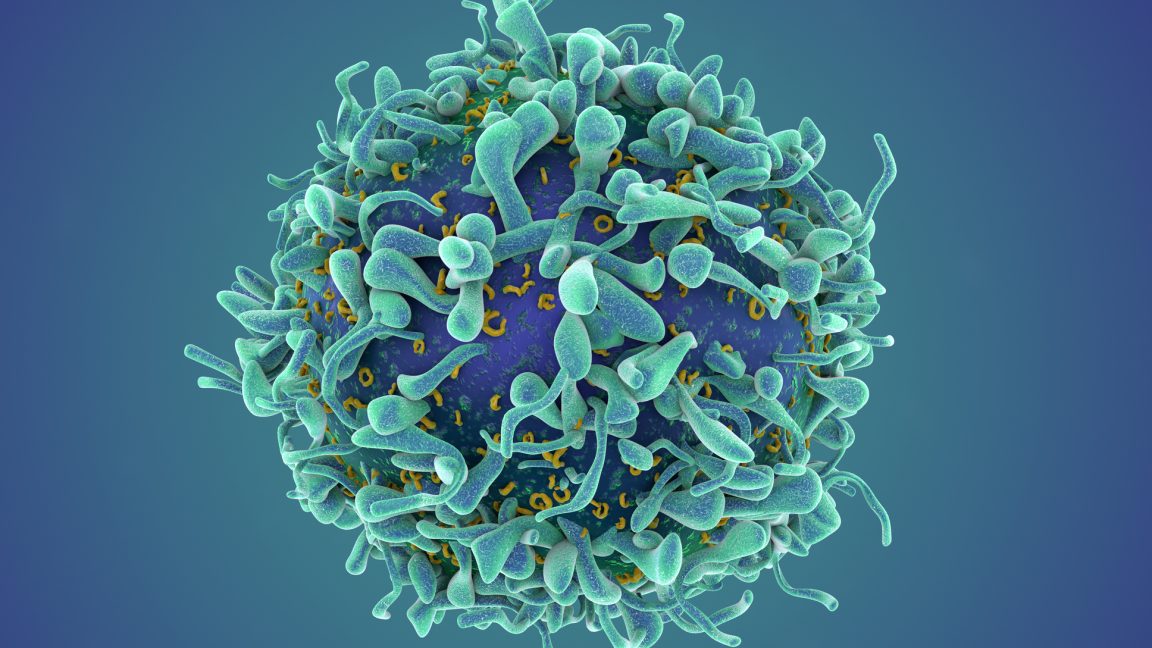
CAR T, originally a cancer treatment that reprograms immune cells to obliterate malignancies, is now being tested in hundreds of clinical trials for autoimmune conditions like MS, lupus, Graves' disease, and vasculitis. The idea is to hunt down and eliminate self-attacking B cells, essentially rebooting the immune system to its pre-disease state. It's promising, but also risky and full of unknowns - long-term benefits, side effects, and all that. Janisch-Hanzlik knew the drill when she got her infusion on June 9, 2025, spending a week monitored for dangerous inflammation.
Her motivation wasn't just personal. MS has a genetic component, and she has two young grandchildren. "I would want to be able to say I did everything that I possibly could to prevent them, or anyone else, from having something like this," she says. Aww.
The FDA approved the first CAR T for leukemia in 2017, and it's since led to long-term remissions in many cancer patients. The tech involves yanking out a patient's T cells, inserting DNA for a chimeric antigen receptor (CAR), and infusing them back to hunt specific targets. For cancer, that target is usually B cells gone rogue. In autoimmunity, B cells are also the bad guys, producing antibodies against your own tissues. So doctors thought, "Hey, why not?" A German team tried it in a lupus patient in 2021 with positive results, and the field took off.
Amanda Piquet, a neurologist at the University of Colorado Anschutz, is testing CAR T for stiff person syndrome - a rare condition with muscle stiffness and spasms, no FDA-approved treatment. Her study, with results in December 2025, treated 26 people with a single dose. Most walked faster by 16 weeks, and eight ditched their walkers or canes for short distances. By April, all 26 were off other immunotherapies. Not bad.
But reprogramming the immune system is no walk in the park. Early cancer patients suffered life-threatening side effects like high fevers, low blood pressure, and brain inflammation. Docs have gotten better at managing these, says Emily Littlejohn of the Cleveland Clinic. There's also the temporary immunosuppression from chemo prep and the longer-term B cell depletion, leaving patients vulnerable to infections for up to a year. Manageable with antibiotics, antivirals, and vaccines. And weirdly, CAR T sometimes spares older B cells, so patients still have antibodies to past vaccines like chicken pox and measles. Not exactly factory reset.
There's also the specter of long-term toxicity. FDA officials warned of "unpredictable long-term toxicity," including Parkinson's disease and, rarely, the engineered cells themselves turning cancerous. For cancer patients, that risk might be acceptable. For autoimmune patients, not so much, says Matt Lunning of Nebraska Medicine. It's a delicate balance.
Researchers are working on safer versions. James Howard at UNC is testing Cartesian Therapeutics' approach using mRNA instead of DNA, so the CAR T cells are short-lived and don't hang around to cause cancer. In a recent trial, 15 autoimmune patients got this treatment; two-thirds improved, and no serious long-term side effects. Another approach uses donor cells to make "off-the-shelf" CAR T, which could be cheaper and available to many patients. Bing Du at East China Normal University says one donor could supply cells for over 1,000 patients.
Speaking of cost, CAR T runs hundreds of thousands of dollars - hospital stays, cell engineering, the works. Off-the-shelf versions might help. Janisch-Hanzlik actually got an off-the-shelf version from TG Therapeutics, under Lunning's care. The study is expected to wrap up in early 2029.
And how did she do? She sailed through without side effects. A couple months post-infusion, she noticed her double vision was gone - no special glasses needed. She started forgetting her cane. Nearly a year out, she rarely falls, doesn't need three-hour naps, and recently visited the Grand Canyon. She still has some symptoms - right leg weakness, foot numbness, word-finding trouble - and asks her docs what's next. They say, "We don't know, you're the first." She's thankful for every day. And so are we.