Max Planck Papers Retracted by Journal That Clearly Didn't Read Them
A journal retracted two Max Planck papers for copyright violations, but historians say it's a case of modern algorithms not understanding 1940s publishing norms.
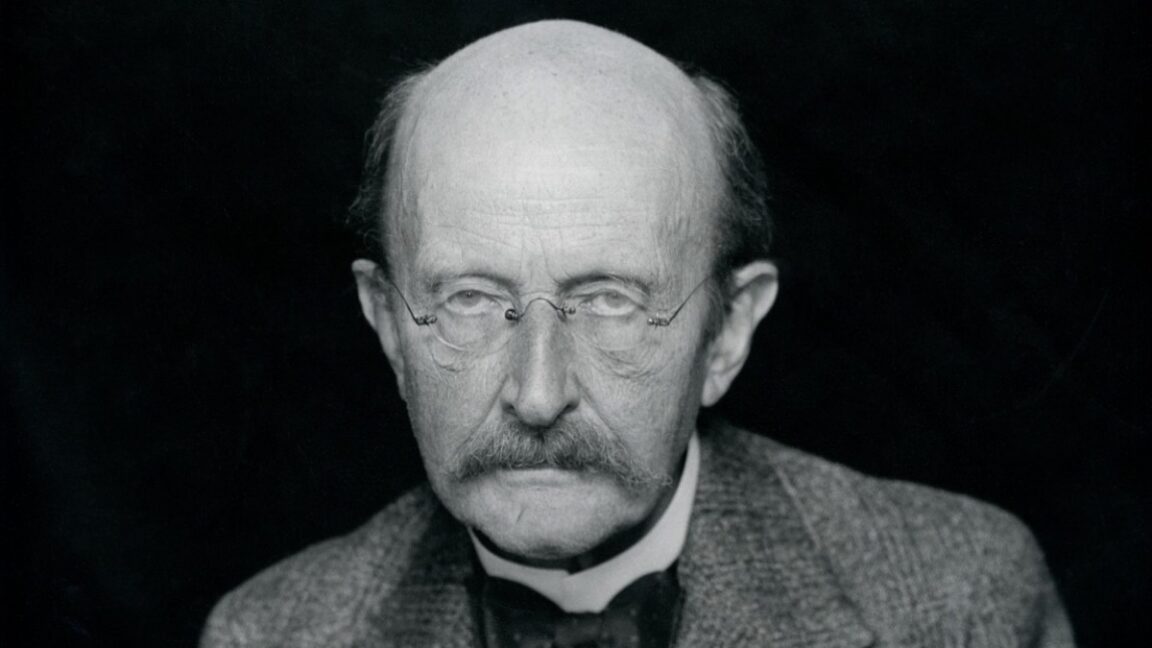
German physicist Max Planck, a pioneer of quantum mechanics and 1918 Nobel laureate, has never been accused of scientific misconduct. So imagine the surprise of two science historians when they discovered that the journal Naturwissenschaften (now The Science of Nature) had retracted two of Planck's papers from the 1940s - and then scrubbed them from existence, leaving only blank PDFs with a note citing "article violation."
Physics historian Yves Gingras of the University of Quebec in Montreal was browsing Retraction Watch's list of retracted Nobel winners out of curiosity and was shocked to see Planck's name. He enlisted fellow historian Mahdi Khelfaoui to investigate. Their findings, posted on the physics arXiv, suggest the retractions stem from the publisher's "misunderstanding, or ignorance, of past publication practices."
The journal's editor-in-chief, Suzanne Scarlata of Worcester Polytechnic Institute, told Science reporter Sam Kean she had no idea the papers had been retracted. "That's crazy," she said. "I don't understand why they were flagged. I think it just happened with their algorithm." (Kean claims Springer Nature is still selling the empty PDFs for $39.95, though the author downloaded them for free.)
The retractions were for copyright violation - not scientific error. Both papers are "philosophical reflections on the nature of scientific knowledge." Metadata shows the DOI records were created in April 2005, during the switch to electronic publishing. Gingras and Khelfaoui suspect a lawyer at Springer flagged them as "duplicate publications."
The first retracted paper ("Meaning and Limits of Exact Science," 1942) was also published as a booklet and in an anthology. The second ("Natural Science and the Real External World," 1940) had not been reprinted, but a scientist named Aloys Muller published a critique of Planck's 1931 essay that year, and Planck responded in the same journal with the same title - confusing any algorithmic duplication detector.
The real issue: applying modern standards of duplicate publication and self-plagiarism to early 20th-century papers, when norms were different. Back then, the goal was wide dissemination across a fragmented scientific community. Now, commercial publishers protect copyrights and profits. Springer Nature killed an editorial Scarlata planned on the topic and declined to comment.
Both papers are now in the public domain in most countries, so copyright violation is moot. They remain accessible via the Internet Archive. But as Gingras told Science: "Whoever did it, I don't care. Just put them [back] in the database. Intellectually, it’s not acceptable."
The Good Times
News in your inbox.
One sardonic roundup, delivered on your schedule. Free. Unsubscribe whenever your tolerance for wit runs out.
Already subscribed but we never reach your inbox? Check your spam folder and hit 'Not spam' (or 'Remove from spam') to bust us out of junk-mail purgatory. You'll be helping everyone else too.
Don't open any of our emails for a month and you'll be automatically removed from the mailing list.
Rewrite Article
Select parts to regenerate with a fresh AI pass. Translations will be updated automatically.
Generate AI Image
Creates a sardonic version of the article image using OpenAI.