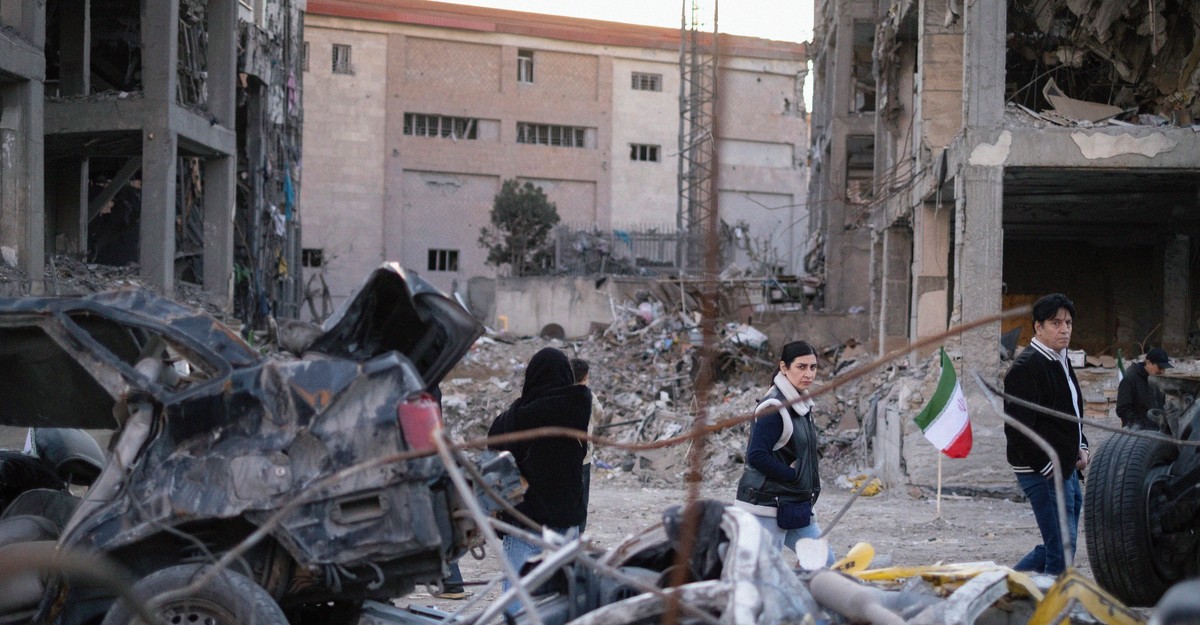
U.S. Loses War With Iran, Discovers That Winning Is Harder Than Starting
America lost a war with Iran, spent billions, closed some straits, and now needs pipelines, new military ideas, and a fresh deterrent - all while pretending victory.
The sooner we admit that the United States has lost its war with Iran and stop fighting, the better - because we've got a lot of cleanup to do. Defense Secretary Pete Hegseth told the Senate on Tuesday that Washington achieved "a historic military victory," sputtering with fury as he did so. But as a certain dead Prussian once noted, wars are fought for political objectives, not just military ones. On that front, the U.S. has failed spectacularly.
Before the war, Iran had a cautious supreme leader. Now it's run by a group of even more extreme and less cautious types. The Strait of Hormuz, once open, is largely closed. The Bab el-Mandeb Strait is also shut thanks to Iran's Houthi pals. American energy execs warned of oil shortages, and while Chinese imports staved off disaster for now, Exxon and Chevron say an energy crunch is inevitable. The Pentagon admits to spending $37.5 billion, but the real number is surely higher. Throwing more good money after bad seems unwise.
To mitigate the damage, the U.S. and allies need to secure alternate oil routes. The East-West Pipeline across Saudi Arabia already moves 7 million barrels a day, and the Saudis may double capacity. The UAE has a similar pipeline that also needs expansion. Pipelines are vulnerable to drones but easy to repair. The U.S. should encourage branches through Yemen and Oman. Chevron is talking to Iraq about a pipeline through Syria. Also, maybe not the best month to cut wind and solar subsidies.
The war has exposed a failure of imagination in U.S. military planning. Cheap Iranian drones and missiles have wreaked havoc on bases, killing troops in their barracks. American planners should have learned from Ukraine, where drones have devastated Russian assets for years. This is likely the easiest drone war the U.S. will ever fight; countering this tech will only get harder.
Finally, Washington needs fresh ideas to reestablish deterrence with Iran. Prior to the war, Iran didn't block the Strait of Hormuz or rush toward nukes because U.S. power deterred them. But as Thomas Schelling noted, deterrence lies in the threat of use - once you actually do the thing, the enemy stops fearing it. The Trump administration has squandered two deterrents: strikes on Iran's nuclear facilities didn't "obliterate" the program, and conventional damage hasn't deterred Iran from striking partners or disrupting shipping. The administration needs an accord or a new deterrent, fast. The war's promoters got what they asked for, and it's been a disaster. So now what?
The Good Times
News in your inbox.
One sardonic roundup, delivered on your schedule. Free. Unsubscribe whenever your tolerance for wit runs out.
Already subscribed but we never reach your inbox? Check your spam folder and hit 'Not spam' (or 'Remove from spam') to bust us out of junk-mail purgatory. You'll be helping everyone else too.
Don't open any of our emails for a month and you'll be automatically removed from the mailing list.
Rewrite Article
Select parts to regenerate with a fresh AI pass. Translations will be updated automatically.
Generate AI Image
Creates a sardonic version of the article image using OpenAI.