Treasury Still Views Defence Spending as a Black Hole, Not a Growth Engine, Says Ex-Minister
John Healey says the Treasury treats defence spending like a cost rather than an investment, leaving the UK lagging on NATO pledges and creating a £5bn hole for the next PM.
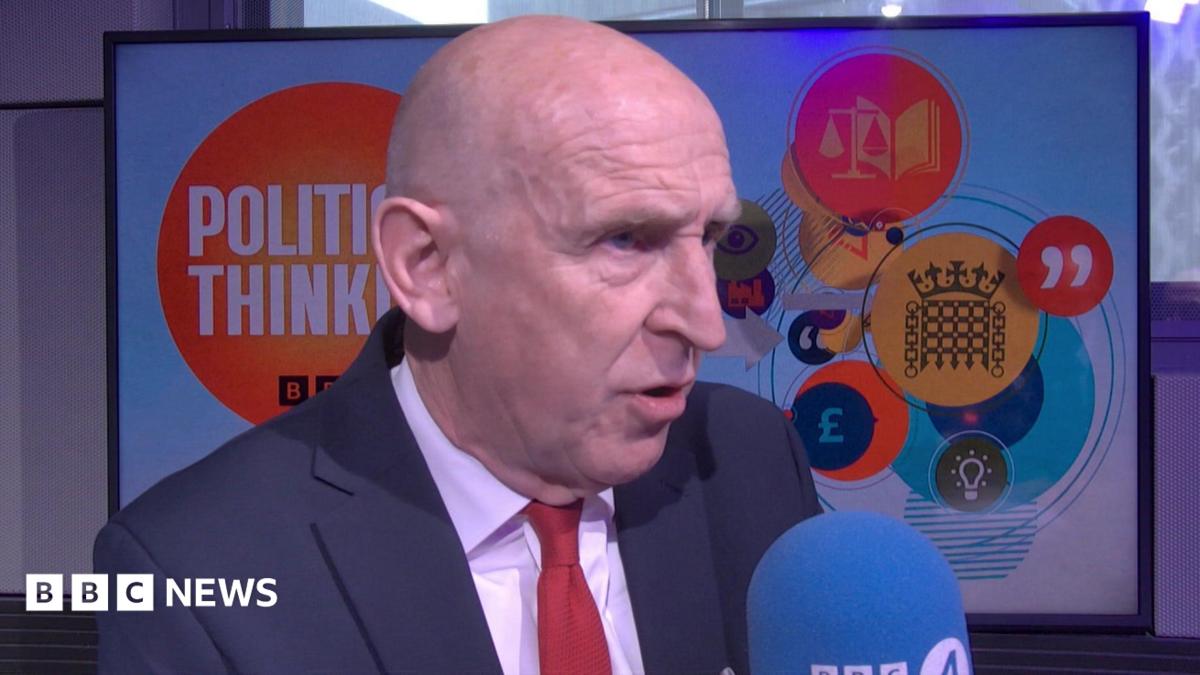
Former Defence Secretary John Healey has accused the Treasury of treating defence spending like a burdensome household expense rather than the economic power tool it could be. Healey, who resigned after a protracted battle over a long-delayed military spending plan that helped topple Sir Keir Starmer's leadership, told the BBC's Political Thinking podcast that the Treasury is in denial about the UK's NATO commitments.
Last week, the government unveiled a slightly-increased Defence Investment Plan (DIP) worth £15bn, but £4.7bn of that remains unfunded - a gap that will need to be plugged in the next budget. The original DIP had committed to 2.68% of GDP on core defence by 2030, which Healey deemed insufficient; he argued for 3% by that date. The updated plan adds a measly 0.02% of GDP, still leaving the UK at 2.7% by 2030.
At a NATO summit in The Hague in June 2025, the UK and other members pledged to spend 5% of GDP on defence and security, with 3.5% going to NATO-qualifying core defence by 2035. Healey said the Treasury is still planning for 3%, but not until 2034 - 35. "The Treasury still often sees defence as a drain on public spending and not the driver of economic growth that we've demonstrated in two years," he lamented.
Healey, a former Treasury minister under Gordon Brown, argued that the defence sector - especially defence tech - could be an engine for reindustrialisation. But Treasury orthodoxy, he said, is a "dead hand on dynamic government."
The prime minister has repeatedly claimed the government is spending £270bn on defence over this parliament - "the biggest sustained increase since the 1980s" - with an additional £15bn from the DIP. Conservative leader Kemi Badenoch, however, criticised the missing £5bn, accusing Starmer of leaving a "mess" for his successor, widely expected to be Andy Burnham.
Healey said he was surprised the DIP included unfunded pledges but noted that defence investment aligns with Burnham's reindustrialisation vision. "It will be something for Andy Burnham as a short-term challenge," he said, adding that Burnham is "strong on defence."
On Tuesday, Starmer will attend the NATO summit for one of his last appearances as prime minister, as US Defence Secretary Pete Hegseth pushes all NATO countries to present credible plans for reaching the 3.5% target. Healey warned that by 2030, more than half of NATO nations will hit or exceed 3%, and the UK must have a credible path to maintain its leadership role - especially as the US starts to scale back its contribution. "Anything that puts that at risk will, in the long run, count against us," he said.
The Good Times
News in your inbox.
One sardonic roundup, delivered on your schedule. Free. Unsubscribe whenever your tolerance for wit runs out.
Already subscribed but we never reach your inbox? Check your spam folder and hit 'Not spam' (or 'Remove from spam') to bust us out of junk-mail purgatory. You'll be helping everyone else too.
Don't open any of our emails for a month and you'll be automatically removed from the mailing list.
Rewrite Article
Select parts to regenerate with a fresh AI pass. Translations will be updated automatically.
Generate AI Image
Creates a sardonic version of the article image using OpenAI.