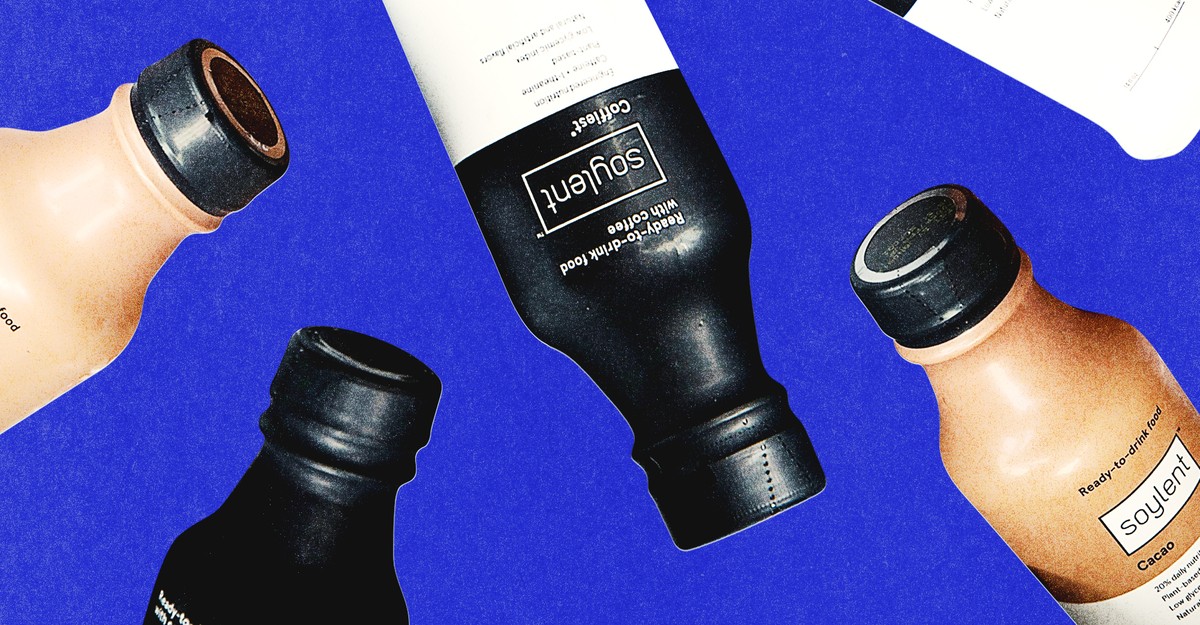
That Protein Shake You're Chugging? It's Basically Soylent With Better Marketing
Soylent failed because it was too honest about replacing food. Now protein shakes sell the same thing with better branding, adaptogens, and a promise you'll get jacked.
Remember Soylent? The nutrient slurry that promised to free humanity from the drudgery of chewing? In the mid-2010s, it was the darling of Silicon Valley - a $170 million brand built on oat flour, maltodextrin, and the dream of never having to defrost anything again. By 2023, it had been sold off for pocket change. But here's the twist: Soylent's ghost is now haunting every refrigerated aisle in America, wearing fancier labels and promising to make you jacked.
Today's protein shakes - Fairlife, Huel, Ka'Chava, Rebbl, and about 47 others with names that look like keyboard accidents - are selling the same basic premise: skip the meal, drink the science. Fairlife is Coca-Cola's fastest-growing U.S. brand. Huel just sold to Danone for $1 billion. These aren't meal replacements anymore; they're "next-level nourishment" with adaptogens, antioxidants, and enough protein to make a bodybuilder weep. Fairlife's Nutrition Plan shake packs 30 grams of protein into 150 calories, which is basically the nutritional equivalent of a magic trick.
John Coogan, Soylent's co-founder, blames his company's decline on being "too clever" and too early. He now eats breakfast with his team, presumably using a fork. But the core idea - why eat when you can drink a precisely calibrated blend of nutrients? - has only metastasized. Americans have become a nation of snackers, eating "maybe six … somethings" a day instead of three meals, according to Kantar analyst Leigh O'Donnell. GLP-1 drugs have created a new market for people who need protein without the pesky commitment of actually eating.
The shakes promise precision in a world where food has become emotionally exhausting. "This much protein! This much fiber! These carbohydrates!" they scream silently from their minimalist packaging. It's Soylent's old promise with a gym membership: you can consume everything you need and nothing you don't. Never mind that regular food - beans, grains, salads - would probably work fine. The point is optimization. Can you maximize your protein, fiber, ashwagandha, and time in one single serving? Ka'Chava says yes, with antioxidants, probiotics, and digestive enzymes. Rebbl throws in zinc and Reishi mushroom extract for good measure.
Even Soylent has rebranded, pivoting from "meal replacement" to "complete nutrition." But the original dream of a post-food future hasn't materialized. After hunting one down online, your correspondent found that Soylent tastes remarkably like every other shake on the market - dominated by the ghost of artificial sweeteners. Coogan himself has abandoned the stuff for actual breakfasts. The goal, it seems, is no longer to match food. The goal is to transcend it. And if you squint hard enough at that refrigerated row of shakes, with their minimalist packaging and maximalist promises, Soylent looks less like a failed experiment and more like a prophet who just showed up a decade too early.
The Good Times
News in your inbox.
One sardonic roundup, delivered on your schedule. Free. Unsubscribe whenever your tolerance for wit runs out.
Already subscribed but we never reach your inbox? Check your spam folder and hit 'Not spam' (or 'Remove from spam') to bust us out of junk-mail purgatory. You'll be helping everyone else too.
Don't open any of our emails for a month and you'll be automatically removed from the mailing list.
Rewrite Article
Select parts to regenerate with a fresh AI pass. Translations will be updated automatically.
Generate AI Image
Creates a sardonic version of the article image using OpenAI.