
For millennia, humans have been rearranging the planet's furniture, and wildlife has had to adapt to our cities, farms, and roads. But new research suggests animals are also reacting to the simple, unsettling fact that we're just... there. Scientists from UC Santa Barbara, the Smithsonian's National Zoo and Conservation Biology Institute, and Yale University strapped GPS trackers to 37 species and cross-referenced their movements with anonymized cellphone location data across the United States. The study, published in Science, reveals that wildlife responses to humans vary wildly depending on the species and how much we've already bulldozed their homes. These differences could help scientists craft smarter conservation strategies.
"Humans have complicated effects on wildlife -- from our physical presence to how we reshape habitats -- but we can't understand our full impact without information on both," said co-lead author Ruth Oliver, an assistant professor at UCSB's Bren School of Environmental Science & Management.
The pandemic lockdowns, as it turns out, were nature's ultimate social experiment. With humans suddenly glued to their couches, researchers had a rare chance to separate the influence of our mere existence from the permanent scars we've left on the landscape. The team analyzed weekly GPS records from 4,581 individual mammals and birds across the continental U.S. during matching periods in 2019 and 2020. Tracking animals was easy; tracking people was the real puzzle. Public data on human movements is notoriously hard to come by, so previous studies relied on indirect proxies like urban development or lockdown status. But this team used anonymized cellphone geolocation data with neighborhood-level resolution -- the first time such data have been used to study how human presence affects animal movement.
"The cell phone data we used was made available to researchers during the pandemic to help reveal the impacts of COVID-19 shutdowns," said co-lead author Scott Yanco, a research ecologist at the Smithsonian. "Typically, private companies hold onto these, which made this a rare opportunity for us to quantify how human presence impacts wildlife, and to demonstrate that there is more to consider than just land modification to create robust conservation plans."
The researchers examined how human activity affected both the physical area each animal used and its environmental niche -- essentially, how it makes a living. For most species, they found that landscape modification alone couldn't explain the impact; our mere presence mattered too. Overall, 57% of species were affected by both human presence and landscape modification. Human presence was linked to changes in territory size or environmental niche for 67% of mammal species and 68% of bird species.
Often, the two influences were tangled together. The effect of humans on an animal depended on how much the landscape was already altered, and vice versa. About 67% of mammal species and 41% of bird species responded to the combination of human presence and landscape alteration by shrinking the amount of habitat they used. Sensitivity to people was especially pronounced in relatively untouched areas, like national parks compared with cities.
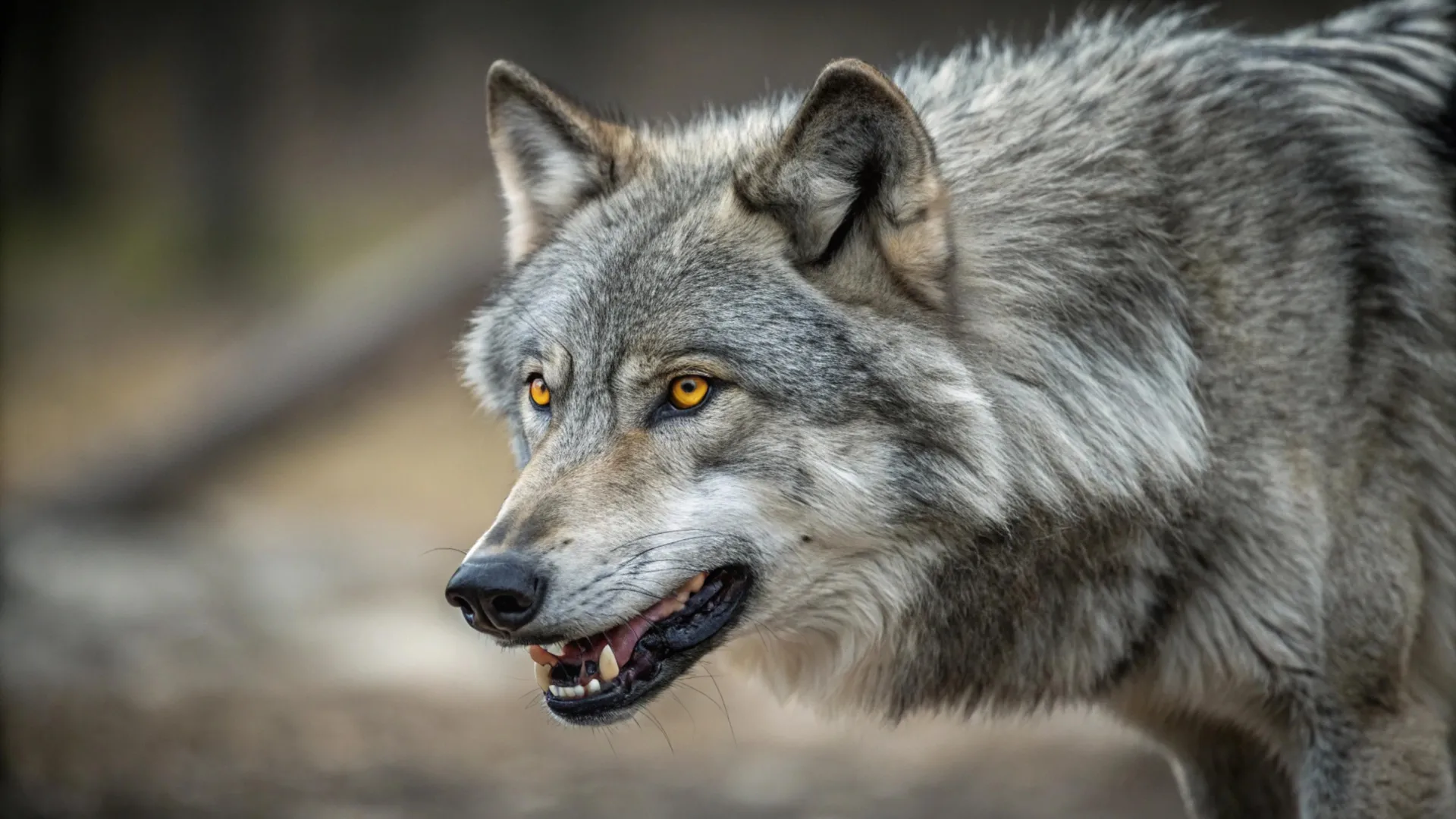
But there's no one-size-fits-all response. Wolves, for instance, expanded their habitat use in response to humans -- perhaps a nod to their long, fraught history with us and a strategy to keep their distance. White-tailed deer expanded their environmental niches as landscapes became more modified, but contracted them as human presence increased. Sandhill cranes did the exact opposite.
"These findings highlight the critical importance of species-based conservation," Oliver said. "Every species has different habitat requirements, has its own particular behavioral tendencies and faces unique threats. Effective conservation requires that we understand the particular challenges that each species faces."
The research is part of the COVID-19 Bio-Logging Initiative, an international effort to study wildlife during the 'anthropause' -- that brief, glorious period when humans collectively stopped moving. Earlier work from the initiative documented widespread behavioral changes in mammals, shifts in marine traffic, and the need to directly measure human movement in the Anthropocene. The broader collaboration involved 600 partners and assembled 1 billion location records from roughly 13,000 animals.
The new findings show how combining animal GPS tracking with mobile-device data can support more precise conservation. By merging the two, researchers can distinguish between the effects of our infrastructure and the effects of our mere presence.
Now, the big question: are these behavioral changes helping or hurting wildlife? Oliver and her colleagues are digging into whether human-driven changes to landscapes and climate influence survival rates. "Our current study shows that animals change how they use space and resources, but we don't know if these changes are helping them adapt or are a sign of stress," she said. "Our group is now digging into that question by asking whether animals that change their behavior in response to human pressures are at greater or lower risk of dying."
The pandemic gave researchers a unique window into human-wildlife interactions, and the findings could reshape conservation policies. "Our results give me some optimism that we can achieve wildlife-coexistence through more nuanced policies that more smartly consider where and when we need to give animals space," Oliver said.
Ben Marcus at the Smithsonian contributed to this story. Materials provided by University of California - Santa Barbara. Note: Content may be edited for style and length.