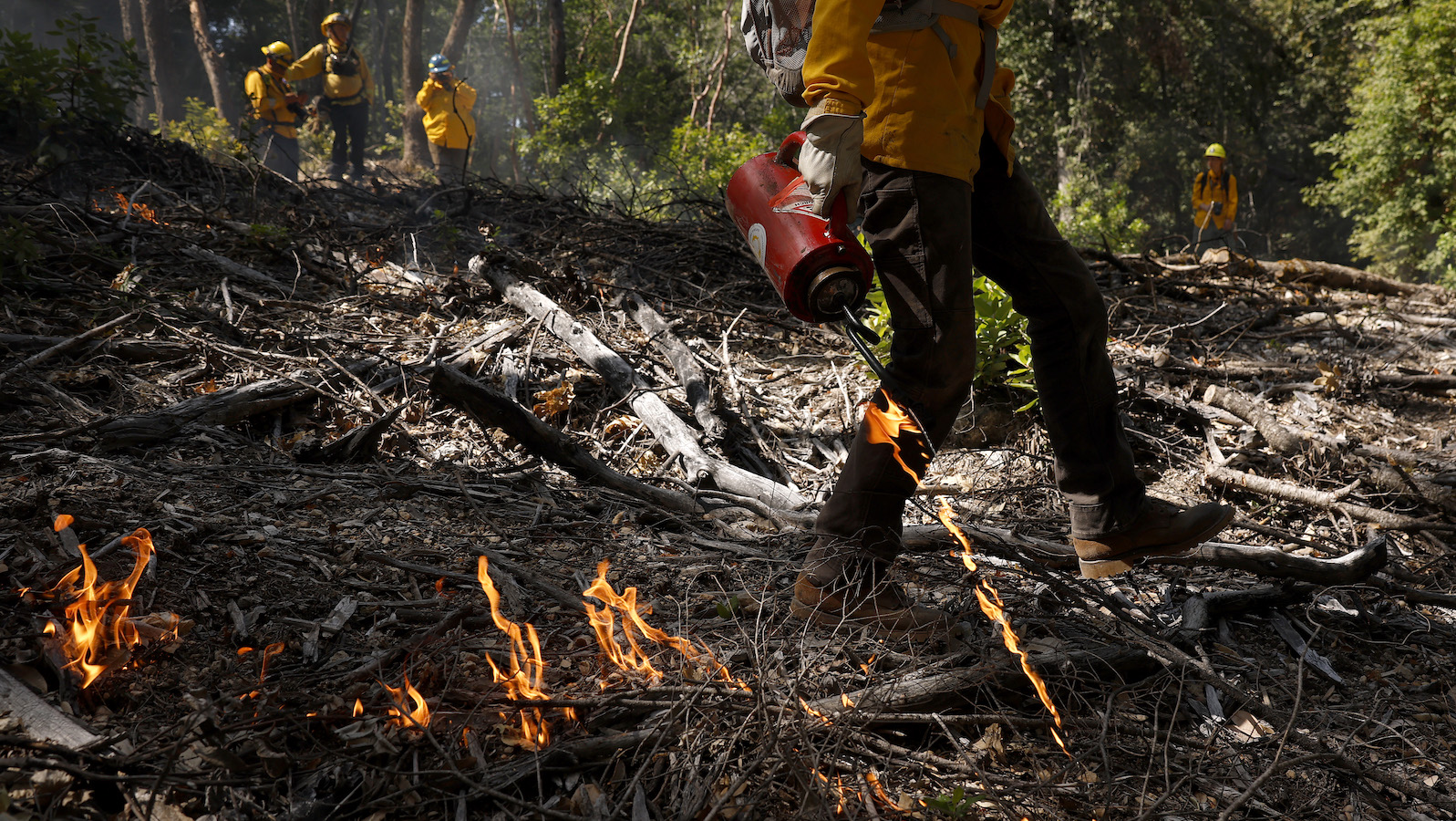
Study Finds That Burning Forests on Purpose Saves Taxpayers Billions, Which Seems Like a Good Deal
Controlled burns and forest thinning save $3.73 per dollar spent, but the Trump administration is apparently not a fan of math that says prevention pays.
For decades, the U.S. Forest Service has been clearing underbrush and setting controlled burns on public lands - a practice Indigenous nations have been perfecting for centuries. Scientists have always liked it for ecological reasons. Now, they’ve discovered it also saves a pile of cash. A study published today in the journal Science crunched data from 285 wildfires across 11 Western states between 2017 and 2023 and found that every dollar the agency spent on such “fuel treatments” avoided an average of $3.73 in smoke, property, and emissions harm. Frederik Strabo, lead author and an economist at the University of California, Davis, noted that while many suspected economic benefits, the area was “pretty understudied.” The treatments reduced total area burned by 36% and land burned at moderate to high severity by 26%. Researchers then modeled the economic upside: $1.39 billion saved in health and workforce productivity losses from wildfire smoke, $895 million in structural damage, and $503 million in carbon dioxide emissions. Larger treatments - those over 2,400 acres - were the most cost-effective. Strabo called the $3.73 return “significant” but small compared to wildfires’ hundreds-of-billion-dollar price tags, and noted the study didn’t even count savings for the multi-billion-dollar outdoor recreation industry. Morgan Varner, fire research director at Tall Timbers, called the work “the missing link.” Not everyone is sold, however. David Calkin, a former Forest Service research scientist, questioned putting a monetary value on intangible public goods like ecological benefits or recreation access. He also argued that federal land treatments may not help much with the costliest fires near communities - better to harden homes themselves. Strabo countered that fires interacting with treatments accounted for a disproportionate share of structure losses, citing the 2021 Caldor Fire near Lake Tahoe. One thing the paper didn’t count: smoke and CO2 from the prescribed burns themselves. Forest Service researcher Mark Kreider said that could potentially flip the analysis but stressed that treatments remain “very beneficial.” Critics worry about ecosystem harm, logging under the guise of prevention, and whether public funds should go elsewhere. The Trump administration’s shift away from prevention - reducing vegetation on about 1 million fewer acres in 2025 than 2024 - has drawn fire from environmental groups. Heather Stricker of the Sierra Club called the current “full suppression” policy misguided, saying the paper “quantified the cost savings” that prove proactive management works. Strabo hopes his evidence will guide policymakers: “We could have these economic and ecological benefits if we scaled it up. It’s a critically underfunded public good.”
The Good Times
News in your inbox.
One sardonic roundup, delivered on your schedule. Free. Unsubscribe whenever your tolerance for wit runs out.
Already subscribed but we never reach your inbox? Check your spam folder and hit 'Not spam' (or 'Remove from spam') to bust us out of junk-mail purgatory. You'll be helping everyone else too.
Don't open any of our emails for a month and you'll be automatically removed from the mailing list.
Rewrite Article
Select parts to regenerate with a fresh AI pass. Translations will be updated automatically.
Generate AI Image
Creates a sardonic version of the article image using OpenAI.