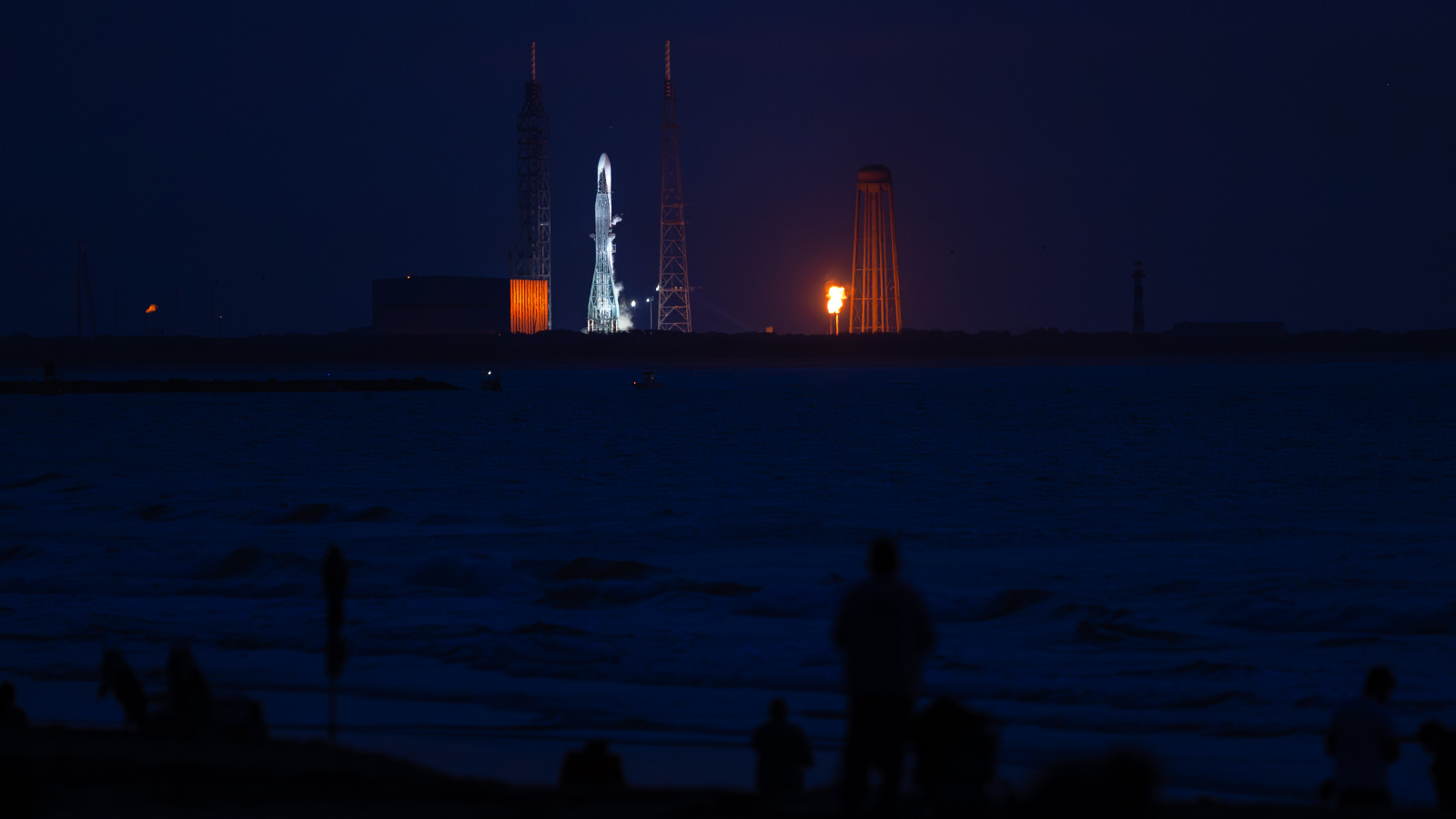
As artificial intelligence gobbles up land and electricity like a Pac-Man with a data center addiction, a new breed of tech company has a brilliant idea: why not just shove the whole mess into space? Data centers hard to place down here? Put them hundreds of miles up. Power demand surges in the evening? Send tens of thousands of mirrors into orbit to beam sunlight down on demand, keeping solar farms humming after dark.
These proposals may sound like the fever dream of a sci-fi writer on a bender, but they're real pitches from Elon Musk, Jeff Bezos, and assorted space start-ups. As private industry drives the new 'space race,' launching more rockets than entire countries, the cosmos is getting a bit crowded. The growing pile of 'space junk' has everyone worried that all that metal might collide, creating a destructive debris layer that would make future launches a game of dodgeball. Earlier this month, a discarded SpaceX rocket part slammed into the moon at 5,400 miles per hour, carving a new crater. Oops.
As Musk's SpaceX, Bezos' Blue Origin, and others expand their cosmic footprint, they're also messing with Earth: air pollution, climate effects, light pollution. Downplaying these downsides while touting space as our savior now has a name: 'starwashing,' a term popularized by space researcher Melissa E. Yingling in The Conversation. It's 'greenwashing' with a telescope.
Blue Origin claims its mission is 'to restore and sustain Earth' while launching rockets and lunar landers, boasting reusable rockets, cleaner fuel, and carbon-neutral tech. Reflect Orbital, the California startup planning 50,000 space mirrors, promises 'abundant energy' and 'a healthier planet.' But Gregers Andersen, a postdoctoral researcher at the University of Southern Denmark, calls this a distraction: 'The problem is, of course, that it takes attention away from actually solving the problems that are here on Earth.'
Experts agree the optimism obscures real risks. Magali Delmas of UCLA's Institute of the Environment and Sustainability compares the space boom to the Gold Rush: 'They were only seeing the positive - they were not seeing the negative impact on the environment of mining.' Rocket engines spew soot into the stratosphere, damaging the ozone layer, and release water vapor that traps heat. Disintegrating satellites could alter upper-atmosphere chemistry, releasing aluminum oxide dust that warms things up and scrambles circulation. Plus, satellites reflect sunlight, ruining dark skies, and launch sites wreck wildlife habitats. Not to mention the greenhouse gases from building and launching all that hardware.
Some promises aren't pure hot air, though. Methane-detecting satellites have exposed oil and gas leaks far worse than reported, and astronauts often get the 'overview effect,' turning into climate advocates. Andersen, however, warns against tech moguls' 'progress' narratives. He'd rather see a sustainable civilization within planetary boundaries than space colonies. 'I think the narratives that they are presenting are just basically derailing us from that mission.' So next time a billionaire offers to save us with space mirrors, maybe ask for a refund and a recycling plan.
The Good Times
News in your inbox.
One sardonic roundup, delivered on your schedule. Free. Unsubscribe whenever your tolerance for wit runs out.
Already subscribed but we never reach your inbox? Check your spam folder and hit 'Not spam' (or 'Remove from spam') to bust us out of junk-mail purgatory. You'll be helping everyone else too.
Don't open any of our emails for a month and you'll be automatically removed from the mailing list.
Rewrite Article
Select parts to regenerate with a fresh AI pass. Translations will be updated automatically.
Generate AI Image
Creates a sardonic version of the article image using OpenAI.