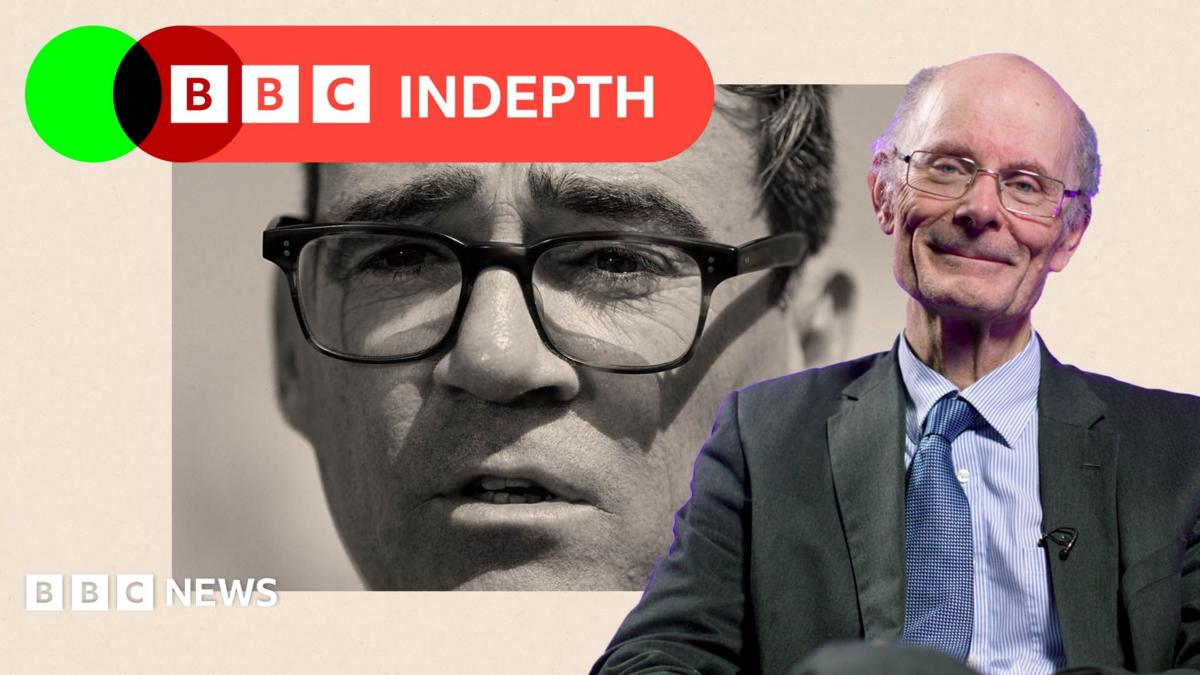
The 'Burnham bounce' is real, according to the polls, but it's less of a trampoline and more of a sturdy step stool. Labour's convincing victory in Thursday's Greater Manchester mayoral by-election has confirmed what the polls have been hinting since the new PM waltzed into Downing Street: the party is enjoying a modest uptick, but it's hardly party time.
Polls in the last week put Labour on an average of mid-20s, the highest since early last year, and a welcome improvement from the 19% they scraped together in late June when Sir Keir Starmer announced his departure. But with Reform UK nipping at their heels, Labour's lead is about as comfortable as a pair of skinny jeans after a big meal.
The bounce isn't unprecedented. Gordon Brown got a seven-point boost after replacing Tony Blair in 2007, and Boris Johnson enjoyed a six-point bump when he took over from Theresa May in 2019. Only Liz Truss, whose arrival was overshadowed by the Queen's death, missed out on the honeymoon period. But let's not forget the hole Burnham inherited: his 19% starting point was the lowest ever passed on by a departing mid-term PM, even lower than the 23% Truss left behind after her 45-day reign.
So, a bounce was inevitable. But even after it, Labour's poll average remains the lowest for any new mid-term PM, and they're still well short of the 35% they won in 2024. The by-election win was convincing, though: Labour's 47% first-preference share was down from Burnham's 63% in the last mayoral contest, but it was nearly double their 24% in May's locals and four points up on their 2024 general election tally. Not bad, but not exactly a landslide either.
Burnham has sensibly ruled out an early election, partly because Reform's slide is more about their own self-inflicted wounds. Reform has been mired in questions about funding legality and whether Farage should have declared certain donations. Farage's decision on 7 July to stand down and trigger a by-election in Clacton, scheduled for 13 August, appears to have backfired. His approval ratings are at their worst since 2024, and Reform's poll rating dropped from 27% to 24% - their lowest in 15 months.
In Manchester, Reform's first-preference share fell nine points, partly due to Rupert Lowe's breakaway party, Restore Britain, which won nearly 9% of the vote, outpolling the Tories. Without Reform's troubles, the Burnham bounce might not have been enough to put Labour in the lead nationally.
The bounce is largely thanks to winning back voters from the Greens and Lib Dems, both of whom have dropped two points. The Greens, who had been hoovering up disgruntled Labour voters, are now down to 11%, four points below their level when Starmer resigned. Among 2024 Labour voters, support for the Greens has fallen from 14% to 9%.
Overall, 67% of 2024 Labour voters now say they'd vote Labour again, up from 57% when Starmer left. Labour is also losing fewer voters to Reform, though the Tories are benefiting too, edging up to 20% for the first time since last spring. But Burnham still faces the monumental task of winning back the working-class, pro-Brexit voters who've flocked to Reform.
Burnham's arrival has given Labour hope, but the road to 2029 is paved with policy challenges as formidable as those that sank Starmer. Whether Labour can win will depend on whether voters believe Burnham's promises are actually materialising.
The Good Times
News in your inbox.
One sardonic roundup, delivered on your schedule. Free. Unsubscribe whenever your tolerance for wit runs out.
Already subscribed but we never reach your inbox? Check your spam folder and hit 'Not spam' (or 'Remove from spam') to bust us out of junk-mail purgatory. You'll be helping everyone else too.
Don't open any of our emails for a month and you'll be automatically removed from the mailing list.
Rewrite Article
Select parts to regenerate with a fresh AI pass. Translations will be updated automatically.
Generate AI Image
Creates a sardonic version of the article image using OpenAI.