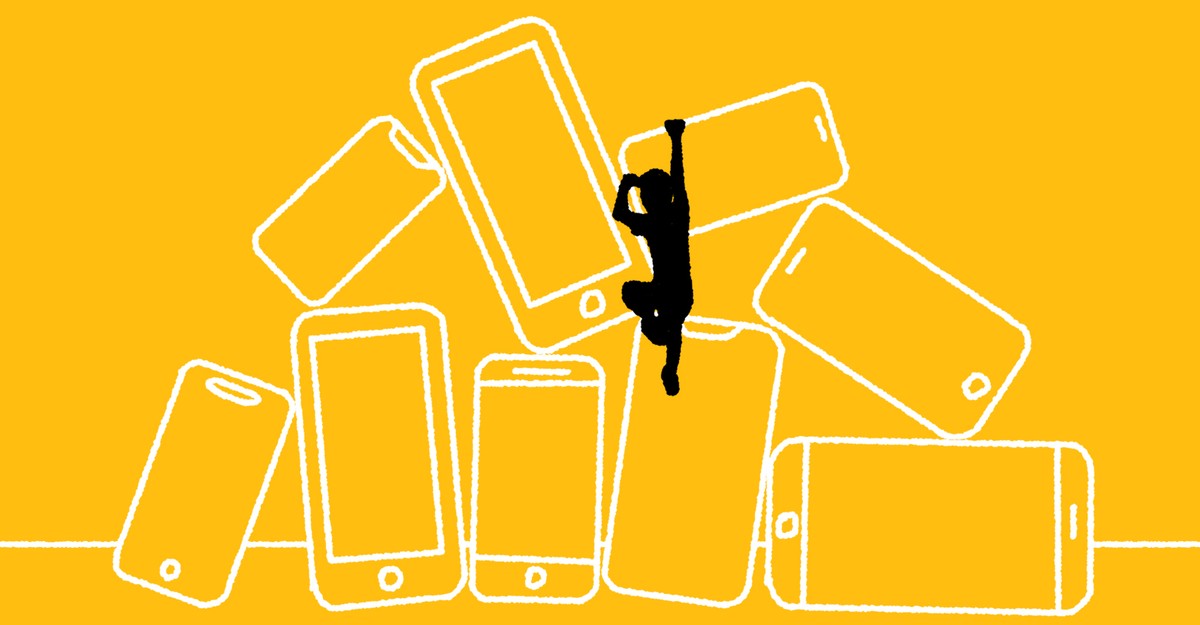
Psychologist Suggests Maybe the Problem Isn’t Phones, It’s Everything Else
Peter Gray, the psychologist who inspired the free-play movement, breaks with Jonathan Haidt to argue that the youth mental health crisis is caused by school stress, not smartphones - and that banning phones just takes away kids' last remaining…
At 82, psychologist Peter Gray has a theory about childhood that’s been brewing since he was buying cigarettes for his grandmother at age four. That was normal then; today, he notes, modern parents would be arrested for letting a child have such fun. Gray’s academic work at Boston College led him to an evolutionary theory of play - self-directed, done for its own sake - which he believes society has spent 70 years systematically crushing. Kids are kept indoors, supervised, and shuttled between adult-organized activities. His 2013 book Free to Learn became a bible for free-range parenting advocates, earning endorsements from Steven Pinker and Jonathan Haidt, who used Gray’s TEDx talk “The Decline of Play” as a chapter header in The Coddling of the American Mind.
But Gray has recently expanded his argument in a way that’s less crowd-pleasing: he insists kids need unstructured play not just in parks and backyards, but also in the wild spaces of the internet. This puts him at odds with his former collaborator Haidt, whose 2023 bestseller The Anxious Generation blames smartphones and social media for a youth-mental-health crisis. Gray found the manuscript “appalling” and “unethical,” arguing that taking away phones won’t magically send kids outside - it just strips them of the few freedoms they have left. He stepped down from the board of Let Grow, the nonprofit he co-founded with Haidt, and posted a critique on Substack. The two haven’t spoken since.
Gray’s forthcoming book, Restoring Childhood: How to Set Kids Free in the Age of Anxiety (due September from Penguin Random House), argues the real culprit is schools - specifically the 2010 rollout of Common Core standards, which narrowed curricula and increased testing. He cites APA data showing that the percentage of teens citing school performance as a stress source jumped from 43% in 2009 to 83% in 2013. Sure, smartphone use also skyrocketed in those years, but Gray points out that youth suicides are far more common during the school year, and 68% of teens in a 2024 Pew survey said they feel pressure to get good grades - more than those worried about looks or fitting in. School pressure, he notes, has increased more for girls than boys, consistent with some mental health trends. So maybe, just maybe, the problem isn’t the glowing rectangle in their pockets, but the system that’s been making them miserable since long before the iPhone existed.
The Good Times
News in your inbox.
One sardonic roundup, delivered on your schedule. Free. Unsubscribe whenever your tolerance for wit runs out.
Already subscribed but we never reach your inbox? Check your spam folder and hit 'Not spam' (or 'Remove from spam') to bust us out of junk-mail purgatory. You'll be helping everyone else too.
Don't open any of our emails for a month and you'll be automatically removed from the mailing list.
Rewrite Article
Select parts to regenerate with a fresh AI pass. Translations will be updated automatically.
Generate AI Image
Creates a sardonic version of the article image using OpenAI.