You've probably seen the sign: "If you need a little something, but circumstances are challenging for whatever reason, take a heart and hand it to us at the counter, no explanation needed." That's the essence of pay-it-forward schemes, where generous souls donate into a pot that others can dip into for a coffee or a book. In these trying times of rising costs, these schemes sound like a lovely idea. But do people actually use them? And more importantly, do they feel comfortable admitting they need a hand?
Take Host Cafe, nestled in the City of London's St Mary Aldermary church. Manager Barbara Gornicka says the rules are delightfully vague: anyone who feels they need their drink covered can use it. To spare blushes, there's a collection of polymer clay hearts on the drinks board - just grab one and hand it over, no awkward explanations needed, especially if there's a queue. "Not everyone can just outright say: 'Can I have a free drink?'" she explains.
Paul Atherton, a regular, knows the value of such schemes. He's been homeless for 17 years, but was recently awarded the Freedom of the City of London. Living on £4 a day after £160 in storage costs, he says, "I wouldn't have survived in this city if I didn't have the ability to sit, use Wi-Fi, and grab a coffee and feel like a part of society." He calls it "life-changing".
But not everyone is convinced. Prof Joan Costa-i-Font, an economist at the London School of Economics, calls these schemes "a drop in the ocean". "It's better than no coffee," he concedes, "but it's not really solving the structural problem. It's a sign of kindness." Gornicka agrees it's tricky to advertise; she wants more people from different backgrounds to feel secure in using it, even if they could afford the drink.
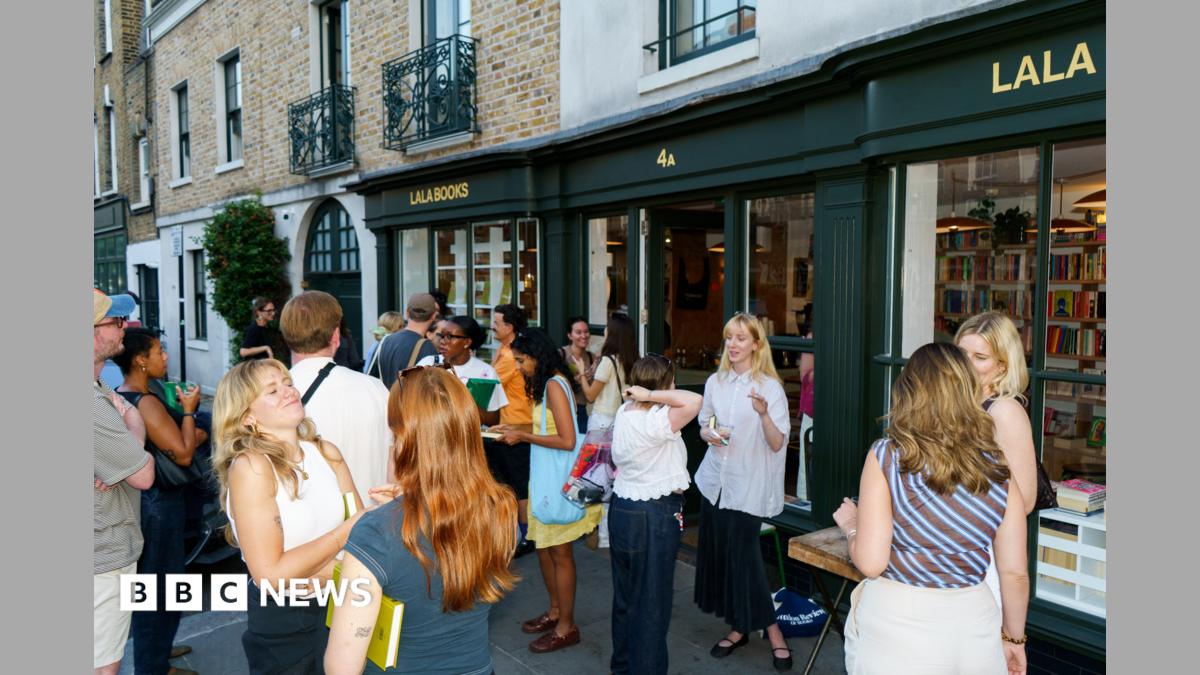
South of the river, Lala Books in Camberwell runs a similar scheme for books and magazines. Owner Danielle Moylan says the fund is especially popular with young people squeezed by rents and living costs - though many hesitate. "'I feel bad' - a lot of people say that, or you can tell they don't think it's for them," she says. "They might not be in quotes poor enough to use it." The scheme is designed for anyone who's a bit short, and to make it easier, there's a box of gift vouchers at the back, indistinguishable from regular ones.
Does Moylan worry about abuse? Not a bit. "That's sometimes the pointy end of running a scheme like this," she says, "but that's just something you have to accept as part of a community fund." The scheme has funded birthday gifts and even 30 books for a local primary school, thanks to parent Gillian Lewis. And it's cyclical: "We even get people who might use it one week... and then like two months later they'll come back and say they want to donate into it now."
So, are pay-it-forward schemes a beacon of kindness or a band-aid on a broken system? Probably both. But if a coffee or a book can make someone feel like part of society, that's not nothing.
The Good Times
News in your inbox.
One sardonic roundup, delivered on your schedule. Free. Unsubscribe whenever your tolerance for wit runs out.
Already subscribed but we never reach your inbox? Check your spam folder and hit 'Not spam' (or 'Remove from spam') to bust us out of junk-mail purgatory. You'll be helping everyone else too.
Don't open any of our emails for a month and you'll be automatically removed from the mailing list.
Rewrite Article
Select parts to regenerate with a fresh AI pass. Translations will be updated automatically.
Generate AI Image
Creates a sardonic version of the article image using OpenAI.