Nigeria Accidentally Funds Fake Government Agency for Almost a Year, Because Why Not
Nigeria's government accidentally funded a fake agency for nearly a year - offices, staff, budget and all - until someone noticed it never legally existed. Whoops.
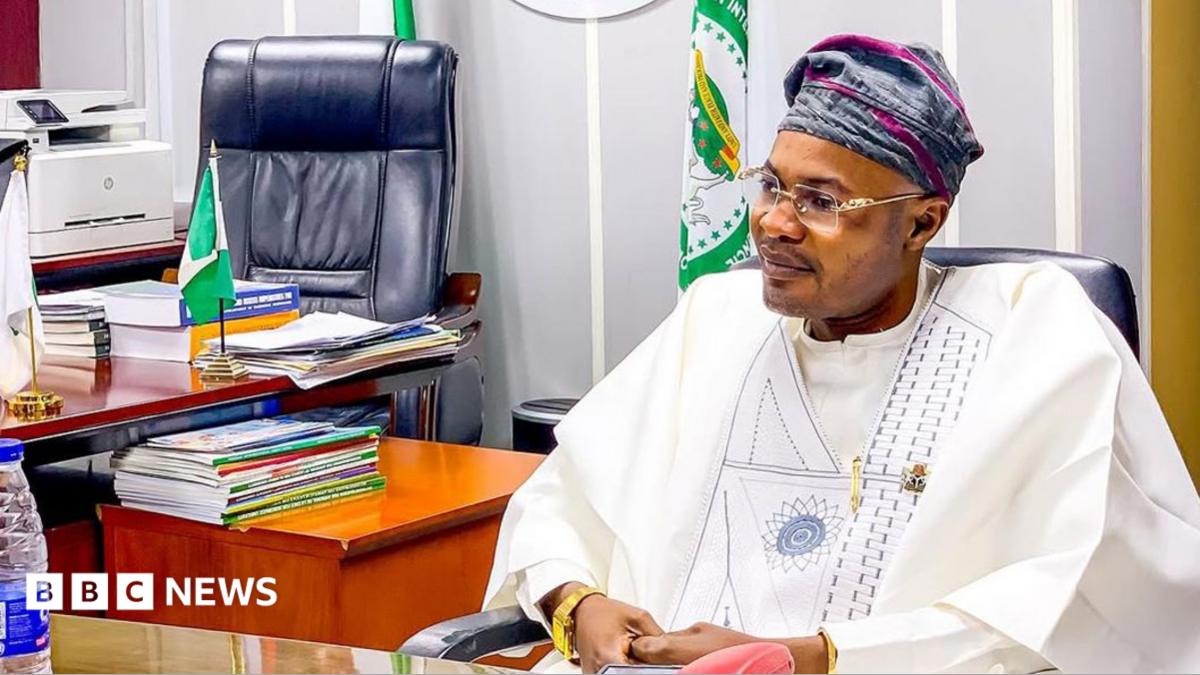
For much of 2025, Nigeria's Presidential Foreign Intervention Promotion Council (PFIPC) looked like any other government agency. It had offices in Abuja's Federal Secretariat, civil servants assigned to it, a .gov.ng website, and even approval to hire over 300 staff during a hiring freeze. Its director general, Prince Adeniyi Adeyemi Matthew, schmoozed with cabinet ministers, regulators, the anti-corruption chief, and foreign diplomats. When the 2026 budget passed, the PFIPC was in it, with a neat 1.3 billion naira ($950,000) allocation.
Then last month, the presidency dropped a bombshell: the PFIPC never legally existed. No law, no presidential order, no official instrument created it. The whole charade allegedly rested on a single forged document - an appointment letter bearing the fake signature of President Bola Tinubu's chief of staff, Femi Gbajabiamila. Adeyemi insists the council was lawfully set up in 2024 and that he was properly appointed, accusing senior officials of demanding bribes and later trying to seize the council's funds. He has since gone into hiding, claiming he fears for his life, but says he'll appear in court on 27 July to face charges of forgery and impersonation. Police are currently hunting him.
The scandal has mushroomed beyond one forged letter. Investigators are now asking how the Nigerian state machinery - spanning the secretary to the government, the civil service head, the accountant-general, the budget office, and parliament - all apparently failed to notice a fake agency. Babachir Lawal, a former secretary to the government, told the BBC: "There's no way [that office] in a normal system would not know that the agency is fake. You cannot create a budget code for yourself without the budget office knowing. There must be connivance with officials within." Oluseun Onigbinde of transparency group BudgIT, which first flagged the council's budget line, pointed out that the PFIPC appeared out of nowhere in the 2026 budget after not existing in 2023-2025. "This agency actually emanated and found itself in the budget from the executive," he said, meaning from the president's own side. "The lone impostor explanation does not add up."
The government's story has shifted. It first said Adeyemi "fraudulently opened" a Central Bank account; later it said no account was ever activated and no public money was released. Even if the treasury is intact, the affair shows how easily a fake government institution can be created in a country courting foreign investors - precisely the clients the PFIPC was meant to attract. President Tinubu has ordered the anti-corruption commission to investigate within 30 days, including "the role of any public officer" who may have helped, while declaring "100% confidence" in Gbajabiamila. Critics want an independent judicial inquiry instead.
Nigeria has seen bigger corruption scandals - Tinubu boasts over 7,000 convictions and 500 billion naira recovered in two years - but critics note those numbers are dominated by low-level internet fraudsters, while politically connected figures remain untouched. What sets the PFIPC apart is not the money - modest by Nigerian standards - but the method: allegedly creating an entire arm of government from scratch. Onigbinde calls it "a symptom of the dysfunctional budgeting process," noting that Nigeria's government agencies have roughly doubled since 2012 to over 1,200, despite a recommendation to cut them.
The scandal's sharpest impact hit far from Abuja: police searching for Adeyemi went to his family home in Ogbomoso, Oyo state, and detained his elderly father, Chief Adetunji Adeniyi. The chief described officers tearing off barbed wire, breaking the fence and door, and taking the family's phones. He was released later, though police claim he was only invited to assist with inquiries. Adeyemi's lawyer, Femi Falana, called the detention illegal and echoed the demand for those higher up to be exposed: "This guy should not just be sacrificed alone. Those who used him to achieve their own objectives will have to be exposed."
As the 27 July court date approaches - with Gbajabiamila and 10 others listed as prosecution witnesses - the question remains: will the investigation identify the officials who allowed a phantom agency to acquire offices, staff, and public money, or will the affair rest on one man, still in hiding, still insisting his council was real?
The Good Times
News in your inbox.
One sardonic roundup, delivered on your schedule. Free. Unsubscribe whenever your tolerance for wit runs out.
Already subscribed but we never reach your inbox? Check your spam folder and hit 'Not spam' (or 'Remove from spam') to bust us out of junk-mail purgatory. You'll be helping everyone else too.
Don't open any of our emails for a month and you'll be automatically removed from the mailing list.
Rewrite Article
Select parts to regenerate with a fresh AI pass. Translations will be updated automatically.
Generate AI Image
Creates a sardonic version of the article image using OpenAI.