NextEra Energy Decides Offshore Wind Might Be Worth It After All, Timing Be Damned
NextEra Energy merges with Dominion, gaining the largest U.S. offshore wind project - just in time for the Trump administration to do everything in its power to make offshore wind a dying industry.
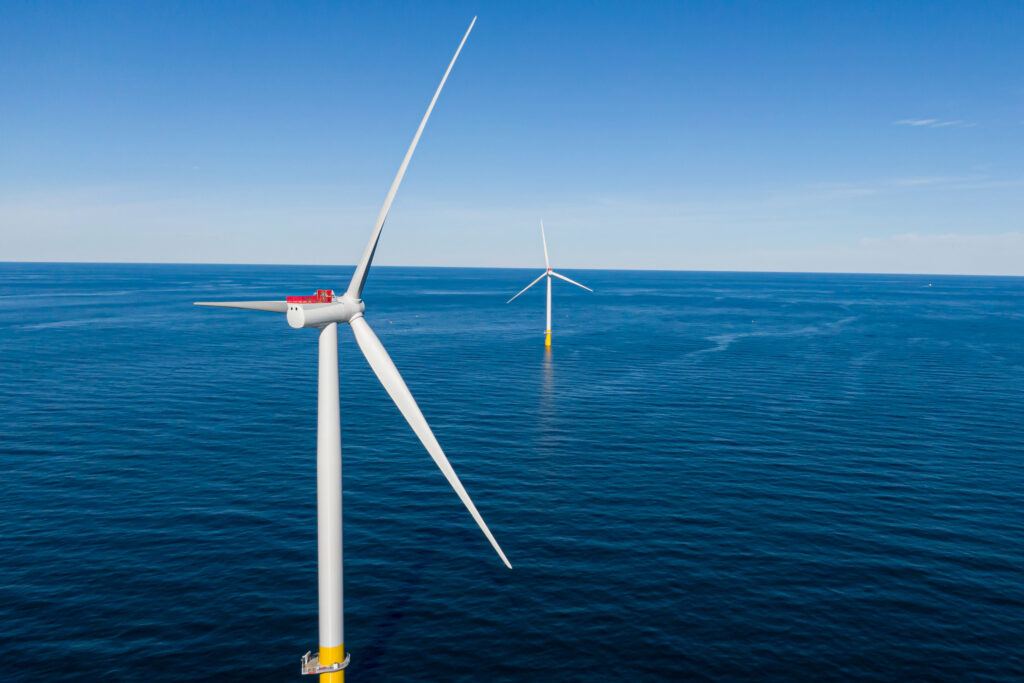
In a move that has the renewable energy world raising one eyebrow and sighing deeply, NextEra Energy - Florida's finest and the largest U.S. utility by market value - has agreed to merge with Dominion Energy of Virginia, the sixth-largest utility by market value and proud owner of the 2,640-megawatt Coastal Virginia Offshore Wind project, the largest offshore wind project in the United States. The merger would make NextEra the nation's leading developer of renewables and battery storage, and also the owner of a giant offshore wind farm. Hooray?
Experts, as they are wont to do, have expressed cautious concern. When large utilities merge, the resulting behemoth becomes difficult to regulate, making it harder to manage consumer rates and address environmental concerns. But on the bright side, having NextEra - already a giant in onshore renewables - dip its toes into offshore wind is probably good for the U.S. offshore wind industry. Probably. At a time when the Trump administration is opposing offshore wind with the enthusiasm of a cat avoiding a bath, any ally is welcome.
NextEra would have a larger market value than any U.S. energy company other than the two oil titans, ExxonMobil and Chevron. And yet, analysts say NextEra joining the offshore wind club probably won't do much to resuscitate the industry following the damage done by President Donald Trump. The Trump administration has gone to great lengths to slow development of offshore wind, including stop-work orders later overturned in court, lengthy permit delays, and paying leaseholders to abandon projects. It's almost as if they don't want it to succeed.
NextEra's conversion is surprising, given that in a 2018 conference call, then-CEO James Robo called offshore wind projects too expensive and too slow, declaring, "It's terrible energy policy." That quote was used by opponents of offshore wind for years. But now, successor John W. Ketchum has changed his tune. He noted that Dominion reduced costs from $11.5 billion to $11.4 billion - a savings of $100 million, which is basically couch cushion money for a utility - and that the project is on track to begin commercial operation by mid-2027 with 176 turbines. So far, 14 turbines are delivering test energy. "We feel very good about it," Ketchum said. "We feel like that project is online. And given the investment that's been made there, it's the right thing to do to finish it." This intent to finish is important, given that the Trump administration is eager to talk to offshore wind developers who want to abandon projects.
Let's take a step back to assess where U.S. offshore wind stands. The country has four operational projects with a total generating capacity of 978 megawatts: Block Island Wind Farm (2016), Coastal Virginia Offshore Wind pilot (2021), South Fork Wind (2024), and Vineyard Wind 1 (2026). Four projects are under construction with a total planned capacity of 5,089 megawatts, including Revolution Wind, Coastal Virginia Offshore Wind, Empire Wind 1, and Sunrise Wind. Then there are dozens of projects in various states of limbo - canceled, pre-construction, or prospective. Every lease could be developed under a future administration, but for now, progress is almost completely stalled. As Harrison Sholler, a wind analyst for BloombergNEF, put it: "Our current outlook for the offshore wind sector in the U.S. is very bleak." He thinks the projects now being built will be the last ones until the federal government makes policy changes and gives assurances to developers. Considering how long it takes to plan and build a project, we are heading for a pause that likely will last into the 2030s. "Developers are not going to be willing to invest significant money if they perceive a market as politically risky," Sholler said. Meanwhile, China and Europe look much more stable, and they will be the offshore wind powerhouses. So, NextEra may soon have an interest in offshore wind, but it won't mean much as long as the United States is a backwater.
In other energy transition news: The Trump administration seeks to roll back vehicle pollution standards, arguing it's responding to consumers' rejection of electric vehicles - a claim that ignores the administration's own efforts to harm the EV market. U.S. solar manufacturing is poised for a breakout in 2027, with manufacturers potentially spending $7 billion expanding capacity, a 150 percent increase from this year. And three mega-solar projects are being built on a scale that would have seemed impossible even a few years ago: Khavda Renewable Energy Park in India (30 GW), Valley Clean Infrastructure Plan in California (21 GW), and Talatan Solar Park in China (at least 17 GW). Giga-scale construction, as one reporter noted, requires a whole new level of land access, workforce mobilization, and transmission planning. But hey, at least someone is building something.
The Good Times
News in your inbox.
One sardonic roundup, delivered on your schedule. Free. Unsubscribe whenever your tolerance for wit runs out.
Already subscribed but we never reach your inbox? Check your spam folder and hit 'Not spam' (or 'Remove from spam') to bust us out of junk-mail purgatory. You'll be helping everyone else too.
Don't open any of our emails for a month and you'll be automatically removed from the mailing list.
Rewrite Article
Select parts to regenerate with a fresh AI pass. Translations will be updated automatically.
Generate AI Image
Creates a sardonic version of the article image using OpenAI.