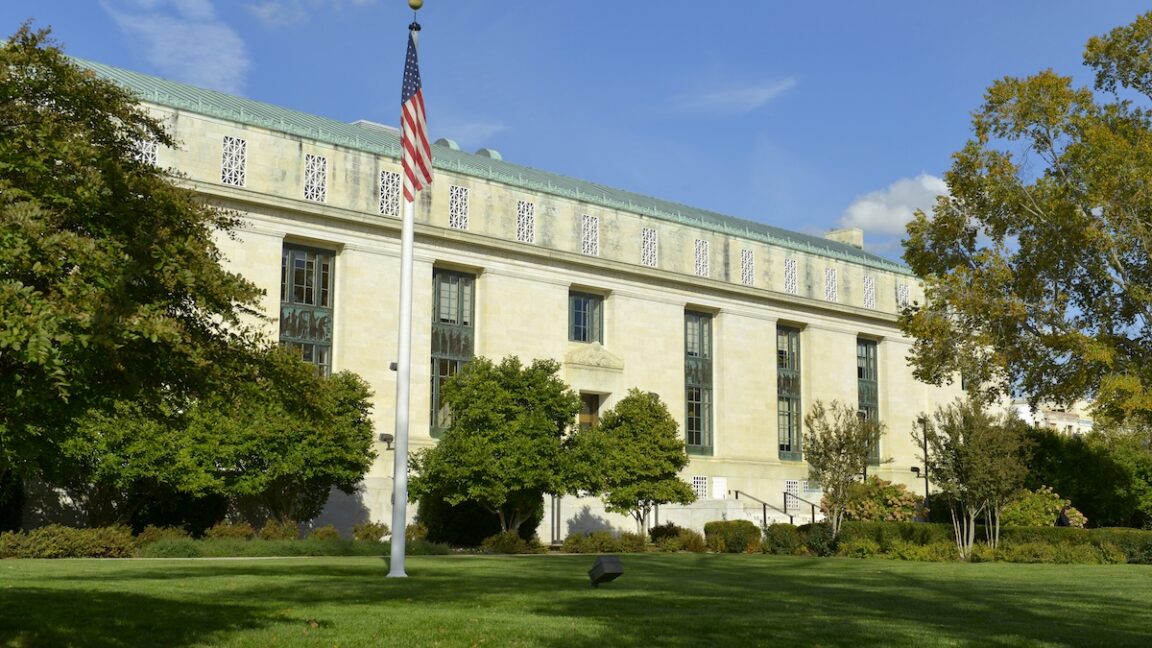
National Academies of Science Discovers That ‘Just the Facts, Ma’am’ No Longer Cuts It in Washington
The National Academies of Science finds that sticking to the facts doesn't stop politicians from trying to defund them - especially when those facts implicate fossil fuel companies in climate disasters.
Founded during the US Civil War to advise the government, the National Academies of Science have long been one of the most prestigious scientific organizations, known for assembling top talent to produce comprehensive reports on scientific and technological issues. These reports haven't shied away from public controversy or offending powerful groups, but they've generally managed to retain the respect of the governmental organizations funding them. That streak, it seems, is now toast.
Yesterday, a deeply reported story from Politico laid out the escalating breakdown between the National Academies and Republican politicians, who have taken issue with a report on attribution of weather events to human-driven climate change - a report that fossil fuel companies fear could lead to findings of liability in the many lawsuits against them.
The National Academies' president, Marcia McNutt, has tried to dodge the political heat by largely ignoring the Trump administration's overt hostility toward science in her annual “state of the science” addresses. But that strategy hasn't kept the organization out of Republican crosshairs, thanks to projects started under previous administrations. One such project, the fourth edition of the Reference Manual on Scientific Evidence, was prepared for the Federal Judicial Center to help judges handle scientific issues in court.
For the first time, that manual included a chapter on climate change, which treated human-driven climate change as established science (which it is). A group of Republican state attorneys general took issue with this, viewing the inclusion of experts involved in climate litigation as bias rather than expertise. They demanded the Federal Judicial Center pull the chapter - and the center immediately caved. The National Academies, however, declined to follow suit, leaving the original, intact report on its website.
That prompted a group of 11 Republican representatives to send a letter to the head of the Office of Management and Budget, “respectfully urging” an investigation into whether the National Academies should be “suspended or debarred from all federal funding.” Their complaint: the report lacked “independent, meaningful peer review from scientists with differing views on climate science” - i.e., people who refuse to accept the evidence for human-driven climate change. Similarly, when the National Academies organized an updated climate report, members of Congress threatened to investigate, even as the Department of Energy convened a group of fringe contrarians to produce something suggesting carbon emissions are probably fine.
Why all the fuss about scientific advice to judges? The issue is attribution: researchers can now determine the probability that extreme weather events occur with and without greenhouse gas emissions, and some events simply wouldn't have happened without human-driven warming. That clarity has allowed researchers to tie financial damages from catastrophic weather to the influence of specific fossil fuel companies. If those studies gain wide acceptance, judges may admit them as evidence in lawsuits against those companies.
Most previous lawsuits against fossil fuel companies have failed because judges deemed them matters of federal policy. But economic damages have long been the domain of courts, and a direct link between business practices and storm damage may be harder to dodge. That's where the National Academies come in again: a committee formed during the Biden administration is evaluating the scientific standing of attribution studies. Oil companies, concerned enough, have hired third parties to file for access to the emails of committee members at public universities.
All of which suggests the fight over this report is about to get intense. The credibility and funding of the National Academies are likely to face sustained assault, potentially permanently damaging science-based policy in the US. And when even basic facts can become politicized, trying to avoid being a target by saying “we're just focused on the science” turns out to be about as effective as bringing a weather balloon to a knife fight.
The Good Times
News in your inbox.
One sardonic roundup, delivered on your schedule. Free. Unsubscribe whenever your tolerance for wit runs out.
Already subscribed but we never reach your inbox? Check your spam folder and hit 'Not spam' (or 'Remove from spam') to bust us out of junk-mail purgatory. You'll be helping everyone else too.
Don't open any of our emails for a month and you'll be automatically removed from the mailing list.
Rewrite Article
Select parts to regenerate with a fresh AI pass. Translations will be updated automatically.
Generate AI Image
Creates a sardonic version of the article image using OpenAI.