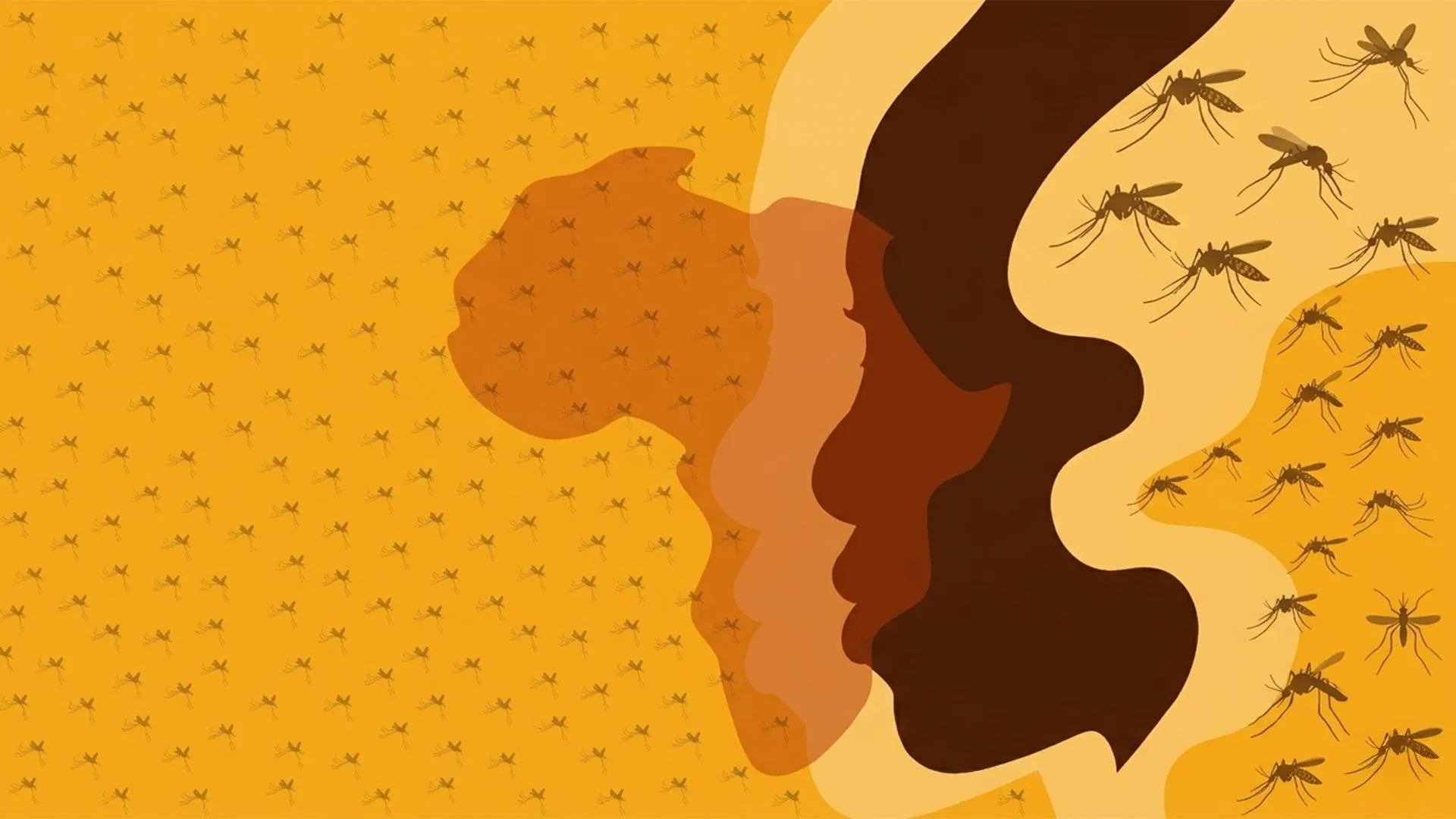
Malaria Didn't Just Kill Early Humans, It Also Played Real Estate Agent
Malaria didn't just give early humans fevers; it also played matchmaker, splitting up populations and shaping human diversity for at least 74,000 years.
A new study suggests that modern humans didn't emerge from a single location but through interactions among groups scattered across Africa. While scientists have long blamed climate for where these populations settled, researchers now point a finger at a more personal culprit: malaria.
In a study published in Science Advances, a team from the Max Planck Institute of Geoanthropology, the University of Cambridge, and other collaborators investigated whether Plasmodium falciparum - the parasite behind the deadliest form of malaria - influenced human settlement choices between 74,000 and 5,000 years ago. That period was crucial, coming before humans spread widely beyond Africa and before agriculture gave malaria new ways to party.
The results indicate that malaria, one of humanity's oldest and most persistent frenemies, played a major role in shaping where people set up camp. Regions with high transmission risk effectively told humans, 'Keep moving, nothing to see here,' pushing populations apart. Over tens of thousands of years, this separation influenced how groups met, mingled, and swapped genetic material, contributing to the patterns of human diversity we see today. In other words, disease wasn't just an obstacle - it was an evolutionary wingman with a mosquito bite.
'We used species distribution models of three major mosquito complexes together with paleoclimate models,' explains lead author Dr. Margherita Colucci of the Max Planck Institute of Geoanthropology and the University of Cambridge. 'Combining these with epidemiological data allowed us to estimate malaria transmission risk across sub-Saharan Africa.' The team then compared these risk estimates with a reconstruction of the environments early humans could actually inhabit, revealing that humans consistently avoided - or couldn't stick around in - areas where malaria transmission was especially high.
'The effects of these choices shaped human demography for the last 74,000 years, and likely much earlier,' says Professor Andrea Manica of the University of Cambridge, a senior author. 'By fragmenting human societies across the landscape, malaria contributed to the population structure we see today. Climate and physical barriers were not the only forces shaping where human populations could live.'
Rethinking the Role of Disease in Human History: 'This study opens up new frontiers in research on human evolution,' adds Professor Eleanor Scerri of the Max Planck Institute of Geoanthropology, also a senior author. 'Disease has rarely been considered a major factor shaping the earliest prehistory of our species, and without ancient DNA from these periods it has been difficult to test. Our research changes that narrative and provides a new framework for exploring the role of disease in deep human history.'
Materials provided by Max Planck Institute of Geoanthropology. Note: Content may be edited for style and length.
The Good Times
News in your inbox.
One sardonic roundup, delivered on your schedule. Free. Unsubscribe whenever your tolerance for wit runs out.
Already subscribed but we never reach your inbox? Check your spam folder and hit 'Not spam' (or 'Remove from spam') to bust us out of junk-mail purgatory. You'll be helping everyone else too.
Don't open any of our emails for a month and you'll be automatically removed from the mailing list.
Rewrite Article
Select parts to regenerate with a fresh AI pass. Translations will be updated automatically.
Generate AI Image
Creates a sardonic version of the article image using OpenAI.