
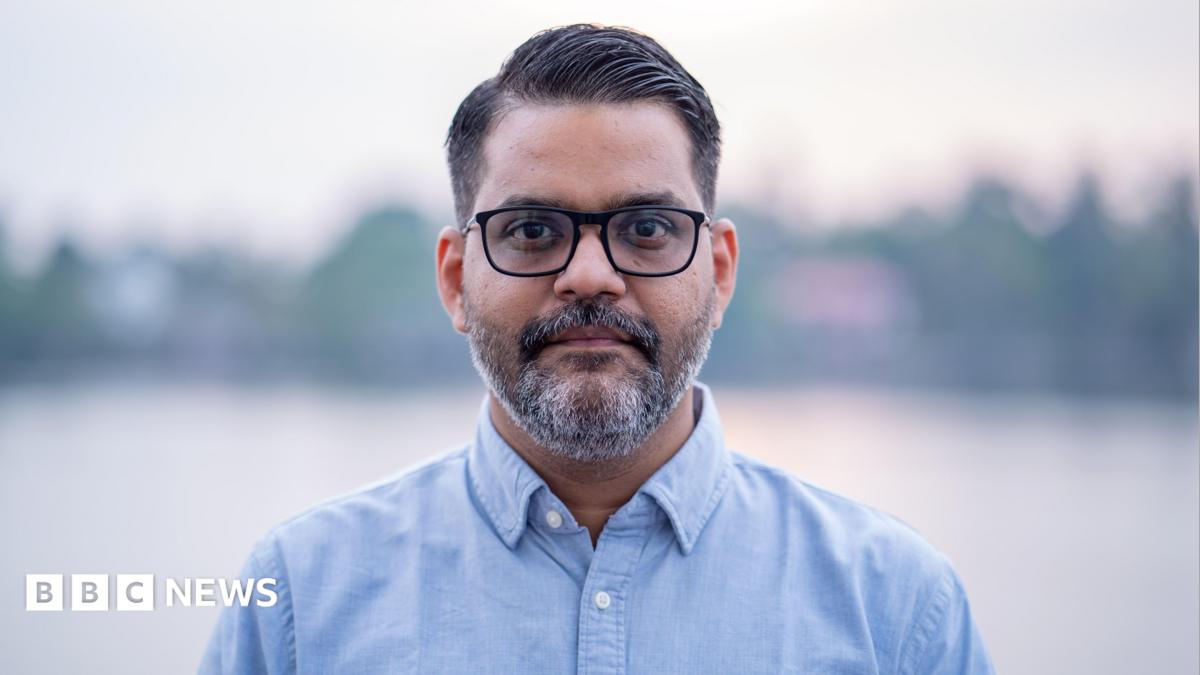
The waiting room outside Dr. Cyriac Abby Philips' hepatology clinic at Rajagiri Hospital in Kochi is a study in suspended animation - hope and despair sitting side by side, occasionally flipping through old medical reports. Inside, Philips is unhurried, leaning forward to ask a question before falling silent. He listens - actually listens - then delivers candid assessments with compassion, walking families through the road ahead rather than just pointing at the map.
I spent two days in his clinic expecting to meet a very different man. Philips, known to over 300,000 followers on X as the "Liver Doc," is one of India's most polarising doctors online: a fearless champion of evidence-based medicine to his fans, an attention-seeking provocateur to his critics. He has called homeopathy "false medicine," labelled alternative practitioners quacks, and told critics their brains were "for rent." India's Ayush Ministry has held two formal committee meetings just to discuss him. A police inspector once travelled two days by train from Uttar Pradesh to question him over a social media post. In six years, he has faced 16 legal cases.
Yet the man in person is measured, soft-spoken, and described by long-term patients and colleagues as polite, unassuming, and courteous. "It's an adopted persona," he says, without apology. "They hate me. But they cannot invalidate the information I give." He targets trolls deliberately, he explains, to keep attention on the message. "If people think I'm rude or ill-tempered, even though it isn't true, I'm willing to pay that price."
His main targets are Ayurveda - India's ancient traditional medical system, trusted by millions and backed by government-funded colleges - and alcohol. The mission, he says, stems from his journey. Philips never wanted to be a doctor; he wanted to write and loved films. But as the son of celebrated gastroenterologist Dr Philip Augustine, the decision was largely made for him. He failed the medical entrance exam on his first attempt, spent nine months in a cramped coaching centre in Thrissur - "I cried myself to sleep the first week" - and got in on his second try. "I was wild at St John's Medical College in Bangalore," he recalls, once admitted to hospital under his own professor with alcohol toxicity.
Medicine became real during his MD in Kolkata, at a 3,500-bed public hospital with chronic shortages. He watched doctors treat critically ill diabetes patients without insulin and make impossible triage decisions. "Even with so little, people were doing the best they could. And patients were happy. I'd never seen that kind of relationship between human beings before."
After training in hepatology at the Institute of Liver and Biliary Sciences in Delhi, he left an academic career to help rebuild his father's practice - another decision not entirely his own. At a new hospital in Kerala, he first saw the devastation from alcohol-use disorder and unregulated herbal remedies. A six-year-old with severe jaundice and acute liver failure was brought in after her family gave her a homemade herbal concoction for a fever. "You have no idea the nightmares I went through in those two weeks trying to save that child."
The case sparked his research into alternative medicines and alcohol-use disorder. He began sharing case studies on social media. At first, few noticed. Then came the backlash. Millions have deep faith in traditional medicine; critics say Philips humiliates people who hold those beliefs. He doesn't yield: "I am not calling the practitioner a quack. I am saying the principles that drive that practice are not based on scientific thinking or rational logic. Modern medicine corrects itself. That maturity is absent in alternative medicine."
He has published numerous peer-reviewed studies on liver injury linked to traditional Indian medicines. When the Ayush Ministry challenged one, he responded with a detailed scientific rebuttal. He has led crowdfunded investigations into protein powders and generic medicines, and published a book. But the path has been costly - financially and emotionally. His day job alone, he says, is enough to send anybody into depression. Many patients have advanced liver disease; alcohol-related liver disease is one of India's fastest-growing causes of serious liver illness, especially among younger adults. Not all receive transplants. Most die. His job, in those cases, is to make death as bearable as possible.
"You have to make sure your patient stays happy until death. You have to make sure the family understands the patient is dying, and that the way they are going to die is dignified." He pauses. Doctors maintain an image of being "some kind of god" - a shield that absorbs everything. "I'm telling you, it is not at all alright." He has signed more death certificates than he can count. After narrowly surviving a car crash while taking a call from junior doctors about a critically ill patient, he changed his routine. He now sees only 25 patients a day - far fewer than his father, who still sees over 100. "I couldn't ask my patients to stop drinking while I was drinking myself."
An avid online gamer, he makes time for family and hobbies. His wife, Teena, puts it simply: "He's very patient. He takes his time. He makes me understand it. He's not like that on social media. As a person, no." His father initially disapproved of his son's social media profile but now understands its importance.
Over six years, Philips has faced numerous legal cases from alternative medicine specialists and corporate groups. He has spent millions of rupees defending himself. One close colleague left India after being detained over a co-authored paper. Some researchers now ask not to have their names on papers with him. But when the conversation turns to his children, his eyes fill with tears. "I seriously thought that if people knew who my family members were, they could do whatever they wanted. I could get hurt. Or my family members could get hurt." He takes safety precautions but has no intention of stopping. "But for someone to make a difference in the world, even a small difference, you have to compromise somewhere. I want my children to remember me as somebody who stood for what he believed was right."