GOP Leaders Funded by Fossil Fuels Question Integrity of National Academies' Climate Report
GOP lawmakers who've pocketed half a million from oil and gas are suddenly worried that the nation's top science body might be biased after it confirmed climate change is real and harmful.
After the EPA proposed revoking its authority to regulate climate pollutants last summer, the National Academies of Sciences, Engineering, and Medicine - the nation's most respected scientific body - fast-tracked a review of the latest evidence on greenhouse gas dangers.
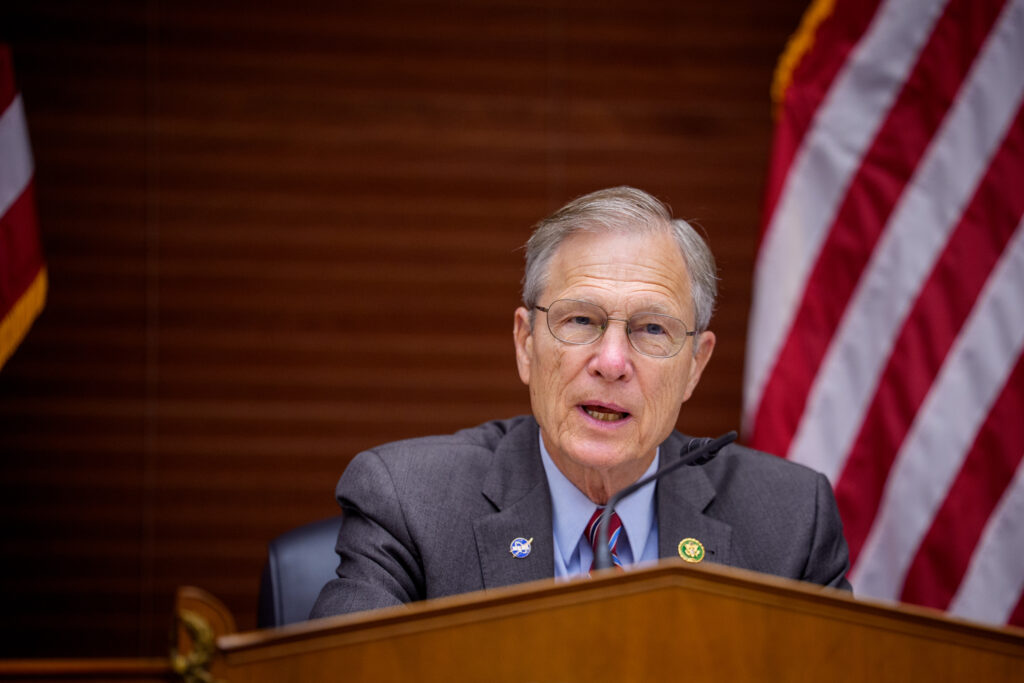
Now Republican leaders of the House science committee, who have collectively received nearly $550,000 in donations from the oil and gas industry, are questioning the "formation, funding and expedited timeline" of that expert panel.
The Trump administration had argued its proposed repeal was justified because the EPA "unreasonably" analyzed the science in 2009, claiming developments since then "cast significant doubt" on the endangerment finding. The National Academies, bound by an 1863 congressional charter to provide objective advice, decided this claim demanded scrutiny.
Its resulting consensus study, released just under the EPA's deadline last September, concluded the evidence for harm from human-caused greenhouse gases "is beyond scientific dispute." The report noted that what was uncertain in 2009 is now resolved, and that "the United States faces a future in which climate-induced harm continues to worsen and today's extremes become tomorrow's norms."
But committee chair Brian Babin (R-TX) and colleagues have sent two letters demanding documents to investigate "potential conflicts of interest," despite the panel including experts from both industry and academia. Physicist Drew Shindell, a Duke professor who contributed to the report, noted there was "no disagreement about the overall conclusions" because "the science is very well established."
Republicans previously alleged the study was "predetermined" due to its fast timeline, ignoring that several panelists had recently worked on IPCC and National Climate Assessment reports. They also cited a "retracted" climate chapter in a judicial reference manual - though legal scholar Michael Green clarified it was pulled under political pressure from Republican attorneys general, not due to any validity issues.
As for the EPA's claim that developments cast doubt on the 2009 finding, Shindell said "the complete opposite is true." Scientists can now map heat exposure impacts, storm damage, and agricultural crop responses across the nation, connecting rising insurance prices to climate-driven disasters. "It's just so, so much clearer now, all the harms that Americans really face from greenhouse-gas-induced warming," he said.
The Good Times
News in your inbox.
One sardonic roundup, delivered on your schedule. Free. Unsubscribe whenever your tolerance for wit runs out.
Already subscribed but we never reach your inbox? Check your spam folder and hit 'Not spam' (or 'Remove from spam') to bust us out of junk-mail purgatory. You'll be helping everyone else too.
Don't open any of our emails for a month and you'll be automatically removed from the mailing list.
Rewrite Article
Select parts to regenerate with a fresh AI pass. Translations will be updated automatically.
Generate AI Image
Creates a sardonic version of the article image using OpenAI.