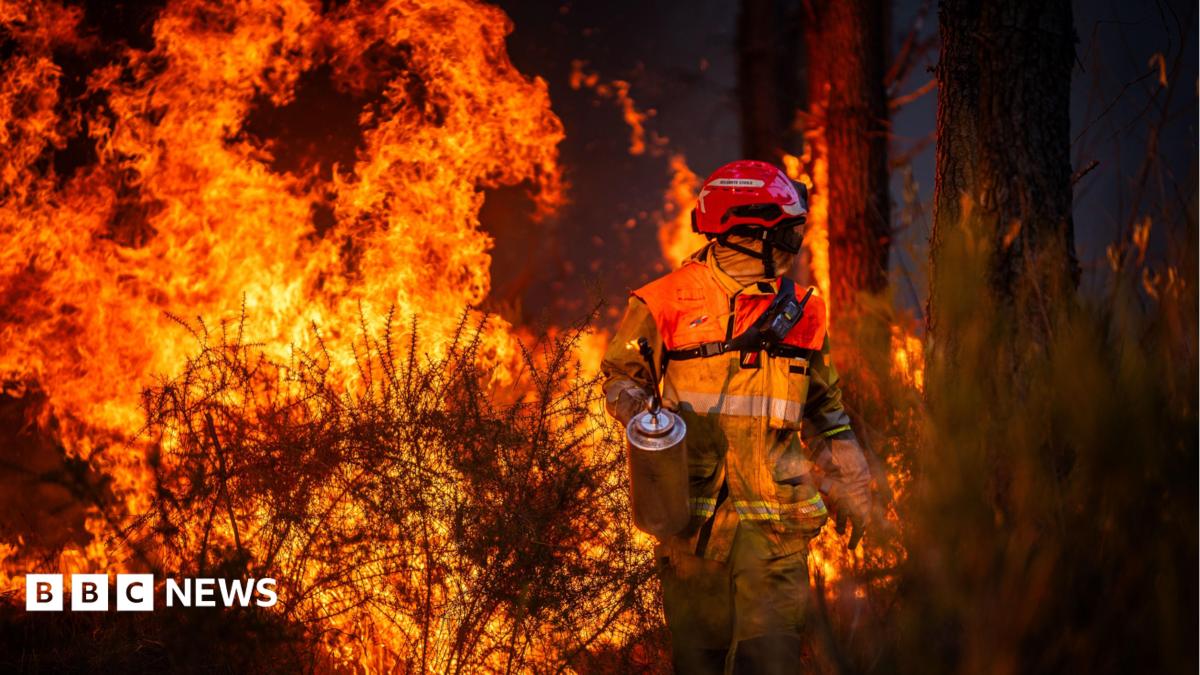
France Arrests 420 for Wildfires, Because Apparently 9 Out of 10 Fires Start With Humans, Not Spontaneous Combustion
France arrests 420 for wildfires, but with 9 out of 10 fires human-caused, the real culprit might just be our collective love for fossil fuels and carelessness.
After wildfires caused more damage in France this year than at any time since World War Two, many are left asking a single question: Why? Well, the answer is as predictable as a summer heatwave: climate change, fueled by humanity's favorite hobby - burning fossil fuels. But in a twist that would make a detective novel proud, records show that nine out of 10 French wildfires are started by humans. Yes, humans. The same species that brought you the wheel, the internet, and the barbecue - which, coincidentally, is also a fire starter.
The government in Paris, perhaps hoping to find a scapegoat more tangible than 'the atmosphere,' has announced 420 arrests of people alleged to have either started the fires deliberately or by accident. Among them are 166 minors, because apparently even kids are getting in on the arson action. One standout case: a 23-year-old man accused of deliberately starting 10 fires in five days in the Var area. If convicted, he faces 15 years in prison and a €150,000 (£128,000) fine - enough to buy a lot of fire extinguishers.
But not all cases are so clear-cut. A man received a three-year sentence for starting three fires in the Raon-L'Étape forest, though as L'Est Républicain noted, 'Only a few square metres of vegetation went up in smoke.' That's like getting a life sentence for burning toast. The heavy-handed approach has also swept up a homeless man and someone with severe autism, who reportedly got jail time for throwing cigarette butts. Because nothing says 'justice' like punishing the most vulnerable for a moment of carelessness.
Muriel Gestas, a lawyer representing several accused arsonists, including two firefighters, is skeptical. 'I was amazed at the number of arrests, it feels excessive,' she says, doubting many will lead to convictions. Le Monde agrees, questioning whether police have adequately examined cases given the short time frame. The authorities' silence on details - specific charges, intent, and comparisons with past seasons - makes meaningful analysis impossible. But Bordeaux prosecutor Renaud Gaudeul defends the tough stance, noting that 'It only takes a tiny spark' to start a fire, especially in drought conditions.
Investigating how a fire started is surprisingly tricky. Eric Dufayet, a fire investigator, explains that during droughts, 'all you need is a simple lighter.' His team maps the fire's outline, often forming a 'V' shape, and traces it back to the origin. If a fire was deliberate, the arsonist might have used multiple devices, increasing the chance of finding DNA or fingerprints. But experts believe arson accounts for only a small fraction of fires; most are accidental, from construction sparks, faulty electrical equipment, cigarette butts, and - you guessed it - barbecues.
Dufayet shares the '30' rule for cigarette fires: at least 30C (86F), maximum 30% humidity, wind under 30km/h (19mph), and at least 30% of the cigarette unburnt. In the current drought, it's even easier. Michel Lejoyeux, a professor of psychiatry, categorizes fire-starters into three groups: the careless, the beneficiaries (insurance payouts, anyone?), and pyromaniacs. Pyromania is rare and hard to diagnose, so don't expect that excuse to fly in court. Some firefighters may have started fires to play savior, others for tax-free overtime - because who doesn't love a little financial incentive to commit arson?
Amid the blame game, the fires themselves are far from over, with forecasts predicting another heatwave. President Emmanuel Macron says criticism isn't the priority now, insisting, 'We will have to replant and rebuild a different kind of forest because we must adapt to the structural conditions of climate change.' The time for lessons will come later, he says, and the country must stay united. Meanwhile, the French public is left with questions, scorched earth, and a burning desire for answers.
The Good Times
News in your inbox.
One sardonic roundup, delivered on your schedule. Free. Unsubscribe whenever your tolerance for wit runs out.
Already subscribed but we never reach your inbox? Check your spam folder and hit 'Not spam' (or 'Remove from spam') to bust us out of junk-mail purgatory. You'll be helping everyone else too.
Don't open any of our emails for a month and you'll be automatically removed from the mailing list.
Rewrite Article
Select parts to regenerate with a fresh AI pass. Translations will be updated automatically.
Generate AI Image
Creates a sardonic version of the article image using OpenAI.