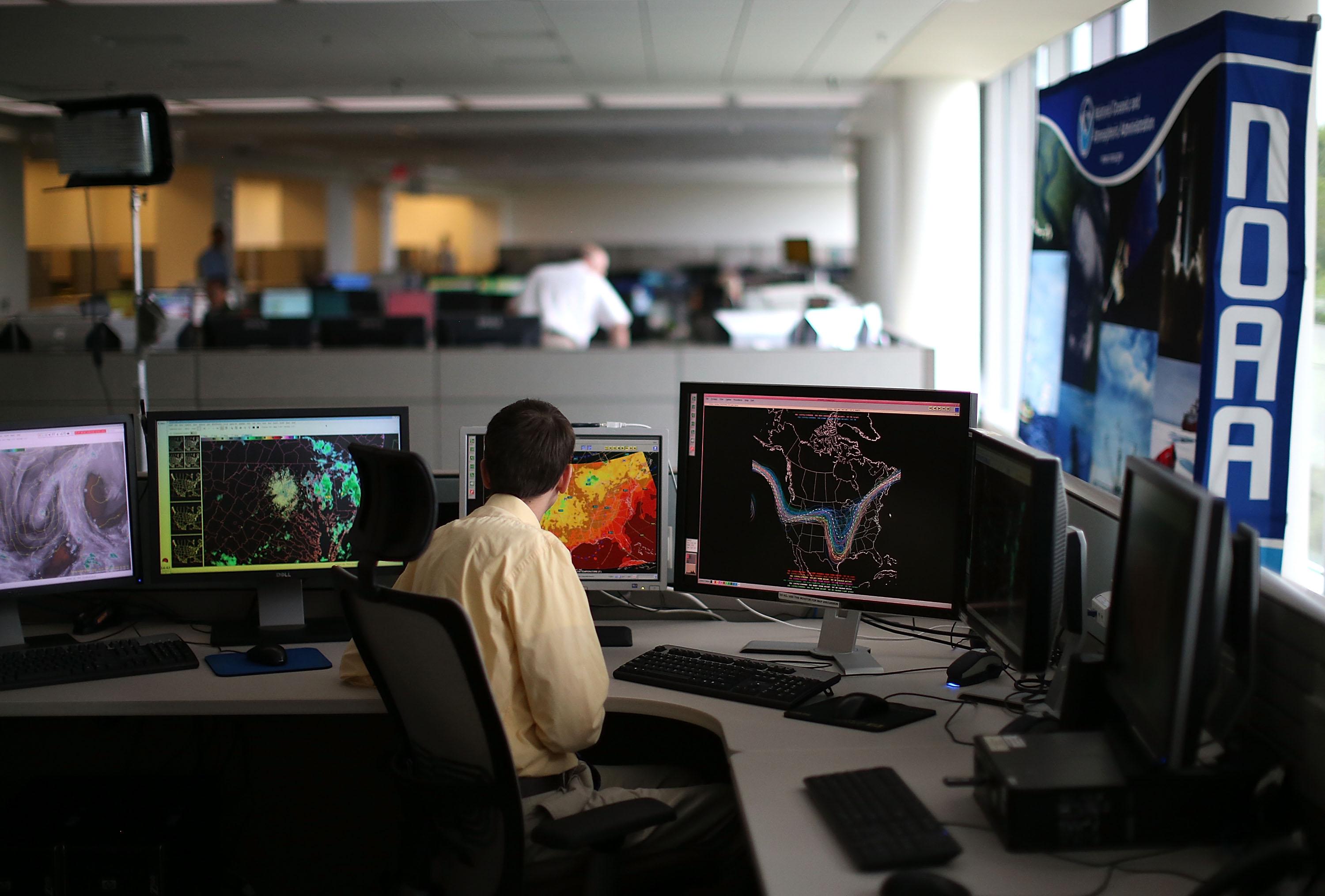
Fired NOAA Staffer Revives Beloved Climate Website, Because Apparently We Can't Have Nice Things From the Government
After the Trump administration killed Climate.gov, its former lead writer resurrected it as Climate.us - because if you want climate science done right, you apparently have to do it yourself.
When Rebecca Lindsey was fired from NOAA last February, she did what any reasonable person would do: stewed, then panicked about the fate of Climate.gov, the website she'd spent 15 years building. Her fears were well-founded - the Trump administration soon axed the rest of the staff and shuttered the site, all in the name of "restoring gold standard science." (Irony: still free.)
Lindsey couldn't bear to see it all vanish. So she and her former team did what any group of passionate, underfunded scientists would do: they built their own damn website. Climate.us launched last month, an independent, nongovernmental version of the original, complete with updated visuals, explainers, and Q&As vetted by actual scientists. Since its launch two weeks ago, it's already racked up 800,000 page views - not bad for a site that's basically a phoenix rising from the ashes of a political dumpster fire.
The Trump administration's second coming has been rough on climate information. The National Climate Assessments? Gone. EPA webpages explaining climate change? Gutted - the agency now blames "natural processes" for global warming, which is like blaming the ocean for being wet. Izzy Pacenza of the Environmental Data and Governance Initiative calls it "an all-out assault on climate information." Charming.
But where the government fails, nonprofits and scrappy ex-feds step in. The American Geophysical Union is rallying 100 global experts to protect environmental datasets from political interference. They're also hosting an academic network so U.S. scientists can keep contributing to international climate reports, because apparently we can't be trusted to play nice with the world. Adam Smith, whose billion-dollar disaster tracking program was killed by NOAA, revived it at Climate Central - though it took nearly a year to get it back to full strength. "It's like starting over in 2010," Lindsey sighs, now running Climate.us with just three staff instead of eight.
Experts warn that nonprofits can't match the federal government's reach or credibility. "No nonprofit is going to have the reach of the federal government," says Gretchen Gehrke of the Environmental Data and Governance Initiative. Plus, funding is always precarious. But the crisis has exposed deeper flaws in how we handle scientific data. "This was always a problem," says Sonia Wang of the Data Foundation. "We're just seeing more cracks now."
The lesson? As Janice Lachance of the American Geophysical Union puts it: "Critical scientific data should not be vulnerable to the political winds of the day." So until the government gets its act together, it's up to a patchwork of nonprofits, universities, and plucky former feds to keep the climate science flowing. No pressure.
The Good Times
News in your inbox.
One sardonic roundup, delivered on your schedule. Free. Unsubscribe whenever your tolerance for wit runs out.
Already subscribed but we never reach your inbox? Check your spam folder and hit 'Not spam' (or 'Remove from spam') to bust us out of junk-mail purgatory. You'll be helping everyone else too.
Don't open any of our emails for a month and you'll be automatically removed from the mailing list.
Rewrite Article
Select parts to regenerate with a fresh AI pass. Translations will be updated automatically.
Generate AI Image
Creates a sardonic version of the article image using OpenAI.