Federal Law Says Imported Seafood Shouldn't Kill Whales. Government Decides to Pretend Otherwise for 50 Years.
Environmental groups sue U.S. government for ignoring 50-year-old law requiring imported seafood to not kill whales and dolphins, because apparently laws are just suggestions when money is involved.
Environmental groups have finally had enough of the U.S. government treating its own laws like suggestions, filing a lawsuit on Thursday to ensure that imported seafood doesn't come with a side of whale carcass.
The United States, which imports more seafood than anyone else on the planet, has had rules since 1972 requiring foreign fishers to meet the same marine mammal protections as American fishers. The National Marine Fisheries Service, however, has apparently been too busy to notice for the last five decades.
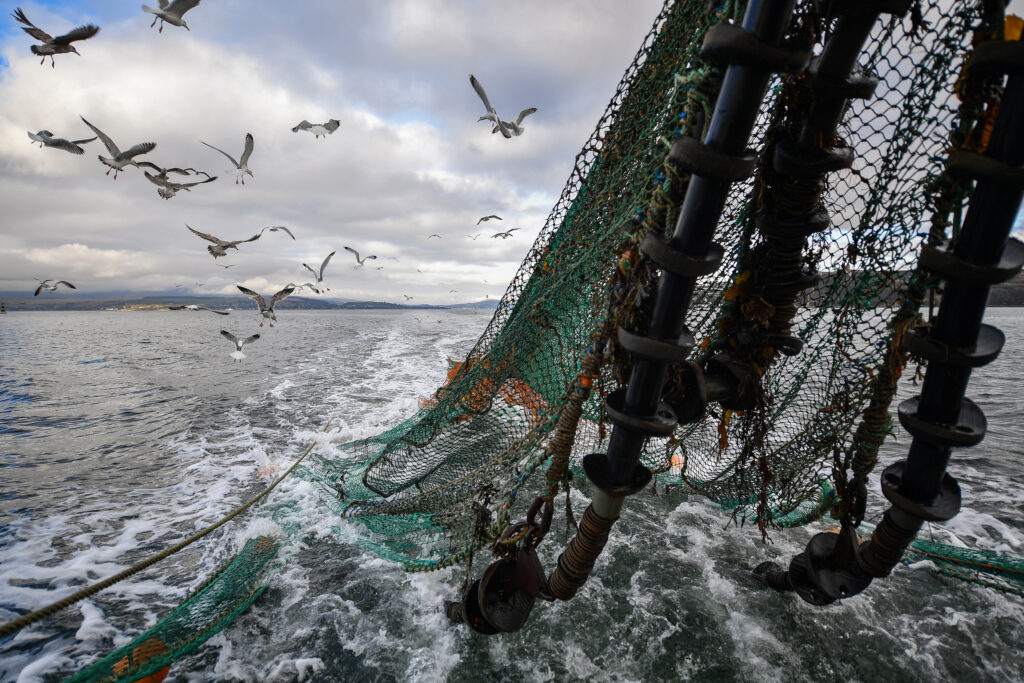
Earthjustice filed the suit on behalf of the Natural Resources Defense Council, the Animal Welfare Institute and the Center for Biological Diversity in the U.S. Court of International Trade, targeting imports from eight countries: Argentina, Ecuador, India, Norway, Taiwan, Tunisia, the United Kingdom and Vanuatu. The complaint alleges these nations' fisheries kill hundreds of thousands of marine mammals annually using gillnets, longlines and trawlers - gear that is about as selective as a tornado in a trailer park.
“The absolute biggest threat to marine mammals - whales, dolphins, porpoises - is bycatch,” said Sarah Uhlemann, a staff attorney with the Center for Biological Diversity. “It’s not intentional, but it still kills 650,000 marine mammals a year.” That's roughly one marine mammal every 48 seconds, for those keeping score at home.
The 1972 Marine Mammal Protection Act requires foreign fisheries to meet U.S. standards, including seasonal closures and robust population monitoring. “Congress realized it’s not just U.S. marine mammals that are threatened by fishing,” Uhlemann added. “But for the most part, the National Marine Fisheries Service just ignored the law.”
The Fisheries Service began banning imports from some countries only recently, but the lawsuit argues it failed to properly assess whether the eight targeted nations have adequate protections. The agency did not respond to a request for comment, presumably because it was busy not enforcing laws.
“We’re really trying to focus on countries that don’t know how many marine mammals are in their waters, or didn’t set limits or didn’t do monitoring,” Uhlemann noted. “These countries - they all lack at least one of those components.”
The U.S. imports billions of dollars of seafood from 140 nations, and about 80 percent of the seafood Americans eat is imported. This creates a delightful incentive: U.S. fishers must follow the law, while their foreign competitors can ignore it and still get paid. “It really makes you wonder, who are these agencies working for?” asked Zak Smith of the Natural Resources Defense Council.
Earlier this month, the Center for Biological Diversity also petitioned the government to potentially sanction China for failing to meet U.S. shark conservation standards. Shark populations have declined by more than 70 percent since 1970, with over a third of shark and ray species now threatened with extinction. Chinese-flagged vessels catch thousands of sharks, fin them, and toss them back to die. If the Fisheries Service identifies China as violating the Moratorium Protection Act, President Donald Trump could ban all $1.5 billion of Chinese seafood imports. That would be a lot of shark fin soup left unsipped.
The Good Times
News in your inbox.
One sardonic roundup, delivered on your schedule. Free. Unsubscribe whenever your tolerance for wit runs out.
Already subscribed but we never reach your inbox? Check your spam folder and hit 'Not spam' (or 'Remove from spam') to bust us out of junk-mail purgatory. You'll be helping everyone else too.
Don't open any of our emails for a month and you'll be automatically removed from the mailing list.
Rewrite Article
Select parts to regenerate with a fresh AI pass. Translations will be updated automatically.
Generate AI Image
Creates a sardonic version of the article image using OpenAI.