
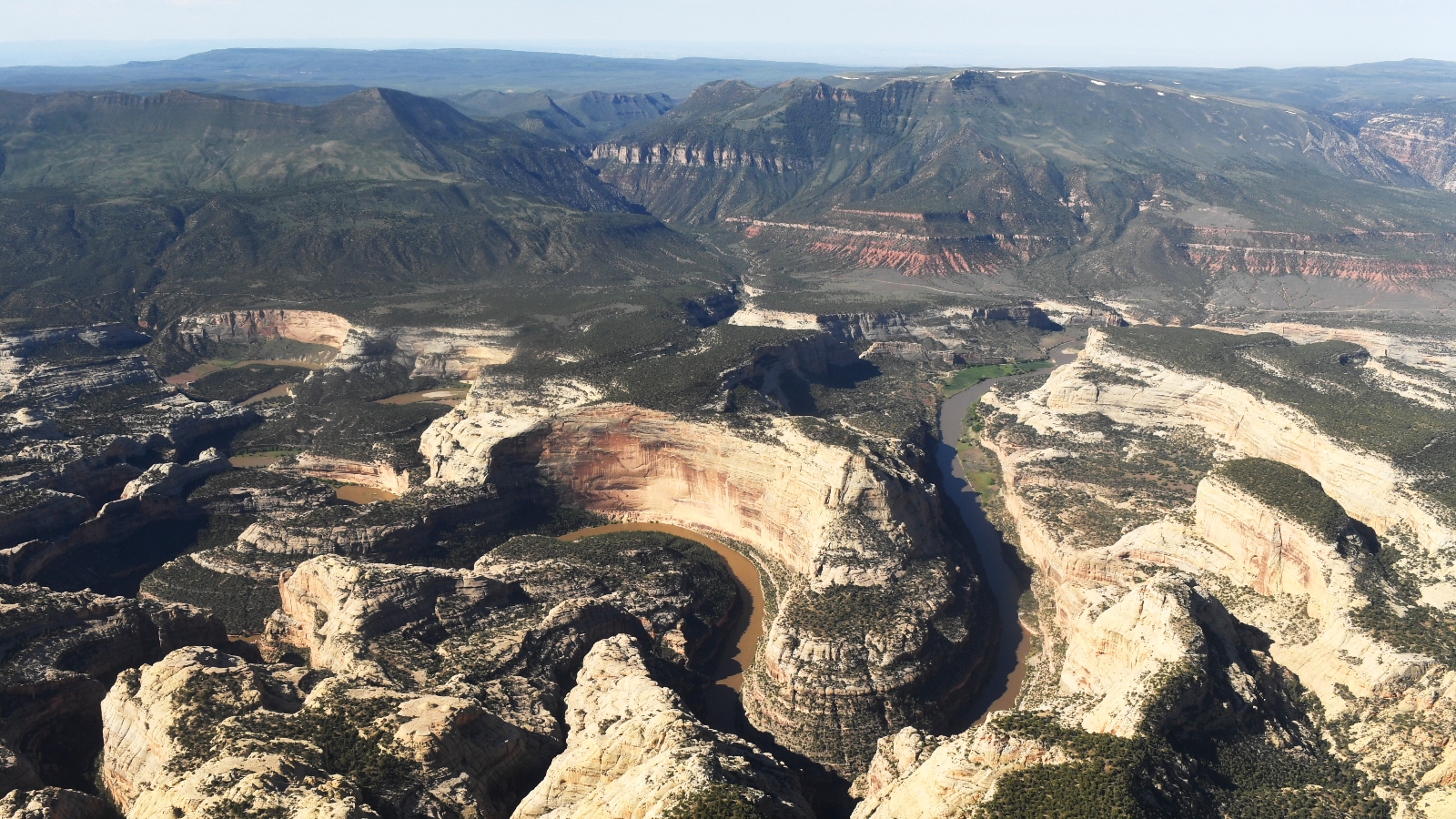
The Bureau of Land Management (BLM) is preparing to auction off tens of thousands of acres in northwestern Colorado to oil and gas companies, in what it’s calling the state’s biggest such sale in modern history - because nothing says “land management” like handing over prime real estate to fossil fuel extraction.
The June 16 lease sale includes over 100 parcels spanning 156,000 acres, much of it in Moffat County - which bills itself as the “Elk Hunting Capital of the World” - and relies on the pastime for economic stability. The area is also home to the nation’s largest elk herd, which uses the land for migration, foraging, and winter habitat. But hey, elk don’t pay royalties.
About two-thirds of the acreage sits just south of Dinosaur National Monument, a certified International Dark Sky Place - one of over 40 such areas in the U.S. with exceptionally starry nights. Tourism officials in Moffat County, who saw inquiries drop by more than half this spring, worry that bright lights and truck traffic from drilling could jeopardize that designation. “Things like that could put that status in jeopardy,” said Tom Kleinschnitz, the county’s director of tourism, with the careful optimism of someone who knows the BLM probably won’t listen.
The record sale contradicts the BLM’s own stated strategy for the monument, as well as 2024 amendments to area plans that strengthened habitat protections for ungulates like elk and deer, and at-risk birds such as the Gunnison sage-grouse. But consistency has never been the strong suit of federal land policy.
A 2,360-line spreadsheet compiled by Denver-based nonprofit Rocky Mountain Wild lists 17 rare plants and endangered species whose habitat could be imperiled by fossil fuel exploration - including the black-footed ferret, wolverine, boreal toad, Colorado pikeminnow, Colorado hookless cactus, and Parachute penstemon. Also at risk: the Columbian sharp-tailed grouse, greater sage-grouse, ferruginous hawk, and swift fox - all identified by state wildlife officers as species of special concern. So basically, a who’s who of creatures that would prefer not to live next to an oil rig.
The June event is one of four large lease sales in Colorado since Congress passed and President Donald Trump signed a bill in 2025 that included provisions to encourage drilling on public lands. This contrasts sharply with the pattern under President Joe Biden, who oversaw just six sales in Colorado during his four years - offering only a few hundred acres total. From hundreds to hundreds of thousands: that’s what we call progress, depending on your definition.
The 2025 H.R. 1 legislation prioritized fossil fuel extraction over recreation and conservation; mandated at least four lease sales per year in nine states; shortened public comment times; and reduced land managers’ discretion over whether to offer acreage. It also decreased royalty rates, making it cheaper to extract fossil fuels on public lands. Colorado alone could lose $148 million in revenue from about 81,000 acres sold in 2026, according to Taxpayers for Common Sense. Because nothing says “fiscal responsibility” like leaving money on the table.
Meanwhile, bipartisan polling from Colorado College’s State of the Rockies Project found that a majority of voters in eight Western states want their representatives to prioritize conservation over energy development on public lands. But who needs voter preferences when you have a mandate?
About 21 million acres of BLM land are already leased for oil and gas development, but only 12 million of those are actually producing - meaning millions of acres sit idle, unable to be used for anything else like recreation or conservation. “Folks need to understand the long-term impacts of a rush to lease so much public land,” said Peter Hart, legal director of the Wilderness Workshop. “Once those leases are issued they are very hard to get rid of - they stay on the land for a long time, even if they aren’t developed.”
The BLM, in response to a 106-page comment letter from the Wilderness Workshop and 17 other organizations, said it would conduct additional site-specific analysis if companies file for drilling permits. It also noted repeatedly in its 646-page report that “risks are reduced through the careful review of drilling and completion plans.” Federal officials removed four parcels and reduced a fifth from the initial sale, citing a recent Interior Board of Land Appeals decision - but numerous other parcels with similar characteristics remain.
Conservation groups say federal land managers have significantly less leeway at the permitting stage to modify operations or cancel leases. “During the first Trump administration, there was a sale that was initially proposed to be much larger than this and the state BLM was able to use its discretion to defer parcels that were inappropriate because of greater sage-grouse conflicts,” said Alison Gallensky, a conservation geographer at Rocky Mountain Wild. “Now, they are being forced to offer a much larger sale than that one turned out to be.”
Greater sage-grouse are very sensitive to oil and gas infrastructure - even if it’s moved farther away - and intuitively sense that a winged predator could land on such equipment. They won’t breed if they feel threatened. So the BLM’s plan to protect them relies on operators following through, which the federal government isn’t always staffed to monitor.
Acreage in the June sale also continues a trend from last year’s sales, which typically offered public lands in remote areas. Yet in September, the agency leased a parcel near the Aurora Reservoir - bordered by a densely populated Denver suburb - for about $5.6 million. The acreage is part of the Lowry Ranch Comprehensive Area Plan, a more than 150-well project strongly opposed by nearby residents. Many of the more than 340 comments the agency received for the June sale urged it not to lease similar parcels near the reservoir, citing worsening pollution in an area already out of compliance with federal air quality rules.
The BLM estimated that several parcels in Weld County could result in up to 150 wells, whose emissions would worsen smog in a region that already fails to meet national standards. “BLM’s implication that this lease sale ‘would result in no emission increase’ or that emissions are not reasonably foreseeable enough to perform a conformity determination are thus entirely baseless,” wrote numerous organizations in their March 13 comment letter. Federal officials responded that they’d conduct a “project-specific emissions inventory” if companies file for drilling permits - presumably after the damage is done.
In Moffat County, where 80 percent of voters cast ballots for Trump in 2024, community representatives note the need to balance pollution concerns with economic reality. “Many people in outfitting have agricultural businesses, and hunting is incredibly important to keeping people on those landscapes,” said Kleinschnitz. “And some of them make royalties from oil and gas and have benefited greatly from having those.” It’s a classic dilemma: do you protect the elk, or do you drill for the money that might help you afford groceries while watching the stars disappear?