Experimental Drug Decides to Fix Fatty Liver Disease by Befriending the Gut, Not Starving It
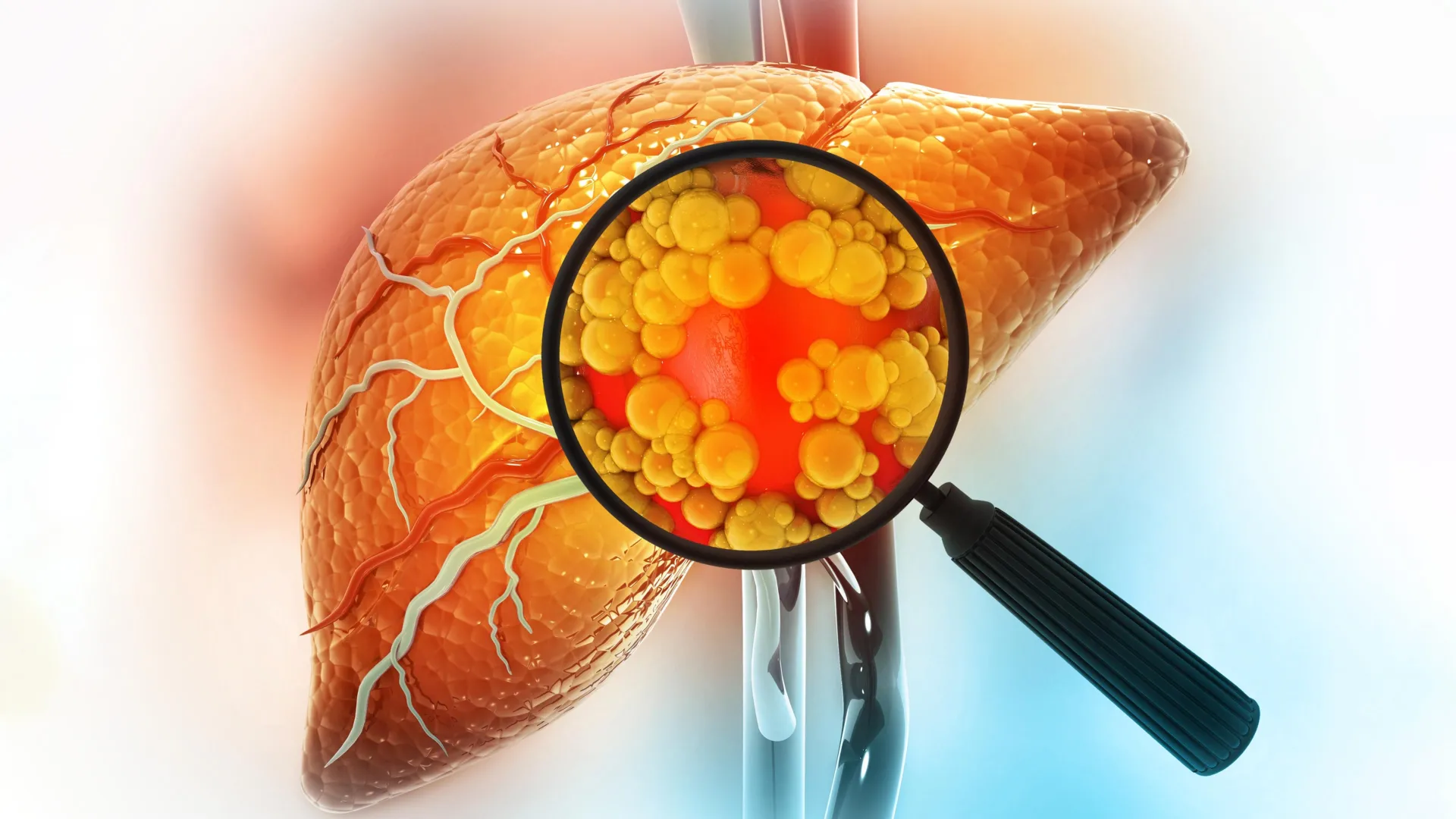
An experimental drug that repairs the gut lining shows promise in reversing severe fatty liver disease, offering a potential treatment for the 7% of people worldwide affected by MASH.
In a move that will surprise absolutely no one who has ever been told to 'trust your gut,' researchers at Michigan Medicine have developed an experimental drug that reverses severe fatty liver disease by repairing the gut. The findings, published in The Journal of Clinical Investigation, suggest that targeting the gut-liver axis could be a promising new approach for treating metabolic dysfunction-associated steatohepatitis (MASH).
MASH, a serious form of fatty liver disease affecting about 7% of people worldwide, can progress to cirrhosis, liver cancer, and liver failure. Current treatment options are limited, which is a polite way of saying 'not great.' Enter DT-109, a glycine-based tripeptide that sounds like a droid from Star Wars but acts like a bouncer for your intestines.
'We see clear evidence that DT-109 protects the gut epithelial barrier, reducing the systemic influx of harmful microbial products that are thought to contribute to MASH development and progression,' said Eugene Chen, M.D., Ph.D., senior author and Frederick G. L. Huetwell Professor of Cardiovascular Medicine at U-M Medical School. 'This compound shows benefits to the gastrointestinal system and has great potential as a treatment for MASH.'
The team identified a major culprit: an overgrowth of the bacterium Clostridium perfringens, which generates ammonia inside the gut. High ammonia levels damage the intestinal lining, allowing harmful microbial products to enter the bloodstream and trigger inflammatory immune responses. DT-109 disrupts this chain of events by reducing Clostridium perfringens levels and lowering ammonia production, strengthening the intestinal barrier.
In both mice and nonhuman primates, DT-109 reduced liver inflammation and significantly improved MASH severity. The results were especially encouraging in nonhuman primates, whose liver biology and gut microbiota more closely resemble those of humans - presumably because they also enjoy the occasional banana.
'DT-109 connects microbiota modulation with liver protection by restoring gut barrier integrity and limiting the systemic translocation of ammonia and other pro-inflammatory microbial products within the gut-liver axis,' said Jifeng Zhang, Ph.D., co-author and research professor. 'We also found that DT-109 primarily acts in the gastrointestinal tract, but its reach stretches much further.'
Previous studies have shown DT-109 can reduce atherosclerosis plaques and prevent vascular calcification in nonhuman primates, suggesting potential for cardiovascular disease treatment. Because breakdown of the intestinal barrier is also linked to digestive disorders, the team believes DT-109 could eventually be explored for inflammatory bowel disease (IBD).
Future research will focus on moving DT-109 into clinical trials. 'What patients with MASH need is a safe and effective therapy capable of improving their liver and heart health - of course we are excited about these developments,' said Elliot Tapper, M.D., Academic Director of Hepatology at Michigan Medicine.
The study involved additional authors from the University of Michigan and was supported by various institutional review boards. The University of Michigan has patented DT-109 and licensed it to Diapin Therapeutics, which supplied the compound for the study. Chen and the university hold an ownership interest in the company - because if you're going to cure fatty liver disease, you might as well get a piece of the pie.
The Good Times
News in your inbox.
One sardonic roundup, delivered on your schedule. Free. Unsubscribe whenever your tolerance for wit runs out.
Already subscribed but we never reach your inbox? Check your spam folder and hit 'Not spam' (or 'Remove from spam') to bust us out of junk-mail purgatory. You'll be helping everyone else too.
Don't open any of our emails for a month and you'll be automatically removed from the mailing list.
Rewrite Article
Select parts to regenerate with a fresh AI pass. Translations will be updated automatically.
Generate AI Image
Creates a sardonic version of the article image using OpenAI.