
Welcome to Edition 9.08 of the Rocket Report, where we bring you the latest in space news with a side of skepticism and a dash of wit. This week, Louisiana is poised to become the epicenter of SpaceX's Starship program, with the company planning to invest up to $100 billion in factories and launch pads along the coast. That's a lot of crawfish money. The move would utterly transform the region, which was previously known for NASA's aging Michoud Assembly Facility near New Orleans. Now, it's about to be the home of a self-sustaining spaceport with propellant production, power generation, deep-water shipping, and an airport - because why not add an airport to your rocket factory?
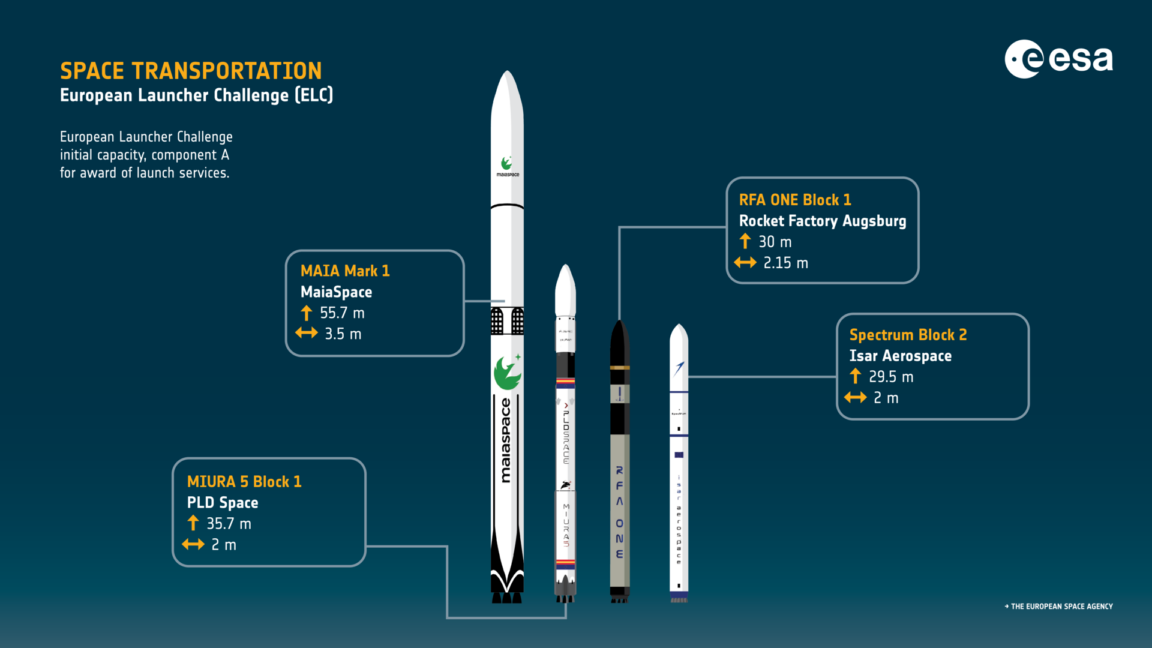
In Europe, the European Space Agency has decided to throw some cash at the launch startup problem, signing contracts with a handful of companies to help them develop their vehicles. The European Launcher Challenge is ESA's initiative to expand Europe's launch service supply and ensure more robustness in access to space. And the winners are: Rocket Factory Augsburg (Germany), which received €186.9 million for its RFA One rocket, with contributions from the UK; PLD Space (Spain), which got €158.9 million for the Miura 5, with Germany chipping in; and Isar Aerospace (Germany), which bagged €197.8 million for the Spectrum launcher, with Austria and Norway contributing. Another contract with MaiaSpace is nearly complete. Because nothing says 'robust access to space' like a bunch of startups competing for the same small slice of the market.
Meanwhile, in India, Jatan Mehta has written a six-part series on what he calls 'India's launch vehicle crisis.' Despite the recent success of Skyroot and its Vikram-1 rocket, Mehta argues that India's gap in orbital launch capacity will remain unresolved. Even if Skyroot's thousand-plus people secure a commendable place in the small-lift market, that doesn't solve India's space access crisis. The government needs to be proactive, addressing constraints in spaceports, suppliers, and especially medium- and heavy-lift rockets. Skyroot's success is only the least worst case scenario - not the peak of emotions, but the bare minimum to cater to a fraction of India's needs. So, India, you've got some work to do.
Over in Japan, a radar-imaging startup named Sarmony has signed a deal to launch its first demonstration satellite on Space One's Kairos rocket in 2028. Bold move, considering Kairos has launched three times and failed to reach orbit every time. The most recent launch in March ended with the vehicle breaking apart a minute after liftoff. But hey, third time's the charm? Fourth time? Space One says it's still investigating the failure and will release details soon. No schedule for the next launch yet. We'll hold our breath.
Florida is saying goodbye to Falcon 9 Starlink launches. A Falcon 9 launch early Tuesday was the last planned Starlink mission from Cape Canaveral until Starship takes over. Kiko Dontchev, SpaceX's VP of launch, said, 'From here on, Starlink missions out of Florida will fly on Starship.' The West Coast team will continue launching Starlink from Vandenberg. SpaceX launched around 260 Starlink missions on Falcon 9 from Florida, but future Florida Falcon 9 and Falcon Heavy launches will carry external customers. The next one is a Falcon Heavy with NASA's Nancy Grace Roman Space Telescope on August 30. Officials plan to phase out Falcon 9 for commercial missions, raising concerns about reliable launch services after 2028. But hey, who needs reliability when you have ambition?
Chinese firm Galactic Energy is ready for the first orbital launch attempt of its Pallas-1 liquid propellant rocket. Airspace warnings suggest a launch window between 9:52 pm ET on August 31 and 12:09 am ET on September 1. The rocket is designed for reusability, but no recovery attempt for the first stage is expected on this flight. No payloads announced yet. Pallas-1 is a two-stage liquid vehicle with an optional Eros upper stage, a 3.35-meter diameter body, a 4.2-meter fairing, a liftoff mass of 283 tons, and 350 tons of thrust. Max payload capacity is 7,000 kg to LEO. Solidly a medium-lift vehicle, but let's see if it gets off the ground.
President Trump has signed a new national space transportation policy calling for more spaceports to support over 1,000 launches and reentries per year by 2030. The policy directs the Pentagon and NASA to prioritize infrastructure investments, publish range schedules, and identify potential locations for additional launch facilities. It also calls for integrating space launch operations into airspace and designating 'priority airspace for critical space launch corridors.' Because nothing says 'efficient' like more bureaucracy.
Ariane 6 is set for its first geostationary launch on Thursday, carrying the MTG-I2 meteorological satellite from French Guiana. This will be the fourth Ariane 6 launch of the year and the ninth overall. The rocket continues to perform well, but questions about its long-term viability remain. Will it survive the competition? Only time will tell.
And finally, the big news: SpaceX plans to build a massive Starship launch site in Louisiana, with a $100 billion commitment. Governor Jeff Landry announced the deal, and Gwynne Shotwell said the 'Starbase Louisiana' facility will be self-sustaining, with propellant production, power generation, deep-water shipping, vehicle processing, and an airport. The Texas site is only 350 acres, but Louisiana offers about 125,000 acres at Pecan Island. Construction begins in 2027, with the first launch targeted for 2029. Eventually, there could be a dozen Starship launch towers. Because one wasn't enough.
In other news, China has delayed its Chang'e 7 lunar mission, citing the need for prudence and absolute success. The mission, which includes an orbiter, lander, rover, and mini-hopper, was due to launch as early as Sunday on a Long March 5. It's headed for the Moon's south pole. Social media chatter suggests the next launch window might not open until February or March, likely due to sunlight conditions and the 90-day lunar orbit reconnaissance required before landing. Better safe than sorry, right?
NASA's Nancy Grace Roman Space Telescope arrived at Kennedy Space Center on Tuesday, just days before its scheduled Falcon Heavy launch on August 30 at 7:26 am ET. The Launch Readiness Review is set for Friday. Roman, launching nine months ahead of schedule, will have a wide field of view and will head to the second Sun-Earth Lagrange point (L2) to capture vast swaths of sky. It's expected to transform our understanding of the Universe. No pressure.
Upcoming launches: August 27: Ariane 6 with MTG-I2 from Guiana Space Centre. August 30: Falcon Heavy with Roman from Kennedy Space Center. August 31: Electron with 'Own Around the World' from New Zealand. Stay tuned for more rocket adventures.