Ecuador's War on Drugs: Police Fight Gangs, Guns, and the Bad Apples on Their Own Side
An Ecuadorian police captain battles drug gangs, corruption, and a justice system that lets suspects walk - while a gang leader brags about buying cops and killing eight people.
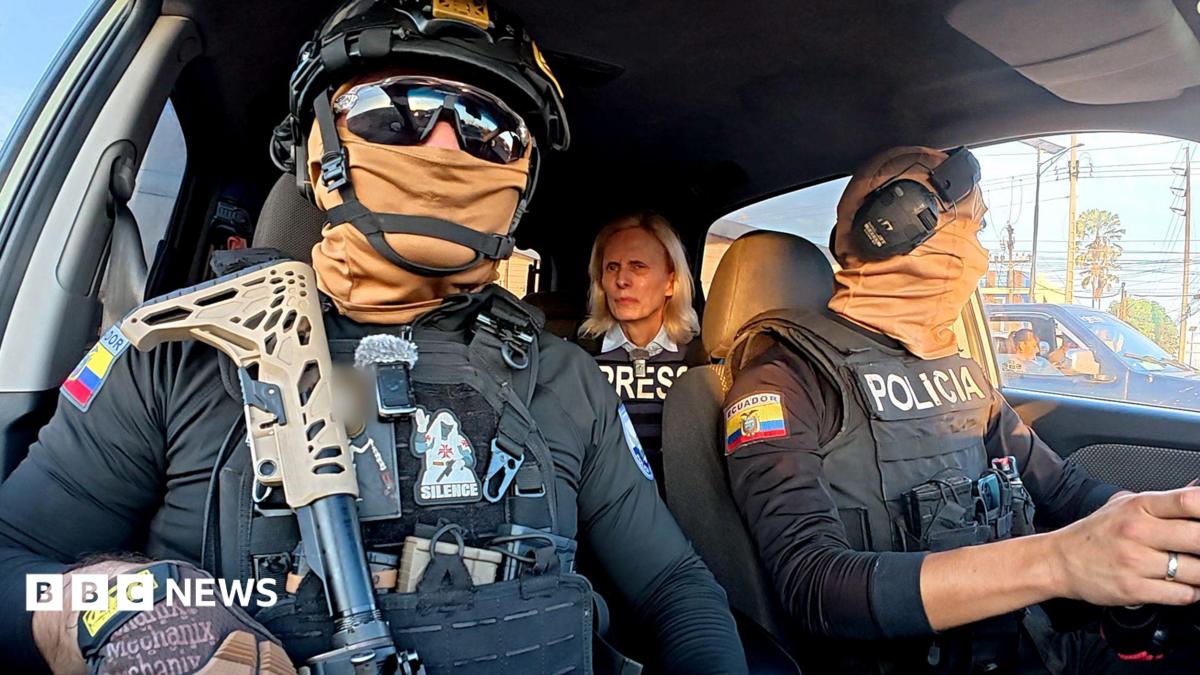
In the Ecuadoran city of Durán, Police Captain Jean Carlos Bustamante knows the enemy: drug gangs who dismember rivals, and also the corrupt cops, politicians, and judges in their pockets. “We have many, many bad people inside our unit, inside the state, inside politics,” he says. The only officers he trusts are his hand-picked team. At 34, he's the oldest and moves like the special forces veteran he once was.
At sunset, he leads his team into a neighbourhood where windows are barred and lips are sealed by fear - gangland controlled by Los Aguilas (The Eagles). If locals speak out? “They kill them,” the captain replies. They batter down an abandoned house and find two handguns and ammo for an assault rifle. A small victory: “two guns less for the gangs.” But he admits the gangs have “many weapons and much more money than the state.” He's lost three close friends fighting them. His parents still worry: “My Mum says ‘be careful, maybe you can die there.’”
Around 70% of the cocaine reaching Europe and the US flows through Ecuador, per President Daniel Noboa. The drug comes from Colombia and Peru, and local gangs with links to Mexican cartels and Albanian mafia smuggle it onward. What was a peaceful tourist haven has become a killing ground: last year, more than 9,200 people were murdered - one of the highest rates worldwide. President Noboa's iron-fisted crackdown has backfired, critics say: top bosses arrested, gangs fractured but multiplied.
Captain Bustamante uses a drone to spot “micro-traffickers” selling $1 packets of “H” (a heroin mix). They raid a house, find a suspect hiding behind a window, and seize tiny paper packets from a flowerpot. One suspect is charged; prosecutors release the other two. “We imprison them and they release them,” says Colonel Santiago Gavilanes, deputy police commander. The gangs have money to “buy laws, judges, and politicians.” One officer (anonymous for safety) was offered a massive bribe via text - enough to retire on - but turned it down. Someone, perhaps a colleague, tipped off the gang about his job and location.
Despite the odds, Bustamante insists: “I believe we can win this war.” Murders in Durán are down by half in the first six months of this year, streets no longer deserted after 7 p.m., and bodies no longer found beheaded or dismembered. Colonel Gavilanes: “Getting complete control is going to be a medium-term process.”
Elsewhere, criminals contain the police. A gang leader we call Jonathan told us he pays four officers $1,500 - $2,000 a month for early warnings of raids. At 37, he joined a gang at 18 to feed his family. He strolled through the streets with a semi-automatic rifle and pistol; his youngest member, 17, wore flip-flops and a bulletproof vest. Asked how many lives he's taken: “About eight, I think. I don't remember well.” He expects to die by the gun: “Death is paid by death.”
Two nights later, we saw how gangs settle scores: a man shot six times beside a motorbike. Another corpse already in the refrigerated van. A witness, anonymous, said: “We are used to this now because it happens every day… Criminals are like ghosts. They pop up wherever they please.” Then he melted into the warm night.
The Good Times
News in your inbox.
One sardonic roundup, delivered on your schedule. Free. Unsubscribe whenever your tolerance for wit runs out.
Already subscribed but we never reach your inbox? Check your spam folder and hit 'Not spam' (or 'Remove from spam') to bust us out of junk-mail purgatory. You'll be helping everyone else too.
Don't open any of our emails for a month and you'll be automatically removed from the mailing list.
Rewrite Article
Select parts to regenerate with a fresh AI pass. Translations will be updated automatically.
Generate AI Image
Creates a sardonic version of the article image using OpenAI.