As Uganda battles an Ebola outbreak that’s also keeping the Democratic Republic of the Congo (DRC) on its toes, health workers are discovering that fighting a deadly virus is only half the battle. The other half? Convincing terrified communities not to treat survivors like they’re radioactive.
According to the latest figures, more than 1,400 confirmed cases of Ebola Bundibugyo virus disease - including 350 deaths - have been reported across both countries. Over 90 per cent of infections are concentrated in Ituri province in DRC, a major cross-border trading hub with Uganda that has also been ravaged by years of armed conflict. Because nothing says “ripe for disease spread” like a war zone.
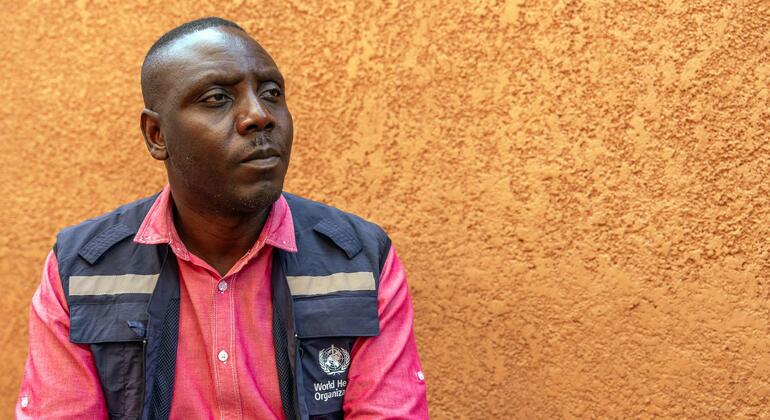
Enter Dr Chris Opesen, an anthropologist with the World Health Organization (WHO), who gets a call at 5:30am on a Sunday. A woman suspected of having Ebola is preparing to return home, and he’s been asked to ensure her reintegration doesn’t turn into a community-wide panic. Lilian* had presented with Ebola-like symptoms three days earlier and was whisked off to the isolation unit at Mulago Hospital. The transfer was planned, but that didn’t stop her family and neighbours from working themselves into a frenzy of anxiety.
Dr Opesen, who describes himself as “the midfielder of the outbreak response,” has been in constant contact with Lilian and her family for the past 36 hours. He convenes a community meeting with her family and friends to address concerns. What starts as a tense emotional exchange gradually shifts when Dr Opesen suggests a more structured dialogue. The group elects a chairperson (a neighbour) and a secretary (Lilian’s sister, Angela*). “We appreciate you, because without you there would still be fear,” Angela says afterwards. High praise for a guy just doing his job.
Later, Dr Opesen and his colleague Henry Bwire, a surveillance focal point with the Kampala Capital City Authority, accompany a neighbour to a local shop. Lilian had asked them to speak to the shopkeeper, who had allegedly stigmatised her mother the previous day. “Ebola is a disease that everyone fears,” Mr Bwire explains. “Stigma can come through miscommunication and fear, both of which were present in this case.” After the discussion, the shopkeeper thanks the team and promises to treat Lilian with respect. Wonders never cease.
All that’s left is the lab result. The team waits on neutral ground, positioning themselves between the hospital and Lilian’s neighbourhood, staying in contact with the lab and family throughout the afternoon. At around 6:30pm, the call comes: negative for Ebola. Lilian had a bacterial infection - treatable, not terrifying. Dr Opesen arrives at her house with a cake and bottles of water. When Lilian arrives, she looks tired but relieved. She shares her story, cuts the cake, and serves slices to everyone. “For me reintegration is supposed to be a celebration,” says Dr Opesen. “I wanted to do something special for Lilian, and for her to serve people the slices and for them to eat what she has given them, to demonstrate her acceptance back into the community.”
By 9pm, after a 15-hour day, Dr Opesen heads home. “My role in the response gives me satisfaction,” he says. “If I do my job well, I can make a difference and support WHO’s leadership on the frontline of a safe and dignified response.” And if he gets a slice of cake out of it, even better.
*Names have been changed to protect patient privacy.
The Good Times
News in your inbox.
One sardonic roundup, delivered on your schedule. Free. Unsubscribe whenever your tolerance for wit runs out.
Already subscribed but we never reach your inbox? Check your spam folder and hit 'Not spam' (or 'Remove from spam') to bust us out of junk-mail purgatory. You'll be helping everyone else too.
Don't open any of our emails for a month and you'll be automatically removed from the mailing list.
Rewrite Article
Select parts to regenerate with a fresh AI pass. Translations will be updated automatically.
Generate AI Image
Creates a sardonic version of the article image using OpenAI.