
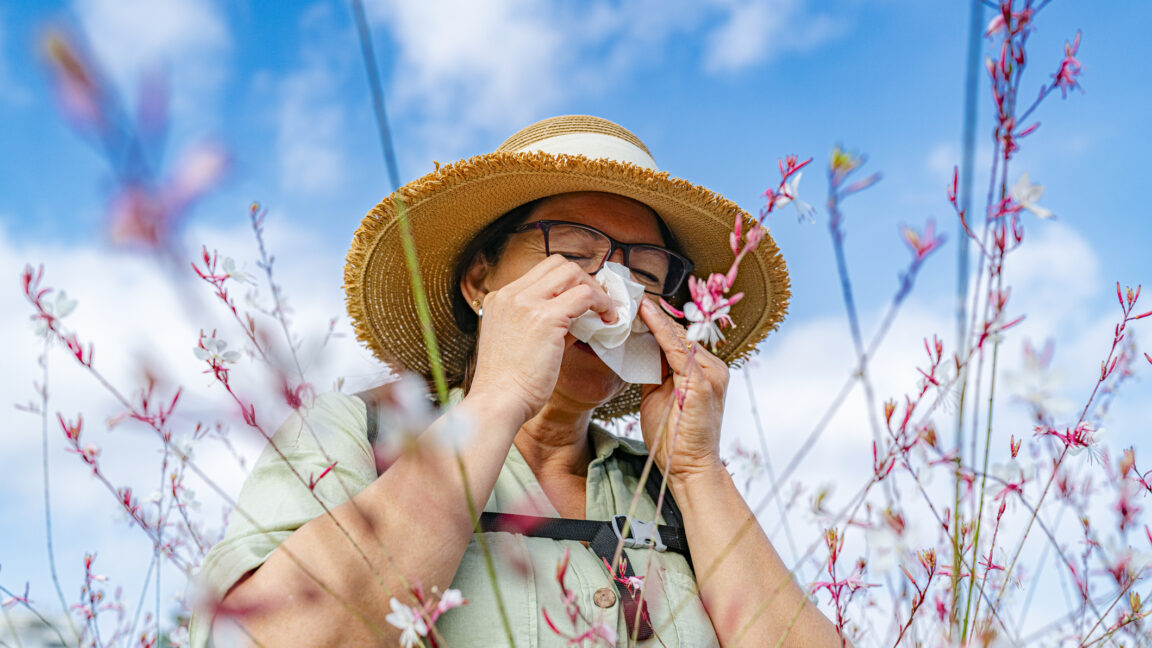
Climate change is making pollen seasons longer and more severe across the Northern Hemisphere, which is great news if you’re a tree, but less so if you’re a human who enjoys breathing through your nose. Dr. Neelima Tummala, an ear, nose, and throat doctor at NYU Langone Health, says her patients tell her every year that their allergies are the worst they’ve ever been - and they might actually be right.
About a quarter of US adults and 1 in 5 children have seasonal allergies. For those millions of Americans, spring weather brings sniffles, itchy eyes, asthma exacerbation, and other miseries, ranging from mild annoyance to serious medical emergencies. Now, rising temperatures and carbon dioxide pollution are making things worse, with climate-change-driven heat waves, air pollution, and natural disasters piling on.
Though experts say it’s too early to fully assess the 2026 pollen season, the trend over recent decades is clear, and evidence so far points to another tough year for the allergy-prone. According to the USA National Phenology Network, spring bloom arrived early across much of the country. AccuWeather meteorologists say this fits the pattern of an extending allergy season due to climate change.
They predict high tree pollen levels in the Ohio River Valley and parts of the Pacific Northwest this spring, with the Northern Plains and Great Lakes possibly seeing early grass pollen spikes in June and July thanks to high rainfall and warmer weather. The Rockies can expect an intense weed pollen season, while New England and parts of the Gulf South might get a break with lower-than-usual tree pollen due to a cooler, drier spring.
As global warming shortens winters and accelerates thaws, trees start flowering - and producing pollen - earlier. A 2021 study found human-caused climate change is worsening North American pollen seasons. Climate Central found that between 1970 and 2025, the “freeze-free growing season” lengthened in 198 US cities, averaging an extra 21 days, with the Northwest and Southwest seeing the biggest jumps.
High carbon dioxide levels directly boost pollen production, potentially increasing it by up to 200 percent by century’s end, according to a 2022 study in Nature Communications. Pollen counts are rising globally, but the trend is best documented in North America and northern Europe, says Moshe Ben-Shoshan, a pediatric allergist at Montreal Children’s Hospital. Some of his patients now experience stronger symptoms that antihistamines and nasal sprays can’t tame like before. “It’s the same symptoms, just more intense,” he said.
Delayed winter frosts also let summer ragweed flower longer, extending pollen season into fall, notes David Wees, a horticulture lecturer at McGill University in Montreal. Wees, who suffers from seasonal allergies himself, has noticed them starting earlier and lasting longer. “There’s a couple birch trees outside my office,” he said. “I know it because my nose feels stuffy and my eyes feel itchy.”
Pollen isn’t the only allergen getting a climate boost. Increased humidity, heat, and flooding create ideal conditions for mold to flourish in places where it was previously rare, causing mold allergies to flare up - especially after hurricanes or for people in older buildings or poorly ventilated homes, Tummala said.
For many, seasonal allergies are mainly a nuisance: itchy eyes, runny noses, and a seemingly endless cold. But they also mess with sleep, increase sinus infection risk, cause missed school and work, and can be dangerous. A 2024 Texas study found that allergies account for a significant portion of emergency department visits for asthma attacks during high pollen periods. People with allergies are also sensitive to heat waves and air pollution, Tummala added.
During heavy wildfire smoke from Canada last summer, Tummala saw patients hit by multiple respiratory stressors. One patient told her they were afraid to go outside. “That’s just really sad,” she said. “That’s not how you should live your life.”
Drought adds another layer: rain normally washes pollen out of the air, but without it, the fine powder can blow around for weeks without relief, Wees said. For Tummala, the link between seasonal allergies and climate hazards underscores the need to act on global warming. “It’s a modifiable risk factor,” she said. “Climate change is something we can do something about.”
This article originally appeared on Inside Climate News.