Blue Origin’s New Glenn Goes Out With a Bang, Literally, in Spectacular Florida Fireball
Blue Origin’s New Glenn rocket decides to become a spectacular fireball during a static fire test, destroying the launch pad and potentially delaying NASA’s lunar plans - but at least the Amazon satellites were safe.
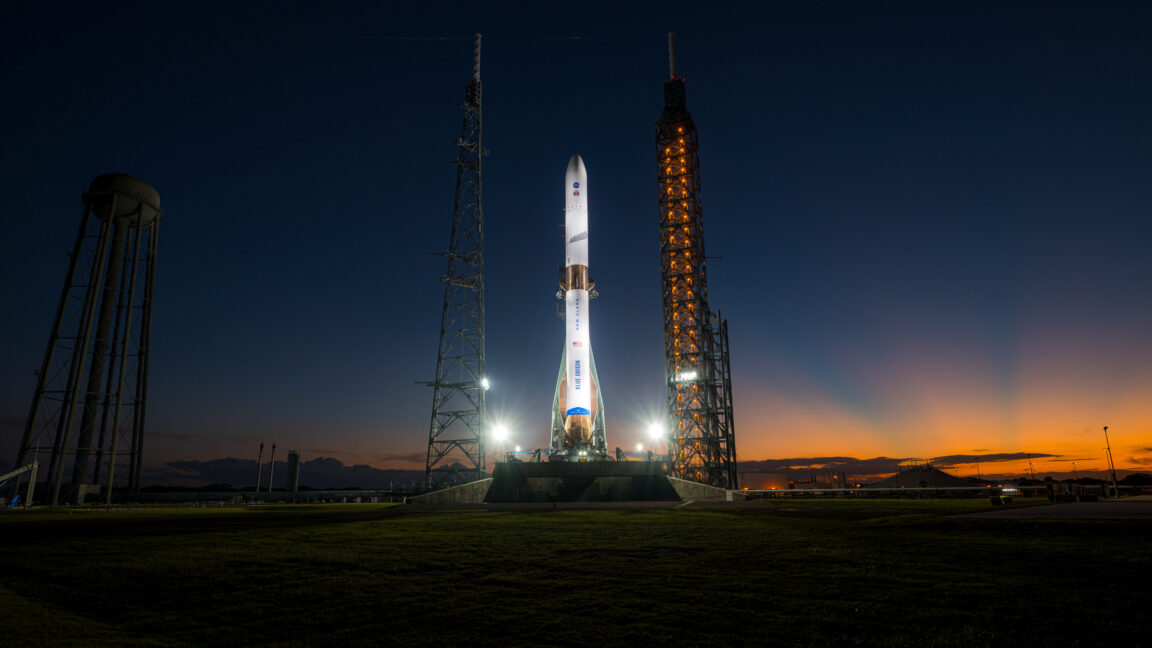
On Thursday evening, Blue Origin decided to test fire its massive New Glenn rocket at its Florida launch site. The rocket, in turn, decided to become a massive fireball. The static fire test went about as well as you’d expect when you ignite seven BE-4 engines and something goes very, very wrong.
The explosion was captured in all its glory by NASASpaceflight.com’s Space Coast Live feed, showing the first stage, fueled with methane, producing a fireball that would make a Michael Bay movie jealous. It’s possibly the most dramatic rocket explosion since the Soviet Union’s N1 rocket decided to imitate a fireworks display in 1969. No word yet on whether anyone yelled “KABOOM” at the scene.
“It’s too early to know the root cause but we’re already working to find it,” Blue Origin founder Jeff Bezos said on X, in what might be the understatement of the year. “Very rough day, but we’ll rebuild whatever needs rebuilding and get back to flying. It’s worth it.” No one was injured, which is the good news. The bad news: the launch site at LC-36A sustained extensive damage, and early reports suggest one lightning tower and the transporter-erector may be beyond repair. The last time a pad failure this serious happened was SpaceX’s 2016 Falcon 9 incident, which took over a year to fix.
This is the worst disaster in Blue Origin’s 26-year history. The company had launched New Glenn three times successfully, even landing and reusing a first stage in April. That third flight had an upper stage issue that caused a mission failure, but Blue Origin bounced back in less than two months. The first stage for this attempt, nicknamed “No, It’s Necessary,” was making its debut. Now it’s making its debut as a pile of scrap.
Prior to this, Blue Origin had two first stages and about six New Glenn upper stages completed, and was aiming for a monthly launch cadence. The rocket was seen as a major success, catapulting the company to the upper echelon of spaceflight. That they were on the verge of accelerating makes this setback all the more painful - like tripping right before the finish line of a marathon you were winning.
The failure also has major implications for NASA’s lunar ambitions. On Tuesday, NASA announced it had selected New Glenn to deliver the first two rovers (built by Lunar Outpost and Astrolab) to the Moon in 2028. Blue Origin’s Blue Moon Mark 1 lander was due to launch this fall, and VIPER was scheduled for next year. Then there’s the Blue Moon Mark 2, which NASA needs alongside SpaceX’s Starship to carry humans to the Moon regularly. Now those plans are in jeopardy, like a Jenga tower after someone sneezes.
Early reports suggest LC-36A is severely damaged, and completing a second launch site (LC-36B) might be faster than rebuilding. New Glenn almost certainly won’t launch again in 2026, and a first-half 2027 launch would be heroic. Blue Origin has been working on a larger 9×4 rocket variant, which might now become the company’s focus. Bezos, who has poured tens of billions into the company, has the financial wherewithal to sustain this failure. And NASA will be very keen to see Blue Origin get back on its feet - preferably before the Moon gets lonely.
One small silver lining: the rocket didn’t carry its payload of Amazon Leo internet satellites. They were safe in a nearby integration facility, presumably watching the explosion on YouTube like the rest of us.
The Good Times
News in your inbox.
One sardonic roundup, delivered on your schedule. Free. Unsubscribe whenever your tolerance for wit runs out.
Already subscribed but we never reach your inbox? Check your spam folder and hit 'Not spam' (or 'Remove from spam') to bust us out of junk-mail purgatory. You'll be helping everyone else too.
Don't open any of our emails for a month and you'll be automatically removed from the mailing list.
Rewrite Article
Select parts to regenerate with a fresh AI pass. Translations will be updated automatically.
Generate AI Image
Creates a sardonic version of the article image using OpenAI.