Beekeeper Discovers Pesticides Are Bad for Bees, Shocked to Learn They’re Also Bad for Humans
A beekeeper loses 85 percent of his hives to a pesticide that's now in everyone's bodies, prompting a fight against regulatory loopholes that treat neurotoxins like harmless lumber.
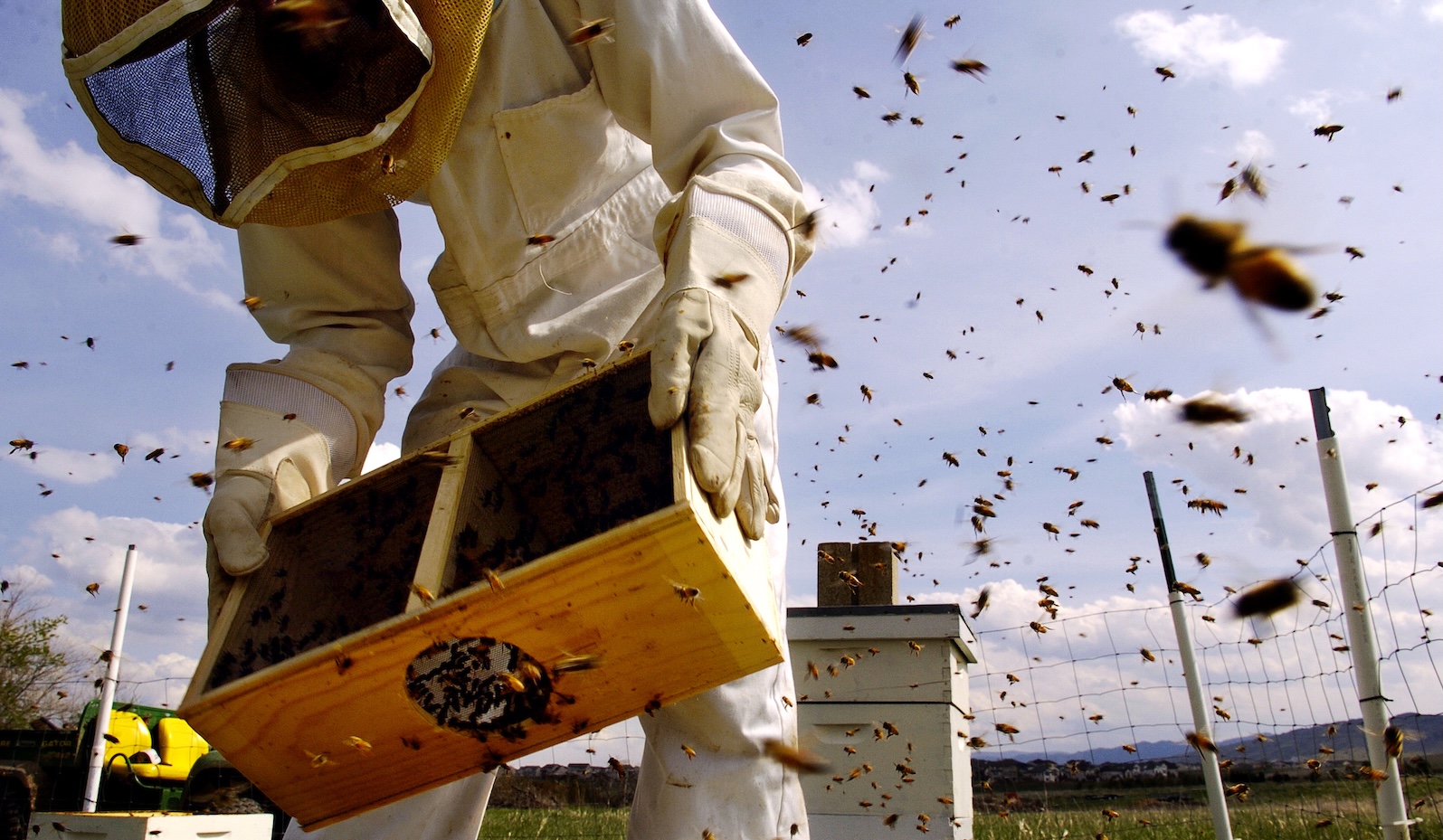
Cory Kreft started working on a honey farm at 15 and eventually bought the business. Then in 2021, his bees started dying en masse - 85 percent of his hives lost that year, and the carnage continued. The culprit? Neonicotinoids, a class of pesticides that have become as ubiquitous as bad opinions on social media.
Neonics, as they’re called by people who enjoy syllables, coat crop seeds before planting. Thanks to a nifty federal loophole called the “treated article exemption,” companies can douse seeds in these neurotoxins without registering them as pesticides. This means treated seeds enjoy the same regulatory status as antimicrobial toothbrushes or pressure-treated lumber. As Kreft put it: “Anyone can legally go buy this pesticide-treated seed, dump it in a river, and then contaminate the entire water system.”
Introduced in the 1990s as a safer alternative to older pesticides, neonics attack insects’ nervous systems. They’re systemic, meaning they spread through the entire plant - pollen, nectar, fruits, vegetables, and eventually, you. Manufacturers promised they’d stay put and harm no one. Spoiler: They lied.
Research now shows neonics persist in the environment, travel via wind and water, and contaminate ecosystems far from their point of application. They’ve been linked to neurological and reproductive harm in humans. A recent study found over 95 percent of pregnant women had neonics in their bodies. They’re in breast milk, tap water, and baby food. “It’s everywhere now,” said Jennifer Sass of the Natural Resources Defense Council.
Meanwhile, treated seeds don’t even help farmers. Studies show little to no impact on crop yield, so farmers are paying extra for the privilege of poisoning their own land. But good luck finding untreated seed - it’s become nearly impossible to source.
In Nebraska, entomologist Judy Wu-Smart watched her research hives die year after year - 100 percent mortality from 2017 to 2020. The cause? An ethanol plant called AltEn processing North America’s surplus neonic-treated corn seed. The facility sold ground-up pesticide residue as soil conditioner, spreading contamination to nearby farms. AltEn closed in 2021, but now no one knows where the excess seed goes. “It’s a big black box,” Wu-Smart said.
Advocacy groups have turned to state legislation. Colorado’s SEED Act, which would have expanded access to untreated seed, was defeated. But similar laws passed in New York and Vermont, and proposals are emerging in Minnesota, Massachusetts, and Hawaii. Quebec adopted a need-based model in 2019, slashing neonic use from near universal to near zero in just a few years.
Back in Colorado, Kreft is considering quitting beekeeping. “If I can’t keep my bees alive because this pesticide is everywhere, why would I keep doing this?” he asked. It’s a fair question - one that regulators, lawmakers, and the pesticide industry have yet to answer.
The Good Times
News in your inbox.
One sardonic roundup, delivered on your schedule. Free. Unsubscribe whenever your tolerance for wit runs out.
Already subscribed but we never reach your inbox? Check your spam folder and hit 'Not spam' (or 'Remove from spam') to bust us out of junk-mail purgatory. You'll be helping everyone else too.
Don't open any of our emails for a month and you'll be automatically removed from the mailing list.
Rewrite Article
Select parts to regenerate with a fresh AI pass. Translations will be updated automatically.
Generate AI Image
Creates a sardonic version of the article image using OpenAI.