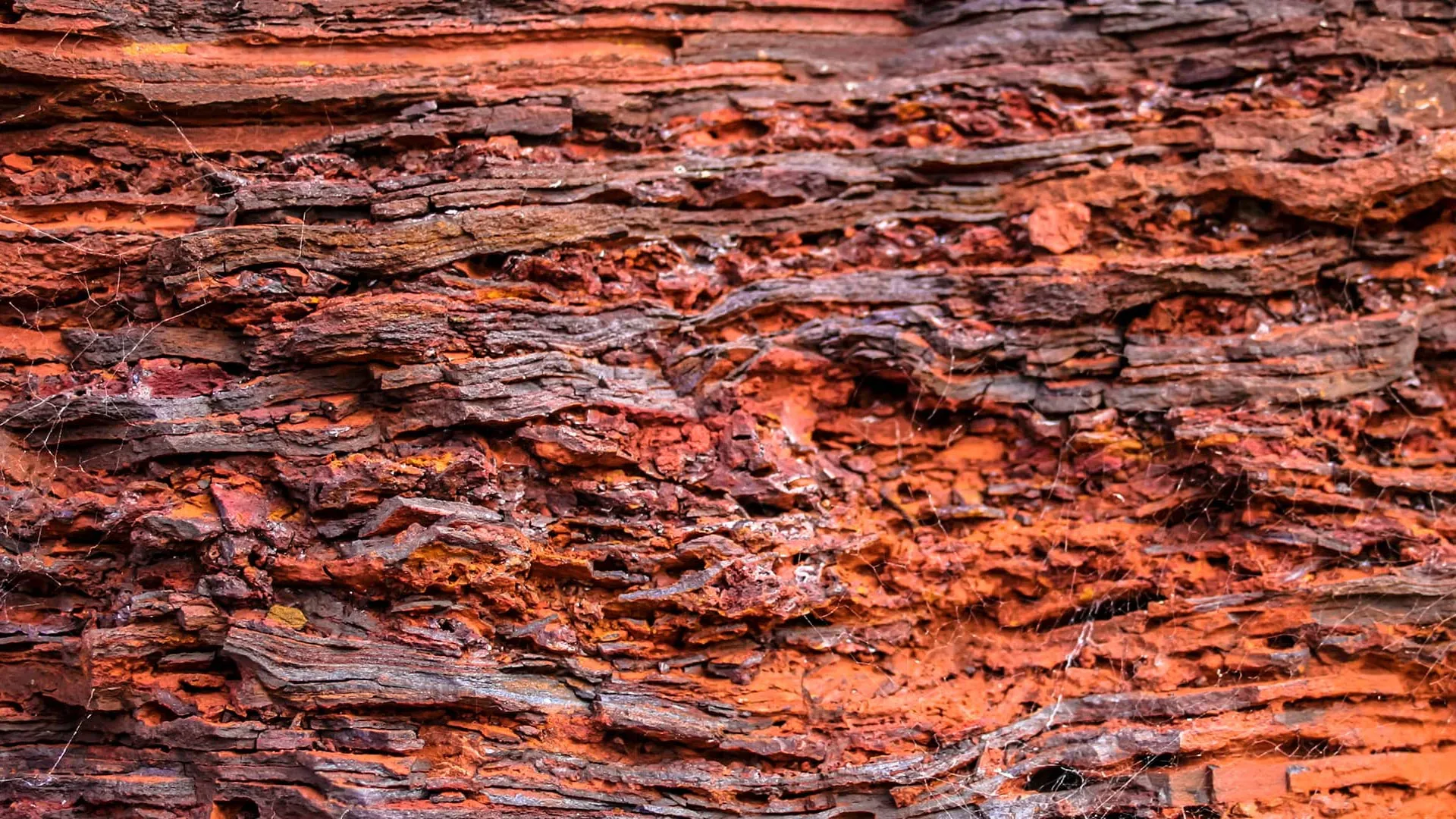
Australia's Red Dirt Might Be Sitting on a Hydrogen Goldmine (Literally, Sort Of)
Scientists discover that Western Australia's iron-rich rocks can naturally produce hydrogen, potentially turning the country into a clean energy superpower - if only the rocks cooperate.
Researchers at Edith Cowan University (ECU) have discovered that Western Australia's vast iron-rich formations might be capable of generating naturally occurring hydrogen, potentially unlocking a massive, low-emission energy source. Because why not add 'underground hydrogen factory' to the list of things Australia is inexplicably good at?
The study, published in the International Journal of Hydrogen Energy, focuses on magnetite, a mineral abundant in the Pilbara region's iron ore deposits. The team found that when magnetite reacts with hot water under conditions mimicking deep underground, it releases hydrogen gas. They even figured out how to speed things up by injecting a solution into banded iron formations, suggesting we might one day deliberately enhance natural hydrogen production. Because apparently, nature wasn't doing it fast enough.
"Australia could be sitting on a massive, untapped energy reserve -- and the potential is enormous," said Associate Professor Alireza Keshavarz, with the kind of enthusiasm that suggests he's already planning his hydrogen-powered yacht. "There is enough hydrogen for Australia to benefit for generations, and potentially enough for us to become a major exporter of clean energy to the rest of the world."
To test their theory, the researchers placed magnetite samples in water at 200°C under high pressure for 60 days, simulating the hot, pressurized environment deep underground. Because nothing says 'science' like cooking rocks for two months. The experiments revealed how natural hydrogen forms within rock and what conditions are needed for sustained production.
The findings are particularly significant for Western Australia, which boasts some of the largest banded iron formations on Earth. "If we can unlock this resource at scale, it could be transformative for our energy future," said lead author Kaveh Moghanirahimi, who clearly has a bright future in motivational speaking. "We even see the potential for Western Australia to strengthen its energy independence during times of crisis through access to this naturally generated hydrogen."
Professor Stefan Iglauer, also from ECU's School of Engineering, noted that the work helps bridge the gap between laboratory experiments and real geological systems. Because, as we all know, the gap between a lab bench and an actual rock formation is basically the same as the gap between a toy car and a Tesla.
The study also found that hydrogen production isn't just about how much magnetite is present - it's also about rock structure. Specifically, whether water can move through fractures, pores, and permeable pathways to reach fresh mineral surfaces. So, it turns out that geology is complicated, and you can't just throw magnetite in a pot and hope for the best.
So, while Australia's red dirt might not be the first thing you'd think of as a clean energy source, it's apparently full of surprises. Who knew? Well, the researchers at ECU, for one.
The Good Times
News in your inbox.
One sardonic roundup, delivered on your schedule. Free. Unsubscribe whenever your tolerance for wit runs out.
Already subscribed but we never reach your inbox? Check your spam folder and hit 'Not spam' (or 'Remove from spam') to bust us out of junk-mail purgatory. You'll be helping everyone else too.
Don't open any of our emails for a month and you'll be automatically removed from the mailing list.
Rewrite Article
Select parts to regenerate with a fresh AI pass. Translations will be updated automatically.
Generate AI Image
Creates a sardonic version of the article image using OpenAI.