Australia's Fire-Fighting Recipe: Satellites, Drones, and 60,000-Year-Old Wisdom
Australia fights fires with a cocktail of satellites, drones, and 60,000-year-old Indigenous know-how - proving that ancient wisdom and modern tech make a surprisingly good team.
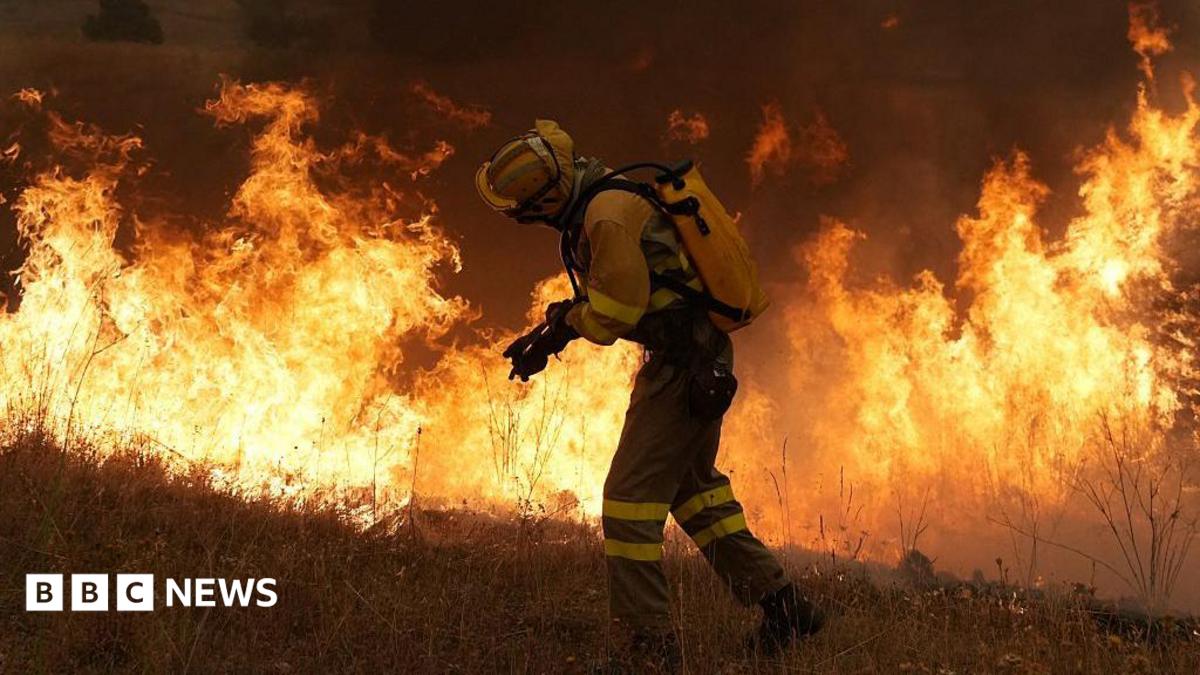
As wildfires tear through Europe, Professor Marta Yebra - a Canberra-based bushfire expert originally from Spain - feels the heat from 10,000 miles away. She heads the Bushfire Research Centre of Excellence, born from the ashes of Australia's Black Summer fires of 2019-20, which scorched an area roughly the size of the UK. Her team's mission: blend cutting-edge tech like satellites, drones, and AI with the kind of knowledge that doesn't come from a manual.
That's where Adrian Webster steps in. Growing up on the south coast of New South Wales, Webster learned to read 'country' - the Indigenous term for ancestral homeland - from his elders. While Yebra's satellites detect fuel moisture content, Webster reads plant colours, scents, and tree shade to translate that data into something actionable. As he puts it, the data was 'kind of useless' without Indigenous perspective, but with it, 'it was a map that could guide you through the country.' Yebra notes a 'remarkable agreement' between Webster's ground-level observations and the satellite imagery - proof that ancient wisdom and Western science can play nice.
The collaboration extends to 'cultural burning,' an Indigenous practice dating back 60,000 years. It involves lighting 'cool fires' - small, controlled blazes that prevent fuel buildup. Europe, Yebra says, lacks this cultural approach to landscape planning, and she suggests it could learn a thing or two from Australia's playbook. 'We have decades of experience living with large and high-intensity bushfires,' she notes, advocating for anticipating risk rather than just reacting.
Modern tactics also include prescribed burns, which are increasingly vital as suburbs creep into bushland. Superintendent Andrew Shurety from Fire and Rescue NSW calls hazard reduction burns 'our main mitigating factor,' though longer fire seasons and rainier cool months are shrinking the window for such operations. Backburning - deliberately lighting fires ahead of a main blaze - is also gaining global traction, as Queensland firefighter Damian Hatfield witnessed in Canada, where crews embraced it by 2024.
Drones are another game-changer. Trent Curtin from the NSW Rural Fire Service explains that local crews can launch a drone for quick reconnaissance before helicopters even arrive, delivering gear, starting backburns, and assessing damage. Meanwhile, Yebra's team is bracing for a 'super El Nino' this summer, which could exacerbate extreme heat and drought. 'Our next fire season is looking like it's going to be a bad one,' she warns.
Jason Heffernan, chief officer of Victoria's Country Fire Authority, echoes the concern, recalling the deadly 2009 Black Saturday fires. 'We're bracing for what could be something extremely significant,' he says, noting that fire seasons are starting earlier and lasting longer. He emphasizes global cooperation: 'No fire service can do this on their own.'
That global perspective just got a workout: France sent its first-ever request for Australian firefighting help this week, with two dozen crew and several aircraft deploying to battle record-breaking blazes. As Heffernan observes, 'we're seeing bushfires occur in parts of the world that never had bushfires before.'
Webster's advice to the world? 'Don't sit back and wait.' The longer you delay, the more fuel accumulates, and the bigger the fire. Indigenous Australians have known this for millennia - they 'burnt continuously' to keep big fires at bay. As Webster puts it, 'All the answers are in the environment.'
The Good Times
News in your inbox.
One sardonic roundup, delivered on your schedule. Free. Unsubscribe whenever your tolerance for wit runs out.
Already subscribed but we never reach your inbox? Check your spam folder and hit 'Not spam' (or 'Remove from spam') to bust us out of junk-mail purgatory. You'll be helping everyone else too.
Don't open any of our emails for a month and you'll be automatically removed from the mailing list.
Rewrite Article
Select parts to regenerate with a fresh AI pass. Translations will be updated automatically.
Generate AI Image
Creates a sardonic version of the article image using OpenAI.