
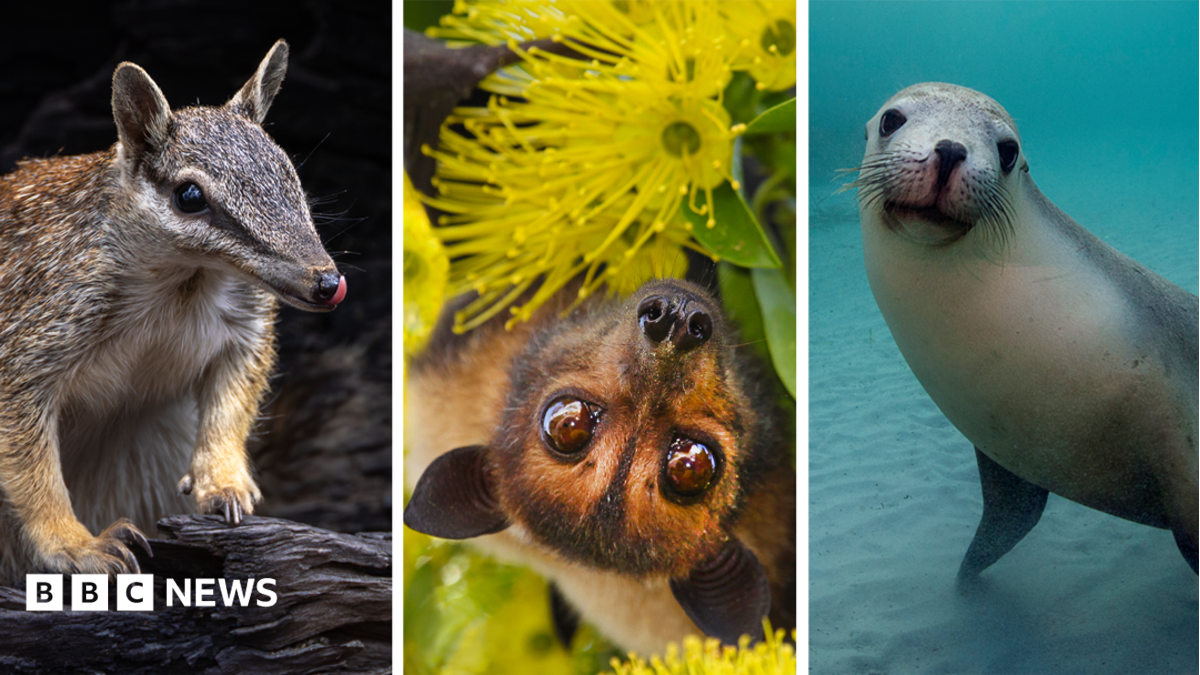
Eyes peeled, we scan logs and wildflowers for a flash of stripes. The numbat, a marsupial that looks like the love-child of a chipmunk and an anteater, is eluding us. Once populous across southern Australia, numbats now cling to existence in places like Dryandra Woodland in the south-western corner of the country.
Researchers on this annual trip are plotting the species' survival. Classified as endangered until this month, numbats have bounced back enough to be scratched off the international red list of threatened species. It's a rare glimmer of hope in a nation facing an extinction emergency.
Australia is the extinction capital of the world, losing about four species every decade. The culprits: feral pests, disease, urban development, habitat destruction, and climate change. Overhead flies the endangered Carnaby's cockatoo; offshore lurks the Gilbert's potoroo, one of the world's rarest marsupials; and the increasingly scarce Australian sea lion dives in sapphire waters.
More than 80% of Australia's species are found nowhere else, yet the decline is worsening. "It's not even a case of imagining it, it's happening in front of our own eyes," says Professor Euan Ritchie.
The numbat is a squirrel-sized camouflage connoisseur, explains Dr Tony Friend, the godfather of conservation in Western Australia. Volunteers from the Numbat Taskforce, led by Rob McLean, drive a daily circuit for two weeks each spring, logging GPS coordinates and estimating population density with a complicated equation. This year's been "a bit of a feast," Rob admits, though we see parrots, wallabies, a goanna, and echidnas - but no numbats.
Tony arrived in the 80s to find fewer than 50 numbats. The threats remain: habitat clearing for development, farming, mining, and timber; introduced pests like fire ants, cane toads, rabbits, foxes, and feral cats; invasive weeds like lantana; chlamydia devastating koalas; chytrid fungus causing seven frog extinctions; and climate change driving extreme temperatures and disasters like the Black Summer bushfires of 2019-20, which killed an estimated three billion animals.
Small efforts offer hope. At Perth Zoo, a keeper feeds a young numbat custard with "termite sprinkles" before its release at Dryandra to boost genetic diversity. Breeding programs help, but many species need fenced reserves, which face in-breeding and overpopulation. Habitat restoration lags behind destruction, and disease-fighting is expensive and laborious. Scientists are even preserving genetic material in case we learn to resurrect species.
Australia leads the world in mammal extinctions. The official list sits at 67, but researchers suspect at least 100 species are lost forever, and the true figure is likely higher. The rate of extinction has stabilized at four per decade, but threatened species numbers climb.
"Despite Australia being one of the wealthiest countries per capita in the world and having more than its fair share of world-leading scientists… we have a truly awful record of conserving species," Ritchie says.
The decline threatens food production, tourism, construction, potential scientific breakthroughs, and First Nations culture. "We think of ourselves as custodians of all life on Earth… so there's a much more personal and social feeling of loss," says ecologist Jack Pascoe, a Yuin man.
The Labor government, in office since 2022, promised no new extinctions and passed revamped environment laws last year, hailed as the most significant reform in a generation. But the laws are just scaffolding; National Environmental Standards and a federal watchdog are still being worked out. Successive governments have failed over 30 years, admits Robert Hill, Australia's longest-serving environment minister, who led reforms in 1999.
The nation's wealth is built on natural resources at the environment's expense. Industry lobbying and state interests blur accountability. Last year, the Albanese government rushed through laws protecting salmon farming, ignoring departmental advice on the A$1.4bn (£733m; $989m) industry's impact on the endangered Maugean Skate.
"The axe falls on the environmental outcome if there's the alternative of an economic one," Hill says.
Conservation work relies on philanthropists and volunteers, with the federal government spending about A$700m on nature protection - a fraction of the A$33bn (1% of GDP) conservationists say is needed. Paul Elton's research suggests A$26bn is still spent on subsidies harming nature, though the government disputes this. Minister Murray Watt says the government remains committed to long-term environmental recovery.
Public sentiment is shifting, but Hill notes, "The community will say to you, we should spend a lot of money on the environment. And then if you say, 'Well, what are you prepared to sacrifice to ensure that funding base?', then they're no longer interested."
Meanwhile, the numbat offers a glimmer of hope - a striped, termite-eating reminder that with dedication, even a species on the brink can bounce back. But without political courage, Australia's biodiversity faces a bloodbath.