Artemis II Breaks Distance Record That Apollo 13 Only Wanted Because It Didn't Get to Land
Artemis II breaks Apollo 13's 56-year-old distance record, but Fred Haise isn't impressed - he just wanted to walk on the Moon, not set a Guinness entry.
With the circumlunar flight of Artemis II, and the prospect of landing astronauts on the lunar surface within a few years, humanity is preempting an era where the imprint of visiting the Moon would be erased from living memory. There are five men still alive who flew to the Moon on NASA’s Apollo missions, all now in their 90s. Between 1968 and 1972, 24 astronauts visited the Moon, and 12 walked on its surface. We’ll have to wait a little longer to add to the Moonwalker roster, but four new names join the lunar explorer list: the Artemis II crew, all in their 40s or 50s, who flew a little more than 4,000 miles from the Moon - higher above the surface than Apollo missions. They set a new record for farthest humans from Earth: 252,756 miles (406,771 kilometers).
This breaks the Apollo 13 record set in April 1970, when Jim Lovell, Jack Swigert, and Fred Haise hit 248,655 miles (400,171 km). That record stood for nearly 56 years, which is longer than most people keep a New Year's resolution. NASA officials, astronauts, and space enthusiasts hope the Artemis II record won’t last quite as long - but whether it breaks depends on orbital dynamics, budget cycles, and the Moon's elliptical whims. The Moon's orbit varies between about 225,800 and 252,000 miles (363,400 to 405,500 km) from Earth, and the Sun's gravity throws it into constant change. The Moon's apogee can reach 252,727 miles (406,725 km), but that's only about once every 5,000 years - though it gets close (within 100 km) three times between now and 2040. So predicting when humans might break the Artemis II record is like predicting when Congress will agree on a budget: impossible, but fun to speculate.
NASA originally planned Gateway, a mini-space station in a near-rectilinear halo orbit looping from 1,900 miles (3,000 km) to 43,500 miles (70,000 km) from the Moon, which could have enabled greater distances. But NASA canceled Gateway to focus on a lunar base, where astronauts can harvest water, live in partial gravity, and test Mars technologies. NASA hasn't selected a new orbit for Artemis crews to meet landers, but it will be closer to the Moon - Orion's service module can't reach low-lunar orbit (Apollo circled at below 70 miles/110 km) and safely return. The bottom line: Astronauts likely won't exceed Artemis II's distance on most lunar landing missions, but occasionally circumstances might align to push a crew a little beyond 252,756 miles. The sure bet will come when someone finally aims for Mars.
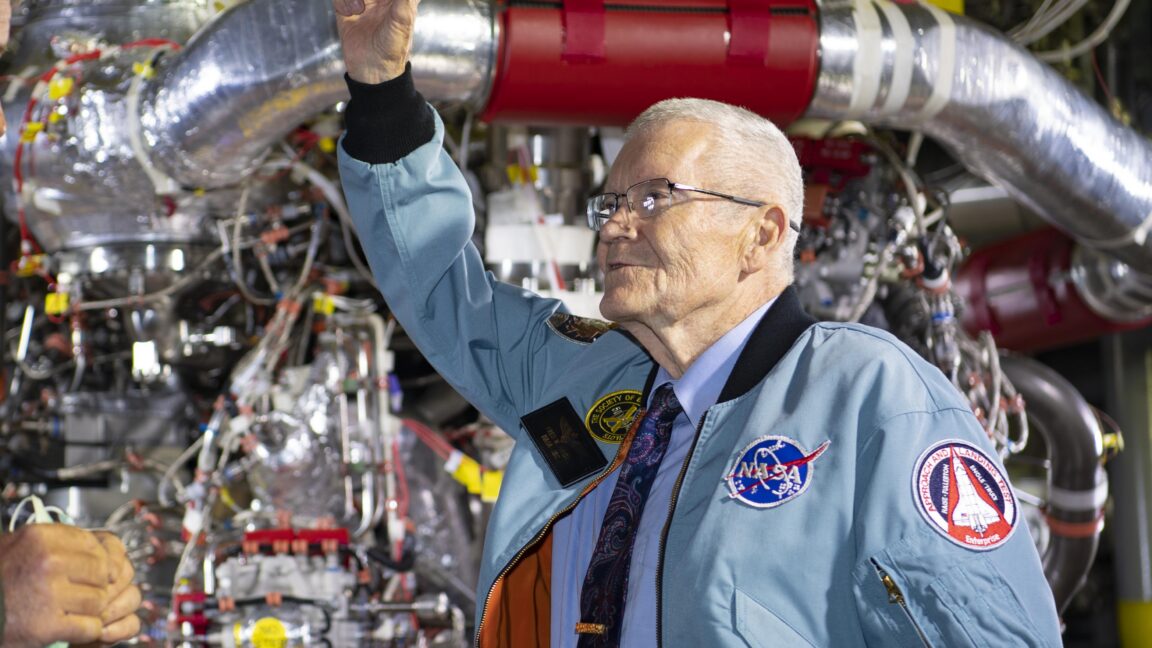
Fred Haise, 92, the only living Apollo 13 astronaut, spoke with Ars as Artemis II returned to Earth. He didn't care much for the record - it was a consolation prize after Apollo 13's aborted landing. "It wasn't a big deal," Haise said. "The Moon was just at its farthest point from Earth." He expressed surprise the record stood so long, blaming inconsistent government funding: "The average citizen thinks NASA has a big pot of gold. They don't realize it requires getting money from Congress." Haise noted Apollo launched every two months initially, but budget cuts stretched timelines. "You could accomplish it faster if you had the program laid out and funded it," he said. "There's no magic to it." He shared memories of shooting photos on the far side of the Moon, hoping Artemis II captured good shots of the South Pole. He met some Artemis II astronauts - Victor Glover, Reid Wiseman, and Christina Koch - who he praised for their involvement with the Astronaut Scholarship Foundation. Haise's advice: fund the program, and you can go.
The Good Times
News in your inbox.
One sardonic roundup, delivered on your schedule. Free. Unsubscribe whenever your tolerance for wit runs out.
Already subscribed but we never reach your inbox? Check your spam folder and hit 'Not spam' (or 'Remove from spam') to bust us out of junk-mail purgatory. You'll be helping everyone else too.
Don't open any of our emails for a month and you'll be automatically removed from the mailing list.
Rewrite Article
Select parts to regenerate with a fresh AI pass. Translations will be updated automatically.
Generate AI Image
Creates a sardonic version of the article image using OpenAI.