
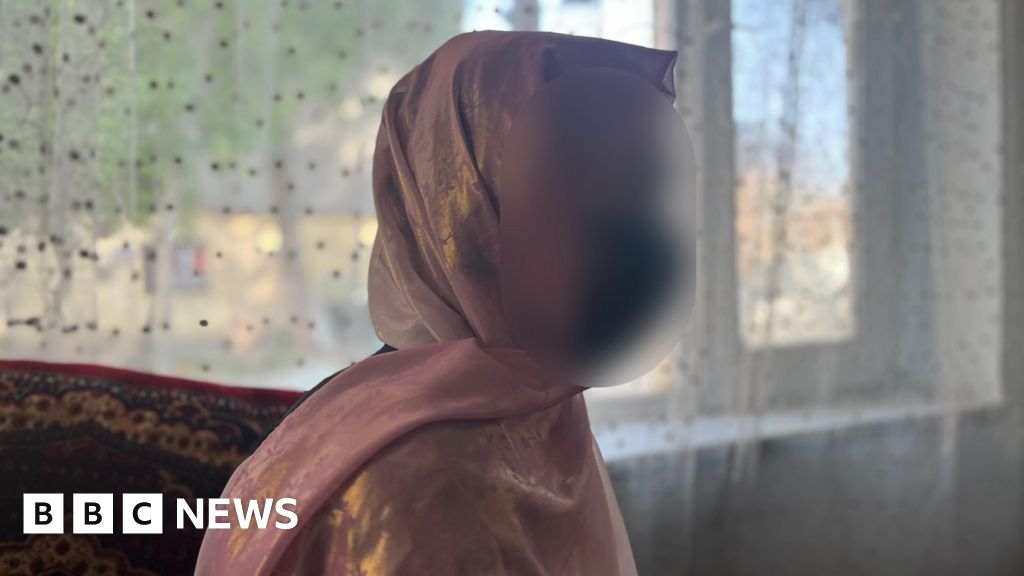
Alia - not her real name, for obvious reasons - hopped in a taxi last year with her cousin and fled hundreds of miles from her village to Kabul. The journey, with both women covered head to toe except for their eyes (per the rules), was exceptional and risky: at any moment, Taliban inspectors might catch them violating the ban on women traveling long distances without a male escort. But they made it through all checkpoints unscathed, because sometimes the universe has a sense of humor.
"I made up an excuse to my family saying I was coming here to meet my friends and former classmates. But that's not true. They are not here. The actual reason is that if I stayed in Daykundi, I would be forced to get married," says Alia, now 19. Instead, she arrived in Kabul with a plan: enroll in an English language course. These short-term, private courses - available only to those who can afford them - are, along with madrasas focusing on religious education, the only options for girls past primary school in Afghanistan. Neither is a substitute for formal schooling, but hey, it's something.
It has now been almost five years since the Taliban stopped girls over 12 from going to school. Various reasons have been offered, none convincing. Years in which girls like Alia have grown up without the education they wanted. Years in which career paths have been shut off, leaving millions of Afghan girls with just one option: marriage. Alia's story is unusual, not just for her bravery but because her family has funds to pursue the few opportunities available - a rarity in a country where three in four people can't meet basic needs, per the United Nations.
"Before the ban, my parents passionately encouraged me to go to school. They told me you can definitely achieve your dream of becoming a pilot. But now they say the best way for me is to get married because I can't go to school, to university, I can't even work," Alia says. She's been receiving marriage proposals and fears she might have to accept one, worried the new family might not give her the freedom her parents do. "Some families can be very restrictive. It's possible they could tell me to forget my dreams. I don't feel positive at all about it." Her resolve, however, is steely: "If my family don't force me to get married, I will wait. I will resist it until my very last breath."
In a small, bare home in west Kabul, we meet Shama (also a pseudonym). "If the Taliban had not taken over, I would have almost finished school by now. I would be close to my dream of becoming a doctor," she says. Instead, four years ago, aged 18, she was pushed by her mother to get married. Now she's the mother of an infant and a toddler - both girls. Her mother Kamila, a widow who worked as a cleaner to put her daughters through school, felt she had no choice. "I was fearful that they [Taliban foot soldiers] will question why I'm not getting her married," Kamila says. "I had wanted her to be educated, work and contribute to society. I am illiterate so I am like a blind person. But I wanted my girls to learn. She had so many dreams. But it didn't happen for her."
The ban's impact has been irreversible. According to the UN, if it continues until 2030, "more than two million girls will have been deprived of education beyond primary school in a country that already has one of the lowest female literacy rates in the world." Shama says, "Having a husband is not the only dream a woman has. She needs to stand on her own two feet first, become independent and then she can marry and start a family. But I went into this new life with none of that. My dreams remain unfulfilled." She's constantly stressed, triggered even by movies showing women working or studying. Her 18-year-old sister Nora now fears the same fate: "I'm too young to get married. I want to continue my education. It's like being in prison."
Since 2021, the Taliban government's response to when schools will reopen for girls has veered from one reason to another. In September 2021, a spokesman said they were "working to improve the security situation." A year later: "religious scholars have issues with the safety of girls travelling to and from school." In 2024, deputy spokesman Hamdullah Fitrat told us: "We are awaiting the decision of the leadership." This month, I met Fitrat again - he didn't want to be pictured with a woman or sit across from me. When pressed, he pointed out that "around seven million boys and five million girls are currently studying," adding that the restriction beyond grade six is "a separate issue." We asked the education ministry. They did not respond.
Women face a slew of other restrictions, vigorously enforced in some places, with a bit more freedom in others. Fitrat claims his government has "issued thousands of permits to women to run businesses" and that the morality police resolved more than "2,000 cases in which women had been denied their rightful share in inheritance" and "2,500 women who were being forced into marriage, or underage were assisted." But this past week, the Taliban government wrote into law rules that imply legal approval of child marriage, where a minor girl's silence can be interpreted as consent. Evidence on the ground suggests underage and forced marriages are increasing because girls are barred from studying.
Among the women and girls we spoke to, there's a sense that one of the most severe forms of institutionalized discrimination no longer triggers much shock or outrage. They feel abandoned by the world. "If we hadn't been forgotten, then something would surely have been done by now," says Alia. "I often think: why were we born in Afghanistan?" says Nora. Her mother Kamila has a message for mothers around the world: "In a world where your daughters are allowed to study and work, let them do it. Let them become independent."