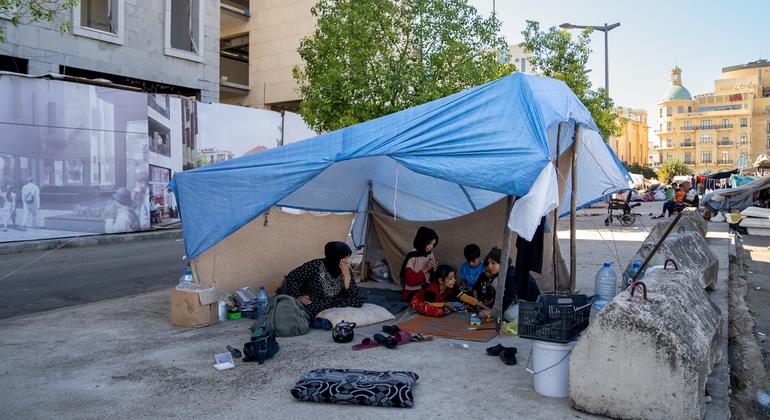
Ministers, mayors, international organisations, urban planners and experts have descended on Baku, Azerbaijan, for the thirteenth session of the World Urban Forum (WUF13), which opened on Sunday. Their mission: to tackle the global housing crisis, which, according to the United Nations, affects nearly 2.8 billion people worldwide. That is roughly one-third of humanity, in case you were wondering if housing might be a big deal.
Over the past decade, around 160 countries have adopted or are developing national urban policies, and more than two-thirds have introduced housing affordability programmes. So, progress? Sort of. According to the UN Human Settlements Programme (UN-Habitat), these efforts remain insufficient. More than 1.1 billion people live in slums or informal settlements, and over the last decade more than 120 million people were either born into or moved into slums. That’s like adding the entire population of Japan to the slum-dwelling roster.
Solutions such as expanded social housing programmes, improvements to informal settlements and protection for vulnerable populations were discussed during the opening sessions of the week-long event. Special attention was given to countries recovering from war. Bashar Al Sebaai, mayor of Homs, Syria - a city that suffered extensive damage during years of conflict - told UN News that 400,000 people have returned to severely damaged neighbourhoods. “Solid waste, infrastructure, electricity…it’s very hard to find solution to all these problems,” he said. No word on whether anyone offered to send a really big broom.
The millions living in unsafe housing are among the first to suffer from floods, heatwaves and other extreme events worsened by the man-made climate crisis. The construction sector remains one of the world’s largest sources of greenhouse gas emissions, so low-carbon construction, resilient urban planning and climate-sensitive upgrading of informal settlements are on the agenda. In a bit of ironic timing, the first day of the forum itself was marked by prolonged heavy rain in Baku, forcing city authorities to drain flooded roads. Local residents noted that such weather events were rare in Azerbaijan just a few years ago, especially at this time of year. The universe has a sense of humour.
“When we have a homeless population of hundreds of thousands of people in the streets in the United States, and we’re considered to be wealthy…In New York, it looks like a crisis right now,” said Lance Jay Brown, founder of the Consortium for Sustainable Urbanization. Brown noted that, during his lifetime, the world’s population has nearly quadrupled, while affordable housing for low-income communities has become increasingly difficult to secure. He expressed hope that the discussions in Baku would generate practical solutions. We’ll see if the rain lets up first.
The Good Times
News in your inbox.
One sardonic roundup, delivered on your schedule. Free. Unsubscribe whenever your tolerance for wit runs out.
Already subscribed but we never reach your inbox? Check your spam folder and hit 'Not spam' (or 'Remove from spam') to bust us out of junk-mail purgatory. You'll be helping everyone else too.
Don't open any of our emails for a month and you'll be automatically removed from the mailing list.
Rewrite Article
Select parts to regenerate with a fresh AI pass. Translations will be updated automatically.
Generate AI Image
Creates a sardonic version of the article image using OpenAI.