Trump Picks Qualified, Normal Person For Top Health Job, Confusing Everyone
In a surprising twist, Trump nominates an actual public health expert to lead the CDC, creating a fascinating conflict with his own administration's anti-vaccine leadership.
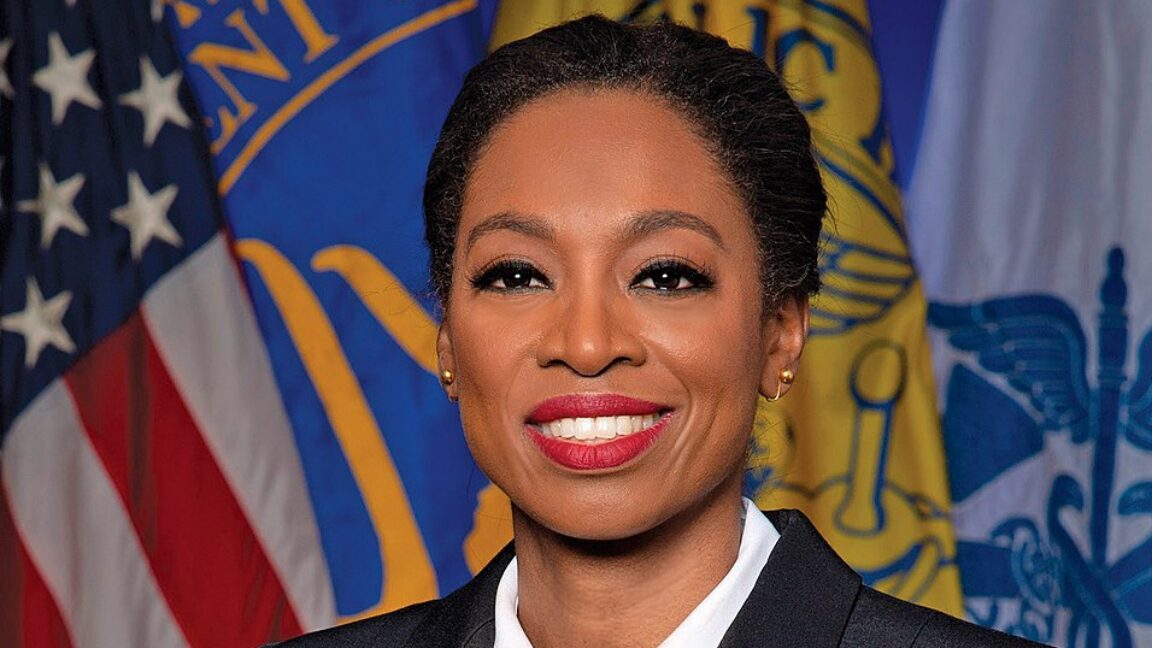
In a move that has left political observers checking their calendars, President Trump announced his third nominee for director of the Centers for Disease Control and Prevention on Thursday. The nominee is Dr. Erica Schwartz, a well-qualified former public health official and board-certified physician in preventive medicine who, notably, publicly supports vaccination and follows evidence-based medicine. This selection is widely seen as uncontroversial, which in the current administration is the equivalent of a four-leaf clover sighting.
The pick reportedly stems from a growing concern within the administration that the aggressive anti-vaccine agenda of Health Secretary Robert F. Kennedy Jr. has become a political liability ahead of the midterms. Kennedy, for those keeping score, has no medical, science, or public health background, a credential that apparently qualifies him to oversee the nation's health. The administration seems to be attempting a delicate balancing act between its ideological wing and the basic concept of public health.
Dr. Schwartz's resume reads like a fantasy draft for a competent public health leader. She served as deputy surgeon general in Trump's first administration, spent much of her career as a Navy officer, was Chief Medical Officer for the US Coast Guard, and is a retired rear admiral of the US Public Health Service Commissioned Corps. She holds a medical degree from Brown University, a master's in public health, and a law degree from the University of Maryland. During the pandemic, she was involved in the federal rollout of COVID-19 vaccines, an experience that presumably taught her a great deal about bureaucratic logistics and human patience.
On social media, Schwartz has championed vaccines as part of preventive health. Earlier this month, she posted a video for National Public Health Week discussing her time as a military physician, stating, 'My job was all about readiness; it was all about public health: prevention, vaccines, early detection. If we get that right, we change lives before illness ever begins.' This is the kind of straightforward, science-affirming talk that has become oddly radical in certain circles.
While outside public health experts have praised her nomination and highlighted her impeccable qualifications, they are also expressing profound wariness. The central question is how an evidence-based health official will be able to function within an environment shaped by Kennedy's anti-vaccine efforts and the many like-minded allies he has already installed at the CDC. It sets up a fascinating workplace dynamic of 'evidence-based medicine' versus 'vibes-based policy,' with the nation's health hanging in the balance.
The Good Times
News in your inbox.
One sardonic roundup, delivered on your schedule. Free. Unsubscribe whenever your tolerance for wit runs out.
Already subscribed but we never reach your inbox? Check your spam folder and hit 'Not spam' (or 'Remove from spam') to bust us out of junk-mail purgatory. You'll be helping everyone else too.
Don't open any of our emails for a month and you'll be automatically removed from the mailing list.
Rewrite Article
Select parts to regenerate with a fresh AI pass. Translations will be updated automatically.
Generate AI Image
Creates a sardonic version of the article image using OpenAI.