Tony, Before He Was Bourdain: A Coming-of-Age Story With Extra Oysters
A biopic about Anthony Bourdain's teenage summer as a dishwasher proves that you don't need the whole life story when you've got oysters, attitude, and a mentor who makes his own ketchup.
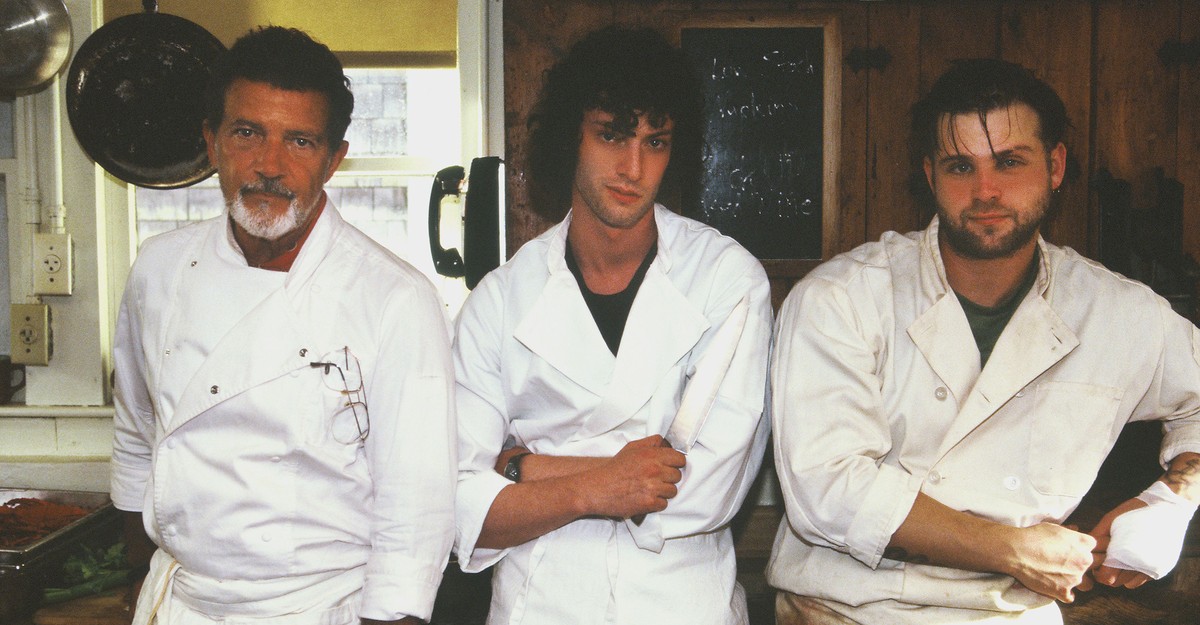
In the pantheon of coming-of-age movies, there's always that one 19-year-old menace who sulks with worldly paperbacks in his back pockets, wears a leather jacket in unseasonable warmth, and glowers like it's his job. Enter Tony, played by Dominic Sessa, who is exactly that guy - but with a twist: he's destined to become Anthony Bourdain, the culinary bad boy who turned kitchen chaos into bestselling memoirs and TV stardom.
Directed and co-written by Matt Johnson, Tony adapts the early chapters of Bourdain's 2000 bestseller Kitchen Confidential, focusing on a teenage summer spent hungover and washing dishes at a Cape Cod seafood joint. The film cleverly avoids the burden of Bourdain's later fame, letting Sessa capture the raw, foolish possibility of youth rather than imitating a well-known TV personality. And it works - beautifully.
We meet Tony at Vassar College, where he's just finished two years before dropping out. His summer plans for a writing fellowship crash and burn, so he follows a crush, Nancy (Emilia Jones), to Provincetown, Massachusetts, and stumbles into a gig at the Flagship, a seafood spot staffed by hard-partying guys, including a garrulous Stavros Halkias and a brooding Leo Woodall. Tony mostly observes, soaking up knowledge while projecting a precious aloofness that beguiles many a young man in search of inspiration.
His muse is a character simply called 'Chef,' played by Antonio Banderas, a wise, older Brazilian man who greets the ocean each morning and makes his own ketchup instead of buying Heinz. Banderas nails the meditative, elusive mentor role, delivering advice with bluntness and poetry. Chef exists to instill in Tony a sense of pride in his work - even if it's manual kitchen labor rather than intellectual pursuits. Johnson understands that this respect for artistry was what made Bourdain enduring.
Tony gets away with being a biopic that ends early because it's less about becoming a famous chef and more about falling in love with a scrappy culture where cuisine blends high and low. Tony learns to create shellfish delicacies while cracking oysters and cleaning plates, holding his own among seedy, profane company with ribald back-and-forth that Johnson presents with hilarious immediacy, as seen in his previous work like BlackBerry and Nirvanna the Band the Show the Movie. Though a minor piece of storytelling, Tony feels deceptively major, infused with just enough of its subject's real-world charisma.
The Good Times
News in your inbox.
One sardonic roundup, delivered on your schedule. Free. Unsubscribe whenever your tolerance for wit runs out.
Already subscribed but we never reach your inbox? Check your spam folder and hit 'Not spam' (or 'Remove from spam') to bust us out of junk-mail purgatory. You'll be helping everyone else too.
Don't open any of our emails for a month and you'll be automatically removed from the mailing list.
Rewrite Article
Select parts to regenerate with a fresh AI pass. Translations will be updated automatically.
Generate AI Image
Creates a sardonic version of the article image using OpenAI.