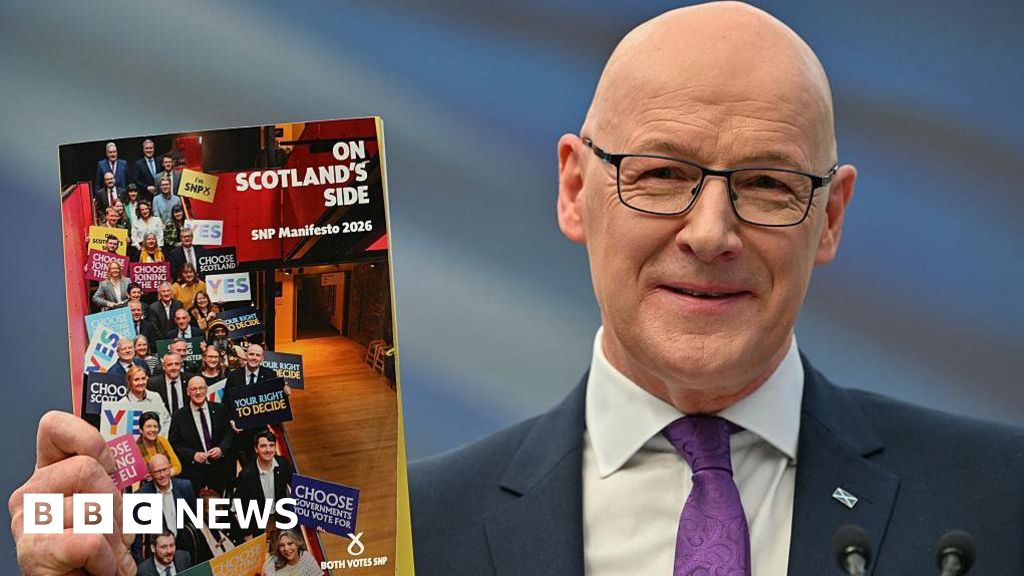
Swinney Insists Price Cap Isn't Just an Excuse to Start a Fight with Westminster
Swinney insists his plan to cap food prices is about helping struggling shoppers, not starting a fight with Westminster - though the timing is certainly convenient.
SNP leader John Swinney has denied that his plan to legally cap the price of essential food items in supermarkets is merely an elaborate excuse to pick a fight with the UK government, though one imagines it wouldn't hurt.
Speaking on the BBC's Today programme ahead of his anticipated re-election as first minister, Swinney explained that his proposal - limiting the cost of up to 50 essential items like milk, eggs, cheese, and rice in large supermarkets - is a response to the cost of living crisis. He said people are “struggling to afford a very basic shop” and that he has a “public health responsibility” to provide an affordable nutritious diet, which is a noble goal unless you're the Scottish Retail Consortium.
The SRC's Ewan MacDonald-Russell called the policy a “gimmick,” warning that it would force small shops - exempt from the proposed legislation - to be uncompetitive. Swinney acknowledged that “engagement” with producers and retailers would be “crucial to get it right,” but noted his challenge is “facing up to members of the public who are really struggling.”
The policy would likely require changes to the UK Internal Markets Act of 2020, a post-Brexit law designed to prevent trade barriers between the four nations. Swinney admitted that, having fallen short of an SNP majority in the election, he would need to work with other parties in Holyrood and UK ministers to implement it. When asked if he was looking for a “punch-up” with Westminster to advance the independence cause, Swinney insisted he just wants to help people who can't afford their shopping, adding, “There are procedures I have got to go through to make that happen.”
Later on Tuesday, Swinney will stand in a vote of MSPs for first minister. All six parties have nominated leaders, but his success is virtually assured after the SNP's emphatic victory on 7 May, winning 58 seats versus Labour and Reform UK's 17 each. The opposition would need to agree on an alternative candidate, a prospect about as likely as a Scottish summer without rain.
If elected, Swinney's appointment will be confirmed by royal warrant before he is sworn in at the Court of Session in Edinburgh on Wednesday. He will then begin appointing his cabinet, presumably while also pondering how to navigate a minority government - the SNP fell seven seats short of a majority, though minority rule is the norm at Holyrood.
Swinney has said he will work with all opposition parties except Reform UK, led in Scotland by former Conservative peer Malcolm Offord, whom he accused of having “completely different values.” Offord called that stance “arrogant, petty and deeply undemocratic,” which is exactly what you'd say if someone refused to play with you.
On independence, Swinney noted that the new Scottish Parliament has a pro-independence majority (combining SNP and Scottish Green MSPs), but he campaigned on the basis that an SNP majority alone was necessary to advance a second referendum. The party's constituency vote share fell 9.5 percentage points to 38.2% compared to 2021, and its regional vote share dropped 13.3 points to 27.2%. Scotland voted 55% to 45% to remain in the union in 2014, and the UK Labour government has made clear it has no intention of allowing another vote. But hey, a man can dream.
The Good Times
News in your inbox.
One sardonic roundup, delivered on your schedule. Free. Unsubscribe whenever your tolerance for wit runs out.
Already subscribed but we never reach your inbox? Check your spam folder and hit 'Not spam' (or 'Remove from spam') to bust us out of junk-mail purgatory. You'll be helping everyone else too.
Don't open any of our emails for a month and you'll be automatically removed from the mailing list.
Rewrite Article
Select parts to regenerate with a fresh AI pass. Translations will be updated automatically.
Generate AI Image
Creates a sardonic version of the article image using OpenAI.