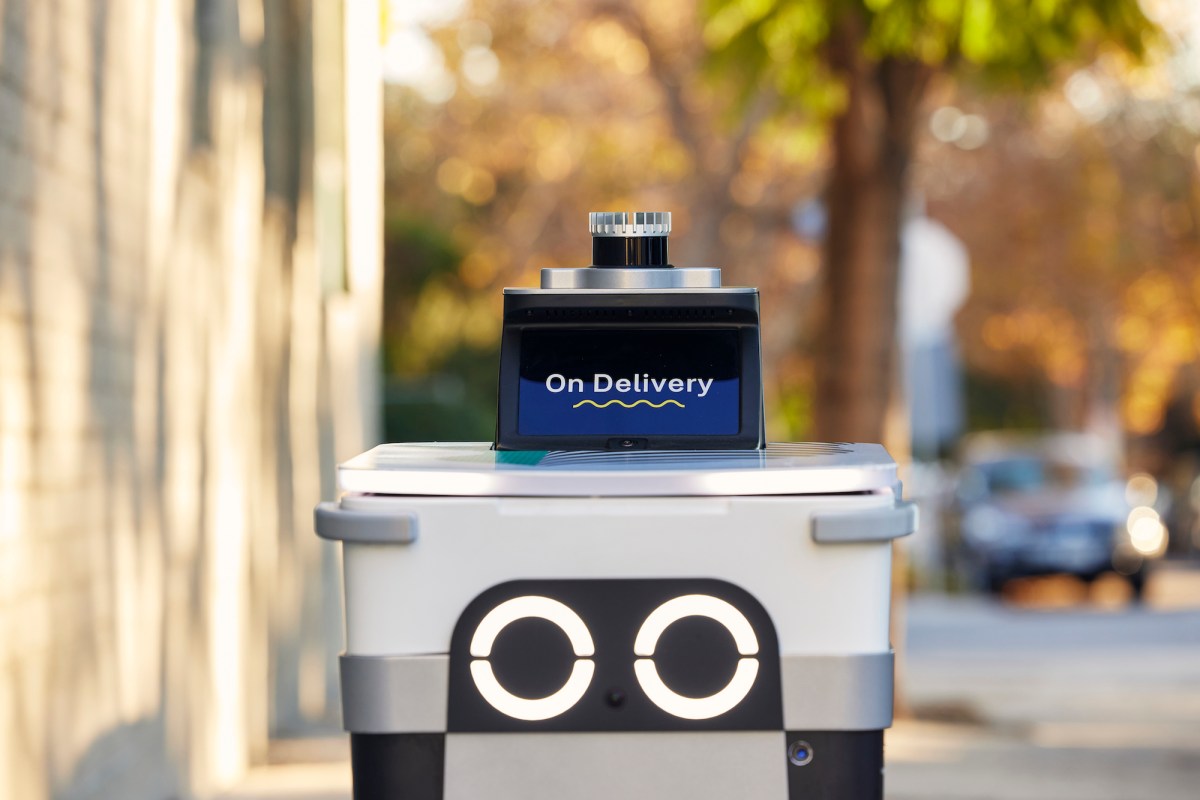
Serve Robotics, the maker of self-driving sidewalk delivery robots with the googly eyes, has decided that delivering burritos is no longer enough. The company - which spun out of Uber's acquisition of Postmates in 2021 and went public in 2024 - announced Thursday it is launching a new business line called Physical AI Services, aimed at becoming a technology supplier to other companies building robots. In other words, if you can't beat the robot economy, sell it the picks and shovels.
Specifically, Serve will offer customers its connectivity and data tools. Bedrock Robotics, a startup developing self-driving systems for construction equipment, is already a customer, according to Serve. The company is also working with T-Mobile to bring AI computing power closer to robots, an announcement it bundled alongside its third-quarter earnings on Thursday, because nothing says "exciting new business line" like a quarterly report.
"We are solving the problem of robots in human spaces," Serve Robotics CEO and co-founder Ali Kashani told TechCrunch, presumably with a straight face and a working knowledge of how humans behave in spaces.
Serve Robotics already makes two kinds of robots: the cute googly-eyed sidewalk delivery robot and one designed for hospitals, which it acquired through its purchase of Diligent Robotics. Those businesses are not going away, Kashani emphasized. Instead, he sees an opportunity to sell the technology it developed for its own robots to other companies building robots for farms, warehouses, and other uncontrolled environments - you know, the places where humans also roam.
"I kind of think of it as the AWS moment where we are taking the technology we've built for us, and we're opening it up for more people to build on," Kashani said, adding this wouldn't have been possible without developing its own robot fleet. Every company, it turns out, eventually wants to be Amazon Web Services.
The expansion comes as Serve's sidewalk delivery business expands, but is shifting away from Uber and toward other partners, including DoorDash and Wonder. Uber, for the record, is now apparently just a chapter in Serve's origin story.
The new Physical AI Services business line will offer three products. Serve Link helps connect robots in the field to AI systems running in data centers, allowing companies to tap into more powerful AI models without cramming all that computing power onboard. "Any robotic application generally needs to connect the robots to some offline intelligence, whether it's to collect data or do exception handling or whatever," Kashani said. "It's the connectivity piece that has to be really high performance. You need to be able to manage really unreliable networks and still reliably connect, and that's what we solve." Reliable connectivity, for robots, is the new "please don't tip over."
It's also launching a data curator tool that helps companies find edge cases in the reams of real-world data a robot collects, which can then be fed back into a training model to improve performance. Its third product is a real-world, foundation-model data catalog built from Serve's own sidewalk robots that can teach AI models how to understand complex human environments. Think of it as a finishing school for robots that have spent too long in the lab and not enough time dodging pedestrians.
Kashani said he's been thinking about this idea - a playbook he learned from Amazon - for years. "When the technology is so nascent, you have got to build the end-to-end application because that's the only way you know what to build, but then over time, as the technology gets more advanced, a lot more people are going to be wanting to build similar things," he said. "And what you want to do is to open your technology so others build with you and on your platform." It's the classic tech trajectory: build the thing, learn the thing, then sell the thing to everyone else who wants to build the thing.
The Good Times
News in your inbox.
One sardonic roundup, delivered on your schedule. Free. Unsubscribe whenever your tolerance for wit runs out.
Already subscribed but we never reach your inbox? Check your spam folder and hit 'Not spam' (or 'Remove from spam') to bust us out of junk-mail purgatory. You'll be helping everyone else too.
Don't open any of our emails for a month and you'll be automatically removed from the mailing list.
Rewrite Article
Select parts to regenerate with a fresh AI pass. Translations will be updated automatically.
Generate AI Image
Creates a sardonic version of the article image using OpenAI.