Scientists Develop Termite Poison That Spares Humans, Because We're Not the Ones Eating Houses
Researchers find a chemical that kills termites by preventing them from molting - because even pests deserve a personalized, non-toxic eviction notice.
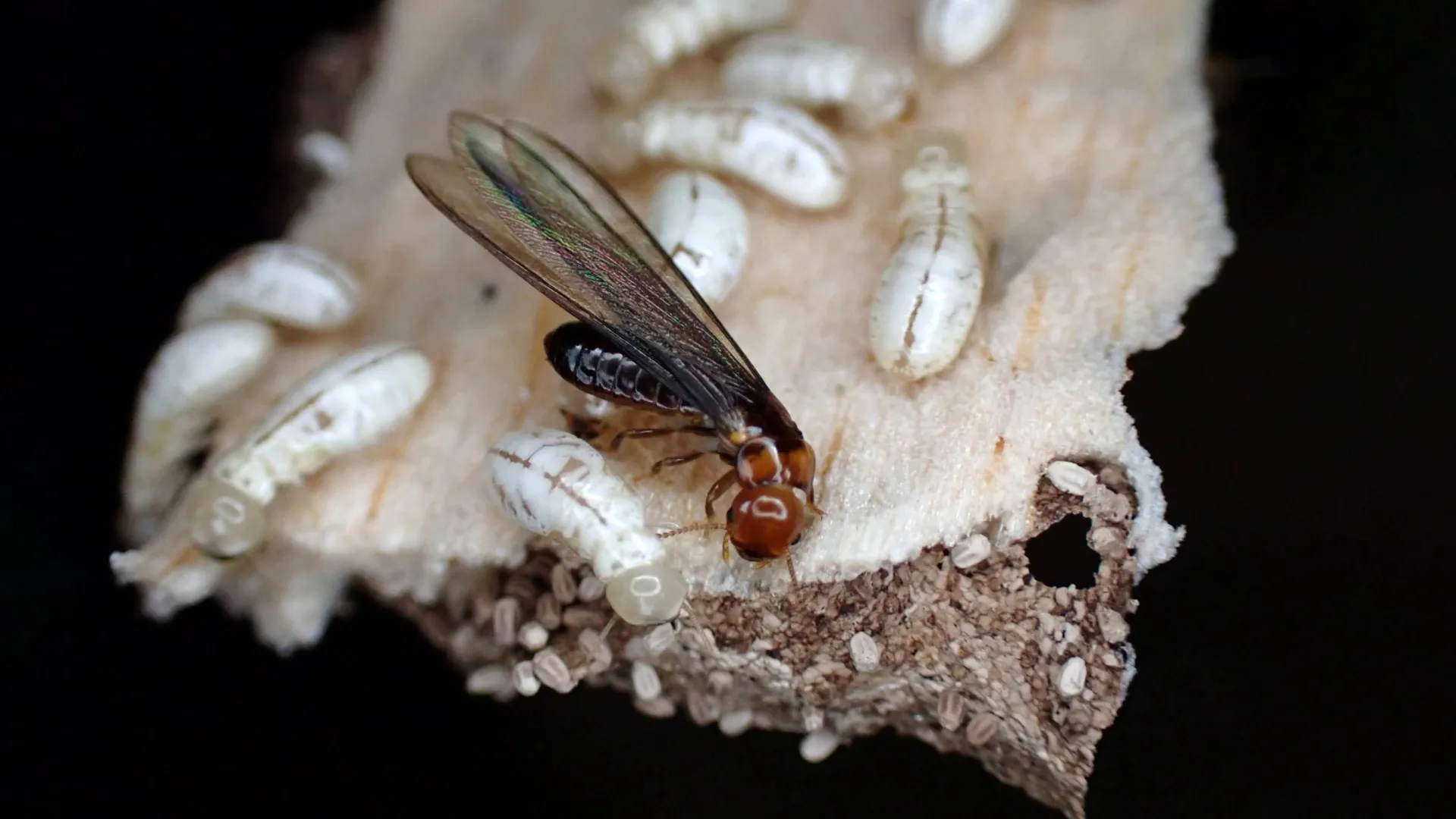
Drywood termites are masters of stealth, quietly munching on your home's wooden skeleton while you remain blissfully unaware until the floor gives way. But researchers at the University of California, Riverside have found a way to turn the termites' own biology against them - specifically, their awkward need to shed their skin like a teenage reptile.
The weapon is bistrifluron, a chemical that blocks termites from building new exoskeletons during molting. In lab tests, it wiped out about 95 percent of a colony without posing the mammal-toxicity risks of traditional poisons. The findings were published in the Journal of Economic Entomology.
"This chemical is more environmentally friendly than ones traditionally used for drywood termite infestations," said Nicholas Poulos, a doctoral student and lead author. "It's specific to insects and can't harm humans."
The secret lies in the termite body plan. Humans have internal skeletons; termites wear theirs on the outside, built from chitin - the same stuff found in fungal cell walls and squid beaks. When termites grow, they must shed their old exoskeleton and build a new one, a process they repeat about seven times in their lives. Bistrifluron interrupts that step, leaving them naked and vulnerable.
"Once the termites reach a certain stage, they have to molt. They cannot avoid that," said Dong-Hwan Choe, UCR entomology professor and senior author. "With a lethal dose of this chemical, they'll try to shed their old exoskeleton but won't have a new one ready to protect them."
The effect is not instant - first the termites get sluggish and stop eating, then they die over time. The 2025 study tested three chitin synthesis inhibitors against the western drywood termite, Incisitermes minor. Bistrifluron outperformed chlorfluazuron and noviflumuron, achieving 99 percent mortality in a no-choice test over 60 days and 96 percent in a choice test using a 0.1 percent rate.
Crucially, the chemical spreads through the colony via termites' charming habit of sharing food through mouth-to-anus feeding (scientific term: proctodeal trophallaxis). In transfer tests, even when only 5 percent of termites were exposed, the entire group hit 100 percent mortality by day 90. That hidden social behavior, which makes infestations hard to detect, also helps the treatment spread.
The compound takes about two months to collapse a colony - slower than fumigation - but it offers lower toxicity and targeted action, potentially allowing spot treatments without tenting an entire home. "We believe this method of spot treatment can kill a larger colony and spread more easily than current termite control methods," Choe said. "You don't have to apply too much to get a very good result."
Traditional fumigation is a hassle: bagging food, leaving home, waiting. It also doesn't prevent termites from returning. Bistrifluron may stay active in wood for a while, offering ongoing protection.
The UCR team is also exploring a scent-based lure. In earlier work, they studied pinene, a pleasant-smelling chemical from forest trees that signals food to termites. A 2025 patent application describes using pinenes to improve insecticide injections. Adding pinene boosted mortality from about 70 percent to over 95 percent and could allow wider drill-hole spacing, reducing labor and chemical use.
The bistrifluron study used acetone to dissolve the chemical, which works in the lab but is flammable and smelly for real-world use. "We are working to make it more feasible for practical application in real life scenarios," Poulos said.
Western drywood termites are native to northern Mexico and California but have been introduced to Hawaii, New York, Florida, Canada, China, Japan, Korea, and Australia via lumber transport. Climate change may help them expand further. "In areas where these termites are common, it's just a matter of time before homes are infested," Choe said.
The Good Times
News in your inbox.
One sardonic roundup, delivered on your schedule. Free. Unsubscribe whenever your tolerance for wit runs out.
Already subscribed but we never reach your inbox? Check your spam folder and hit 'Not spam' (or 'Remove from spam') to bust us out of junk-mail purgatory. You'll be helping everyone else too.
Don't open any of our emails for a month and you'll be automatically removed from the mailing list.
Rewrite Article
Select parts to regenerate with a fresh AI pass. Translations will be updated automatically.
Generate AI Image
Creates a sardonic version of the article image using OpenAI.