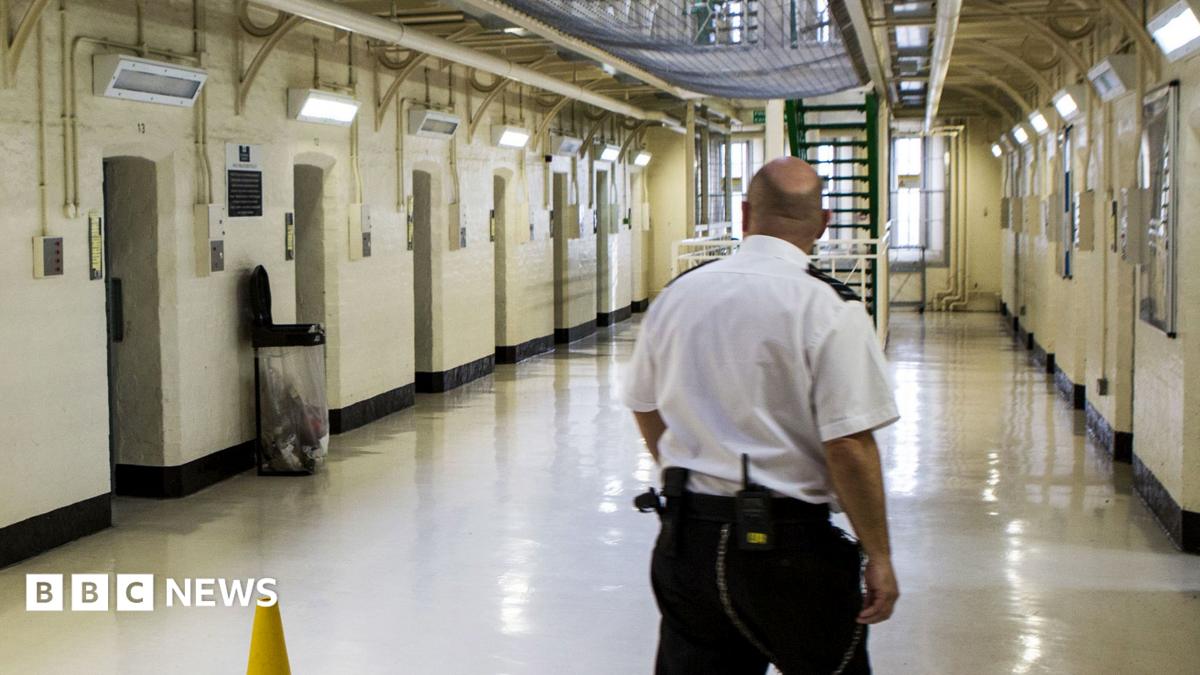
Probation Chief Warns Early Release Scheme Could Lead to 'Serious Sexual or Violent Offence or Even Murder'
Probation chief warns early release could lead to serious crimes, police chiefs protest, and everyone agrees the system is stretched thin - but at least the government is confident.
In a move that has probation officers reaching for the smelling salts, the chief inspector of probation for England and Wales has told the BBC that the early release of thousands of prisoners could result in "a serious sexual or violent offence or even murder." It's almost as if releasing people early without adequate supervision might have consequences.
The government plans to release 5,000 offenders starting in October, part of a desperate bid to create space in overcrowded prisons. Probation officers, who are supposed to monitor these folks - checking curfews, drug use, and the like - are already drowning in a caseload of 258,000, nearly three times the prison population. Martin Jones, His Majesty's Chief Inspector of Probation, confessed he's "not fully confident that the probation system will be able to cope with this massive work." No kidding.
Meanwhile, 50 police chiefs have written to the prime minister, urging him to use "every legal option" to keep PC Andrew Harper's killers behind bars. They're also worried about the broader implications, like victims finding out that offenders are being released earlier than expected. Shadow home secretary Chris Philp called the plans a threat to public safety, while the Conservative shadow justice secretary, Nick Timothy, suggested emergency legislation to exempt grooming gang perpetrators and those who killed emergency workers from the scheme.
Probation officers, who help ex-prisoners with housing and employment, are seeing their workloads balloon. The caseload has already increased by 8% in two years, thanks to a previous early release scheme from 2024. One officer described the upcoming releases as putting the service into "a state of panic," worrying that "things are missed" and "serious further offences" could follow.
The Ministry of Justice, in its defense, says it's investing £700m and has hired 1,389 trainee officers, exceeding targets. They claim the Sentencing Act is "restoring order" to a prison system "on the brink of collapse." But with a shortfall of 1,556 probation officers (5,554 in post versus 7,110 needed), the math doesn't quite add up.
Prime Minister Andy Burnham has promised tagging for released offenders, but Jones notes that electronic tagging just provides information - it doesn't act on it. With vacancy rates at 20-25%, Jones wonders what probation can "realistically do." Burnham, meanwhile, is "increasingly confident" that fewer people will need early release, and he's "confident" that PC Harper's killers can be excluded. Confidence is nice, but as the probation chief suggests, the system is running on fumes.
The Good Times
News in your inbox.
One sardonic roundup, delivered on your schedule. Free. Unsubscribe whenever your tolerance for wit runs out.
Already subscribed but we never reach your inbox? Check your spam folder and hit 'Not spam' (or 'Remove from spam') to bust us out of junk-mail purgatory. You'll be helping everyone else too.
Don't open any of our emails for a month and you'll be automatically removed from the mailing list.
Rewrite Article
Select parts to regenerate with a fresh AI pass. Translations will be updated automatically.
Generate AI Image
Creates a sardonic version of the article image using OpenAI.