President Attacks Pope, Apparently Forgets Which Century It Is
Donald Trump picks a fight with Pope Leo XIV over Iran comments, in a strategic move that expertly ignores both modern diplomacy and a key voting bloc.
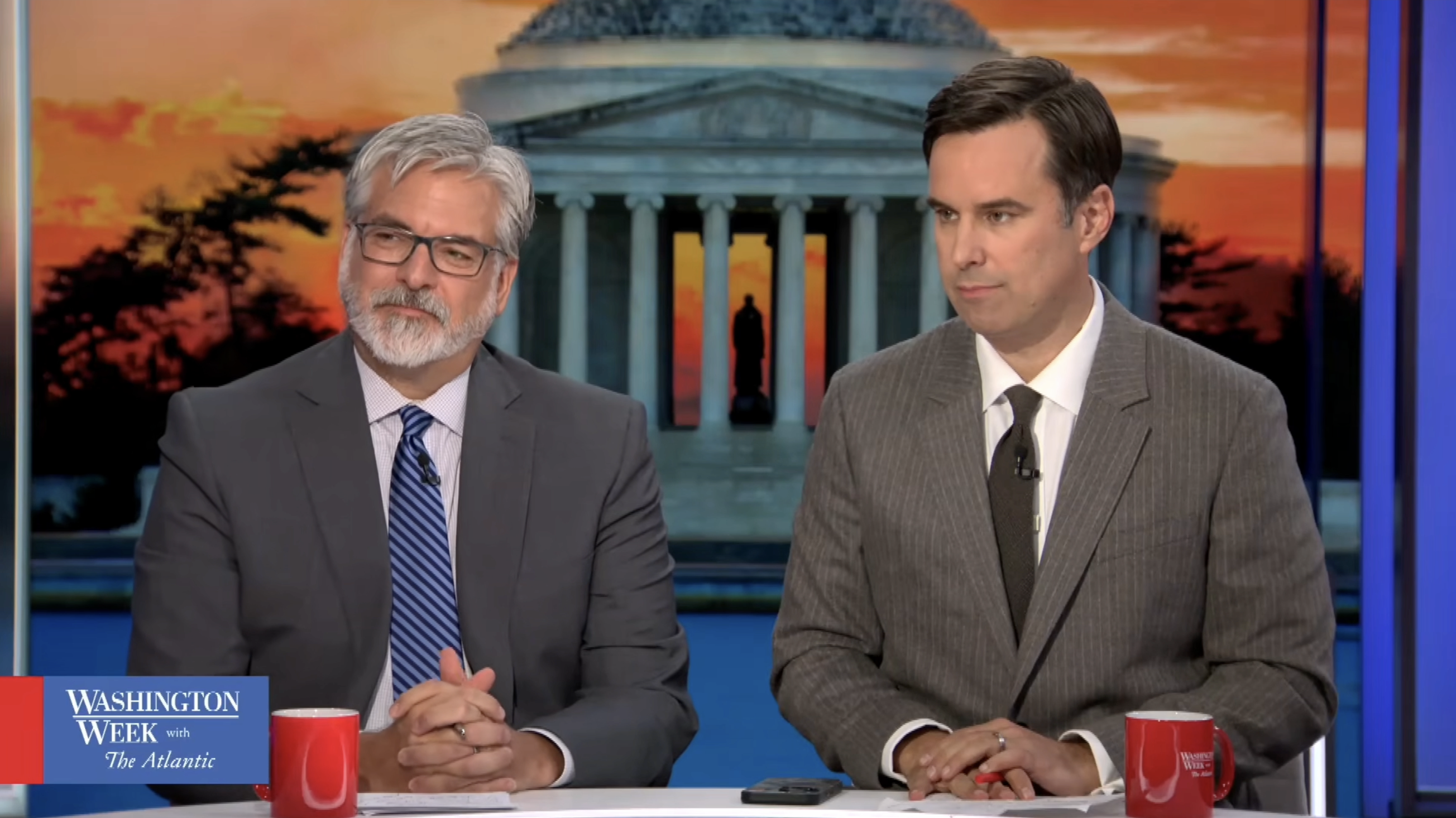
In a move that surprised precisely no one who has been paying attention, former President Donald Trump has decided to pick a fight with a religious leader. This week, he launched an attack on Pope Leo XIV for the Pontiff's comments regarding the war in Iran. Panelists on Washington Week With The Atlantic gathered to dissect this latest diplomatic masterclass, pondering what the president's remarks might signal about his messaging on the ongoing conflict.
Michael Scherer, a staff writer at The Atlantic, provided the crucial context that the Pope has indeed become more vocal about his concerns over Iran. However, in a classic display of cause and effect, Scherer noted that Trump's backlash prompted Leo to double down, speaking "in even more aggressive terms ... about how military leaders should not use religion to justify their actions." It seems the standard strategy of yelling at something until it goes away is not working on the head of the Catholic Church.
Scherer then pointed out the obvious political calculus, or lack thereof, noting that "Catholic voters are a real swing group in this country." Despite this, "Trump has not backed down; he says he won't apologize." Scherer argued the president is not "operating from a position of strength," a diagnosis that could apply to several other situations, but let's focus on the papal feud for now.
The high-level discussion was hosted by The Atlantic's editor in chief, Jeffrey Goldberg. He was joined by a panel of experts including Leigh Ann Caldwell, the chief Washington correspondent at Puck; Stephen Hayes, the editor of The Dispatch; Jonathan Lemire, a staff writer at The Atlantic and a co-host of Morning Joe on MS NOW; and Scherer. Together, they presumably tried to figure out what game, exactly, the former president thinks he's playing, and whether the rulebook involves a 15th-century schism.
The Good Times
News in your inbox.
One sardonic roundup, delivered on your schedule. Free. Unsubscribe whenever your tolerance for wit runs out.
Already subscribed but we never reach your inbox? Check your spam folder and hit 'Not spam' (or 'Remove from spam') to bust us out of junk-mail purgatory. You'll be helping everyone else too.
Don't open any of our emails for a month and you'll be automatically removed from the mailing list.
Rewrite Article
Select parts to regenerate with a fresh AI pass. Translations will be updated automatically.
Generate AI Image
Creates a sardonic version of the article image using OpenAI.