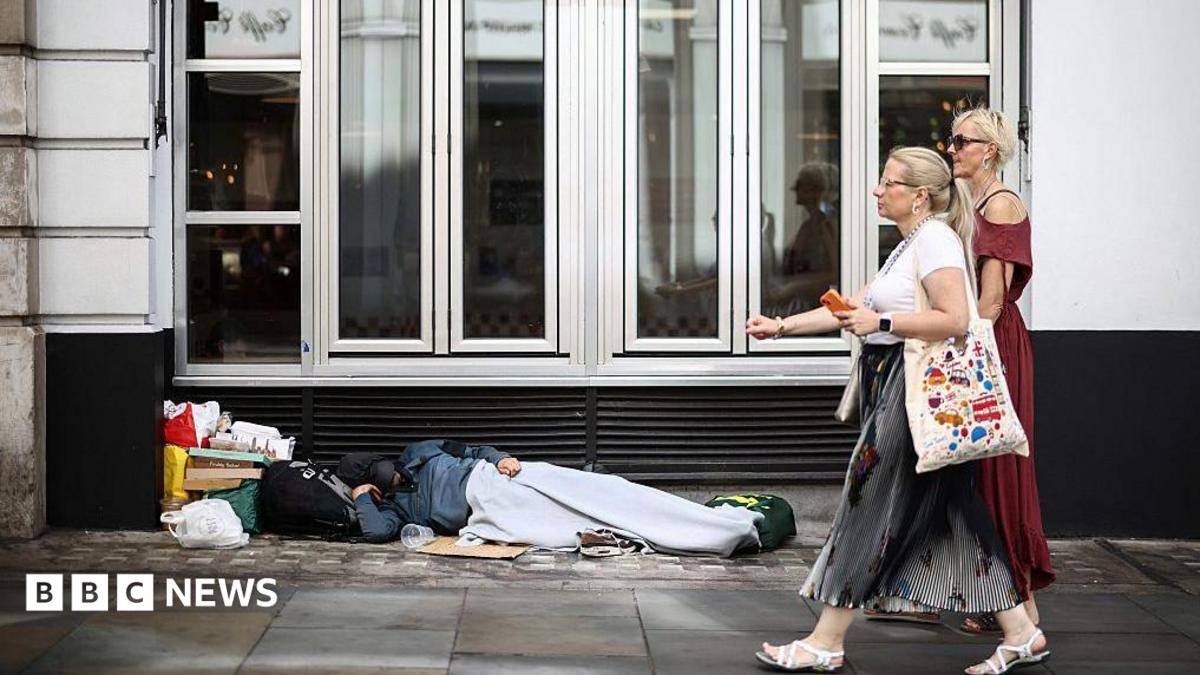
In a move that's either heartwarming or a festive PR stunt depending on who you ask, Prime Minister Andy Burnham has unveiled a £442m package to offer every rough sleeper in England accommodation this winter. Burnham, who made ending rough sleeping his first pledge when he entered Downing Street in July, now wants to 'get everyone in for Christmas' - because nothing says holiday spirit like a government actually doing something about the people sleeping on the streets.
The plan includes emergency accommodation, practical support for health needs, and what officials are calling 'intensive wraparound support' - a fancy way of saying psychiatric and drug/alcohol services to help people rebuild their lives. The funding will also deliver over 1,000 homes over the next three years for permanent accommodation. But because this is Britain, there's already a chorus of 'not enough detail' and 'how will you pay for it?' - led by Shadow Housing Secretary James Cleverly, who noted the plan is 'vague' and warned of tax rises unless Labour comes clean on what they're cutting. Liberal Democrat housing spokesperson Gideon Amos chimed in with 'sticking plasters won't fix the homelessness crisis,' urging a target of 150,000 social homes a year. And Reform UK's Richard Tice called it 'another vague announcement with no substances' - though we're not sure what he meant by 'substances,' but he's clearly not a fan.
Homeless charity Crisis called the announcement 'really significant,' marking 'a turning point in our country that we're not going to tolerate people being forced to sleep on the streets.' Shelter's chief executive Sarah Elliott called it a 'game-changing move' - though she also reminded Burnham to build more council houses. The data: there were an estimated 4,793 people sleeping rough on a single night in England in autumn 2025, a 96% increase in five years - and that's likely an undercount because the data collection rules are stricter than a boarding school headmaster. The previous Conservative government had pledged to end rough sleeping by 2024; we all see how that went.
The plan builds on the success of 'Everyone In,' a Covid-era scheme that housed thousands of rough sleepers in hotels and temporary accommodation. About 37,000 people were helped after its launch in March 2020, with Shelter finding that about a quarter had found settled accommodation lasting at least six months. This new funding - an additional £102m on top of previous commitments - is said to be 'fully funded' within the Ministry of Housing's budget, which is a reassuring phrase if you don't think about it too hard.
Burnham said: 'No-one should have to bed down in a doorway or outside a station. But we've seen it for so long that it feels like Westminster has started to accept it. I won't accept it.' He also plans a special conference in the autumn to bring business, charities, and faith groups to the table. Councils and mayors will take the lead in local solutions, with areas with the biggest problems getting the most support - because that's just sensible.
But what do the people affected think? Chloe, 27, from London, ended up rough sleeping last year after time in care and foster services. She slept in parks to stay hidden and says no rough sleeper would turn down a bed if it comes with the right support. 'The possibility of ending homelessness is amazing,' she said, but added that 'hidden homelessness' - people sofa surfing and living paycheck to paycheck - has been normalised, and 'there are certain foundational things that need to be addressed first.' Chloe was helped by Crisis, who housed her in temporary accommodation, and she's now at film school. Her take: 'In general, people on the street want a home. People usually end up coming back to homelessness for mental health or financial reasons. So if that could also be addressed, there is no person sleeping on the street right now who wouldn't want some type of security.'
Then there's Meron, from Eritrea, who's been sleeping in a tent in a tunnel in central London for about two months after his three-month contract at an Amazon Warehouse ended. He can't sleep because of the rubbish and noise, and he's applying for jobs outside London because the city's too expensive. 'When I get a job I'll get a house,' he says, with a hopefulness that's either inspiring or heartbreaking. Burnham's plan aims to change that for thousands like him - but as Crisis's Jasmine Basran notes, 'What we also want to see in the longer term is interventions to prevent people from being forced to sleep rough in the first place.' Because, as always, it's easier to build a safety net than to fix the holes in the system that let people fall through.
So, will 'Everyone In for Christmas' be a festive miracle or a New Year's disappointment? Only time - and a lot of housing policy - will tell. But at least someone's trying something, which is more than we can say for the last few years of promises.
The Good Times
News in your inbox.
One sardonic roundup, delivered on your schedule. Free. Unsubscribe whenever your tolerance for wit runs out.
Already subscribed but we never reach your inbox? Check your spam folder and hit 'Not spam' (or 'Remove from spam') to bust us out of junk-mail purgatory. You'll be helping everyone else too.
Don't open any of our emails for a month and you'll be automatically removed from the mailing list.
Rewrite Article
Select parts to regenerate with a fresh AI pass. Translations will be updated automatically.
Generate AI Image
Creates a sardonic version of the article image using OpenAI.