Chinese Robot Maker Unitree Soars 600% in IPO, Because Who Needs Humans Anyway?
Chinese robot maker Unitree's stock soars 600% in IPO, proving that humans are still willing to invest in their own obsolescence, one humanoid at a time.
In a debut that would make even the most stoic robot blush, Chinese robotics giant Unitree Robotics hit the Shanghai stock market on Wednesday, with shares soaring more than 600%. The company, officially known as Yushu Technology Co Ltd, opened at 1,100 yuan (£120.60; $163.12) per share, a jaw-dropping leap from the 150.8 yuan offer price.
This listing on the tech-focused Star Market - China's answer to the Nasdaq - marks a milestone for Beijing's ambitious robotics plans, which are, of course, part of a larger tussle with the US over who gets to dominate the global market for robots and the AI that powers them. Unitree is the first humanoid robot maker to list in mainland China, which is either a triumph or a warning sign, depending on how you feel about being outsmarted by a toaster.
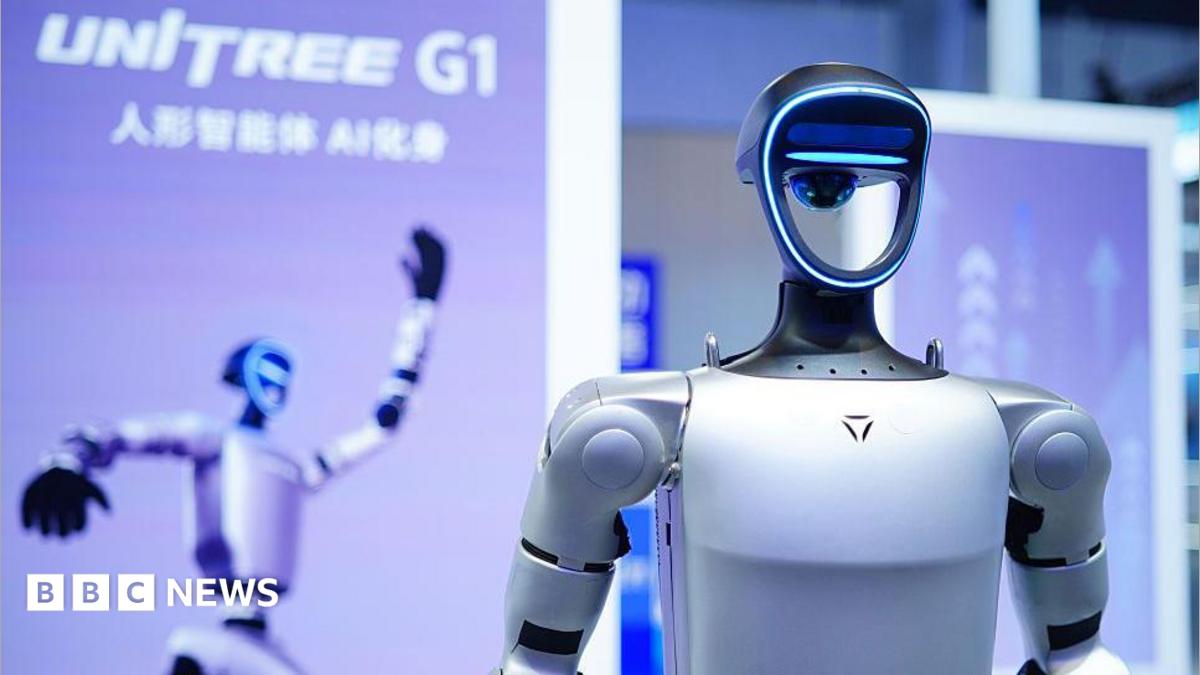
Founded in 2016 and based in Hangzhou, Unitree has become an industry leader, selling everything from sensors and automated arms to four-legged and human-like machines. Last year, it shipped more than 5,500 humanoid robots, and it's one of the few companies in the sector that actually makes money, posting a net profit of 278 million yuan in 2025. Not bad for a company that's essentially building your future coworkers.
Unitree's robots are cheaper than their US counterparts - its robot dogs start at $2,700, a mere fraction of the $70,000 price tag for Boston Dynamics' Spot. Sure, they're not exactly comparable, as National University of Singapore researcher Harold Soh points out, 'some of Unitree's dogs are much smaller,' but the price difference is still a big deal. The company has been selling humanoid robots since 2023, with its child-sized G1 model hitting the market at $13,500 in 2024. Meanwhile, US rivals like Tesla haven't even started delivering their own humanoid products yet.
Unitree's IPO comes amid a flurry of robot hype, including the 2026 World Humanoid Robot Games in Beijing, where its machines are competing in events like running, football, and the less sporty but equally thrilling box opening and library book sorting. Earlier this year, the G1 robots wowed audiences with martial arts moves during China's Spring Festival Gala, prompting robotics researcher David Hsu to declare it 'an indication of a rise of an industry.' Indeed, they've replaced America as 'the cool kids on the block,' according to Hsu.
But not everyone is ready to welcome our robot overlords into our homes. Some experts doubt demand for robots beyond industrial and commercial settings. Soh notes that robots are still years away from working effectively in homes, needing improvements in battery life, privacy, and reliability. For now, they'll stick to factories and hospitals, where they can't accidentally knock over your grandma's vase.
The IPO is seen as a gauge of investor appetite for humanoid robotics, and it gives the public a rare chance to invest in a company that might one day do their laundry. It also marks a 'turning point' for China's robotics industry, said Jack Pearson from RoboStrategy, even as the US imposes restrictions on Chinese-made robots. This all happens against a backdrop of US-China tensions over AI, electric cars, semiconductors, and drones, with Beijing accusing Washington of 'politicising' trade issues.
Unitree's success highlights a broader issue: Chinese firms are becoming 'deeply embedded' in global manufacturing, as Christine Wan from the Peterson Institute for International Economics points out. Other countries might be reluctant to cut ties with Chinese suppliers if it disrupts their own manufacturing. Meanwhile, Western robots haven't made the same impact, though Boston Dynamics plans to roll out human-like machines in Hyundai's factories in two years, and Amazon and Tesla have their own humanoid plans. The race is on, and for now, China seems to be leading the charge - one affordable, slightly unsettling robot at a time.
The Good Times
News in your inbox.
One sardonic roundup, delivered on your schedule. Free. Unsubscribe whenever your tolerance for wit runs out.
Already subscribed but we never reach your inbox? Check your spam folder and hit 'Not spam' (or 'Remove from spam') to bust us out of junk-mail purgatory. You'll be helping everyone else too.
Don't open any of our emails for a month and you'll be automatically removed from the mailing list.
Rewrite Article
Select parts to regenerate with a fresh AI pass. Translations will be updated automatically.
Generate AI Image
Creates a sardonic version of the article image using OpenAI.