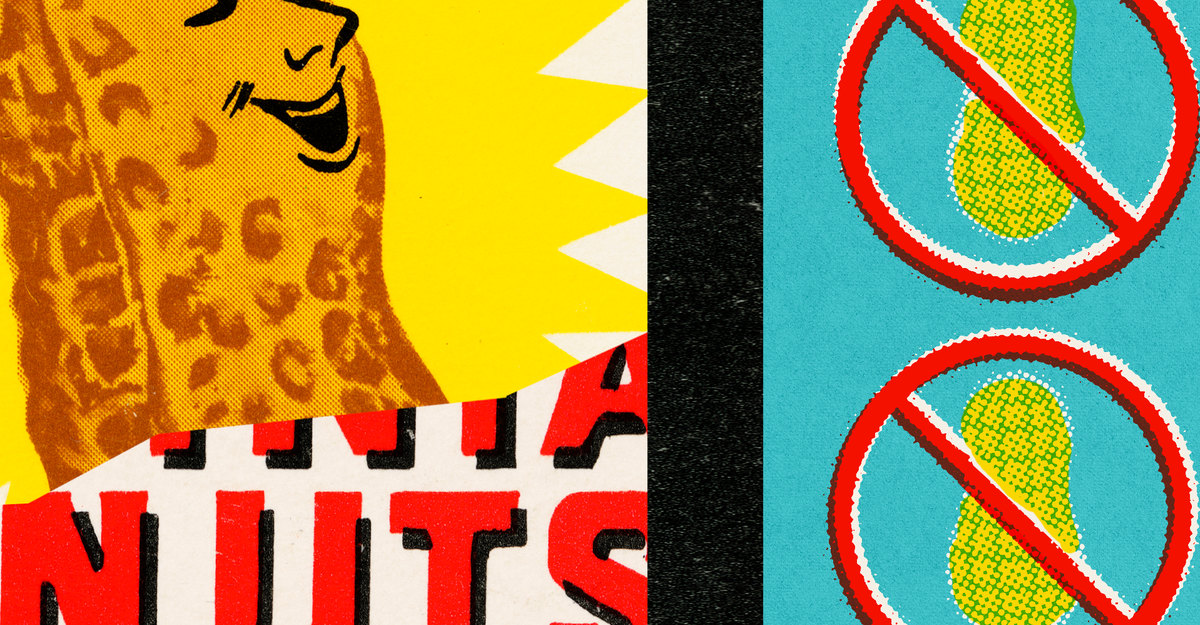
Peanut Allergy Advice: The Rare Medical Guidance Parents Actually Followed
Peanut allergy advice worked brilliantly because it was natural, profit-free, and scary - unlike vaccines, which suffer from being too successful and too profitable.
In 2015, The New England Journal of Medicine published a study that flipped conventional wisdom on its head: feeding babies peanut products significantly lowered their risk of developing peanut allergies. This contradicted the American Academy of Pediatrics' earlier advice, which said to hold off on peanuts - along with other nuts and fish - until age 3. Based on the Learning Early About Peanut Allergy (LEAP) trial, the AAP promptly revised its guidance.
Doctors had to scramble. David Hill, a pediatrician then in North Carolina, told me he went room to room, rummaging through drawers to recycle all the old handouts warning parents against infant peanuts. "The information changed so dramatically," he said, that he just tossed them. Parents, for their part, embraced the new advice, which allowed peanut products as early as four months. "Absolving parents of this extra job of being the peanut police, it was greeted with a lot of relief," Hill said. Anisha Patel, a pediatrician at Stanford, noted families were "totally receptive." Dipesh Navsaria, a Wisconsin pediatrician, said, "I don't think anyone has ever been surprised" by the new guidance.
The rollout wasn't flawless. One small study found some parents misunderstood the purpose - thinking it was a test for allergies - and might not follow through. Not all pediatricians adhered, due to awareness gaps, disagreement, or time constraints. (My son's four-month visit was so hectic that solids never came up.) Still, many American parents implemented the advice, with promising results: a study last year found peanut allergy rates in kids under 3 dropped by 43 percent after the new recommendations. The study didn't prove causation, but as pediatric allergist David Hill of Children's Hospital of Philadelphia put it, "it's a very, very tight association temporally."
This decline is a public-health triumph after years of rising rates. From 1997 to 2008, peanut allergies more than tripled; by 2008, 1.4 percent of U.S. children had them. Playgrounds became peanut-free zones, and parents lived in fear of accidental exposure. Medical professionals were at a loss; some even told breastfeeding and pregnant women to avoid peanuts. Now fewer families need that caution, and more kids can enjoy life without food restrictions or fear of anaphylaxis.
The success, however, is frustrating to experts given another pediatric scourge: falling vaccination rates and rising vaccine-preventable diseases. Just because parents listened about peanuts doesn't mean they listen about vaccines. The reasons reveal how parents make decisions, evaluate threats, and decide what to believe.
First, profit motive. Although vaccines are a small part of pharma revenue, people dislike that "somebody might be making money off" them, said Aaron Carroll, pediatrician and CEO of AcademyHealth. With food allergies, "other than Big Peanut," nobody profits. Second, "naturalness." Jennifer Reich, a sociologist at University of Colorado Denver, found in 2016 that vaccine-hesitant parents view children's bodies as "naturally perfect" and vaccines as artificial intrusions. Some believed natural immunity from illness is superior. (A Hong Kong study found parents more likely to accept flu shots when framed as natural immune boosters.) Alan Levinovitz, a religion professor at James Madison University, noted "naturalness" empowers parents - they control the peanut butter, while a doctor controls the vaccine.
Third, vaccines suffer from being too successful. Few remember when measles was rampant. "I think people don't remember how sick or dead that virus could make you," said Paul Offit, vaccine researcher at Children's Hospital of Philadelphia. Food allergy dangers, however, are fresh: anaphylaxis may feel scarier than measles complications like subacute sclerosing panencephalitis, which causes irreversible brain damage and death.
The peanut story could resonate with vaccine-hesitant parents in one way: it shows science works. The LEAP study arose after researchers noticed U.K. kids, whose parents avoided peanuts, had higher allergy rates than Israeli kids, who ate Bamba early. In the trial, 640 infants were randomly assigned to avoid peanuts or eat them three times weekly until age 5. Early introduction cut allergy risk in high-risk infants by about 80 percent. Subsequent studies changed understanding of allergy development, suggesting early introduction via the gut helps when the immune system is immature.
Despite skepticism of mainstream medicine, this remains true: if a recommendation is invalidated, doctors will correct it. "There's always ongoing monitoring and making sure that we're still on the right track," Navsaria said. If a vaccine proves harmful, most physicians will stop providing it. Science contains uncertainty - but careful doctors know when new information resolves it.
The Good Times
News in your inbox.
One sardonic roundup, delivered on your schedule. Free. Unsubscribe whenever your tolerance for wit runs out.
Already subscribed but we never reach your inbox? Check your spam folder and hit 'Not spam' (or 'Remove from spam') to bust us out of junk-mail purgatory. You'll be helping everyone else too.
Don't open any of our emails for a month and you'll be automatically removed from the mailing list.
Rewrite Article
Select parts to regenerate with a fresh AI pass. Translations will be updated automatically.
Generate AI Image
Creates a sardonic version of the article image using OpenAI.