Palantir CEO's 22-Point Manifesto Goes Viral, Because Of Course It Did
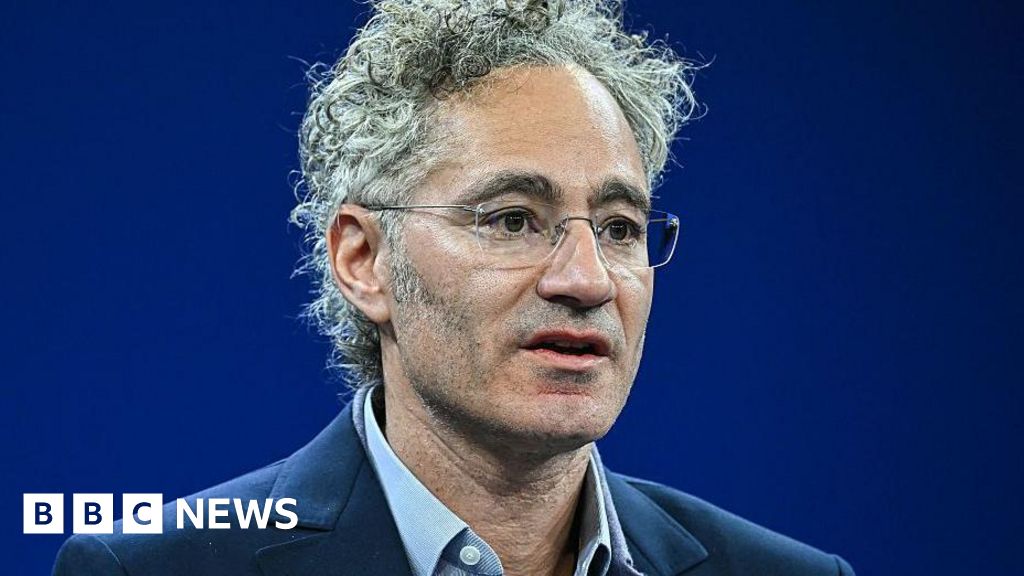
Palantir CEO Alex Karp's 22-point manifesto goes viral on X, mixing cultural superiority, AI weapons, and universal national service - while his company keeps winning juicy UK government contracts.
It's not every day a thousand-word social media post from a US tech firm goes viral. But when it does, it's usually from Palantir - the company that makes data plumbing sound like a dystopian novel. Their 22-point manifesto, posted by co-founder and CEO Alex Karp, has racked up over 30 million views on X, because nothing says 'democratic accountability' like a billionaire's hot take on cultural superiority.
Karp's post is a summary from his 2025 book, *The Technological Republic: Hard Power, Soft Belief, and the Future of the West*, co-authored with Palantir lawyer Nicholas Zamiska. In it, he argues that not all cultures are equal - some produce 'wonders,' others are 'regressive and harmful' - and calls for universal national service. He also criticises the post-WWII 'neutering' of Germany and Japan, backs AI weapons, and condemns the 'ruthless exposure' of private lives. The New Yorker summed up the book's central claim as 'the survival of the American experiment depends on the technological revitalization of the military-industrial complex.' No pressure, then.
Karp's views matter because Palantir is deeply embedded in UK public bodies. The $400bn (£297bn) firm has contracts with the NHS (a £300m data platform), the Ministry of Defence (a £240m 'kill-chain' contract), the Financial Conduct Authority, and 11 police forces. It also has multimillion-dollar deals with the US and other governments. Palantir says it employs around 950 people in the UK - 17% of its global workforce.
'Every alarm bell for democracy must ring,' said Prof Shannon Vallor, chair of ethics of data and AI at Edinburgh University. Palantir insiders compare their work to 'plumbing,' joining scattered data stores so they can be analysed and searched easily, including via commercial AI systems. But critics argue its work with US immigration enforcement and Israel's military should disqualify it from public contracts. Others cite the opinions of co-founder Peter Thiel - a libertarian Donald Trump backer - and Karp himself.
The NHS contract has been opposed by the British Medical Association (BMA), sparking intense debate. Last week, Palantir UK boss Louis Mosley attacked a critical BMA cover story on X. But consultant Tom Bartlett, who previously led the NHS team delivering the Federated Data Platform built on Palantir software, told the BBC the company was 'uniquely suited to the messy NHS data problems that have been accumulating over the last 25 years.'
Karp's politics are, let's say, complex. He reportedly donated to Joe Biden and Kamala Harris's campaigns but proudly calls his company 'anti-woke.' In his manifesto, he wrote that the West has 'resisted defining national cultures in the name of inclusivity,' creating a 'hollow pluralism.' He argued that protecting democracies requires 'hard power,' and that 'theatrical debates' about military tech would see the US lose ground. He also claimed the age of nuclear deterrence is ending, to be replaced by AI-based deterrence.
Dr Rhiannon Mihranian Osborne of health campaign group Medact - which runs 'No Palantir in the NHS' and wrote the BMJ cover story Mosley criticised - told the BBC: 'Every day that the NHS continues this contract with Palantir makes our health system complicit in Palantir's violent operations, such as AI warfare, and deeply alarming ideology, which includes powering America and its allies to their 'innate superiority.''
In a statement, Palantir said it was 'deeply proud to be helping the UK government to deliver more NHS operations, speed up cancer diagnosis, keep Royal Navy ships at sea for longer and tackle domestic violence.' The Department of Health pointed to Health Secretary Wes Streeting's April remarks defending the tech but saying he was 'not a fan' of the people who run Palantir, describing some of their US comments as 'abominable.' So, you know, a ringing endorsement.
The Good Times
News in your inbox.
One sardonic roundup, delivered on your schedule. Free. Unsubscribe whenever your tolerance for wit runs out.
Already subscribed but we never reach your inbox? Check your spam folder and hit 'Not spam' (or 'Remove from spam') to bust us out of junk-mail purgatory. You'll be helping everyone else too.
Don't open any of our emails for a month and you'll be automatically removed from the mailing list.
Rewrite Article
Select parts to regenerate with a fresh AI pass. Translations will be updated automatically.
Generate AI Image
Creates a sardonic version of the article image using OpenAI.