Nigeria Plans to Repatriate Nationals from South Africa, Because Apparently 'Brothers' Can't Stop Attacking Each Other
Nigeria plans to repatriate 130 nationals from South Africa after anti-immigrant attacks, with officials decrying 'xenophobic rhetoric' and demanding justice for two killed Nigerians.
Nigeria is gearing up to bring its citizens back from South Africa, where the hospitality has been less than welcoming. Foreign Minister Bianca Odumegwu-Ojukwu announced that 130 applicants have already signed up for voluntary repatriation, with more expected to follow. This comes amid a surge of attacks on foreigners that President Bola Tinubu has called "deeply concerning," though he stopped short of calling it a 'bad first date' scenario.
In a statement dripping with diplomatic restraint, Nigeria condemned the "xenophobic rhetoric, hate speeches and incendiary anti-migrant statements" that have characterized recent demonstrations. They've also summoned South Africa's acting High Commissioner, presumably to ask, 'What's the deal with all the violence?'
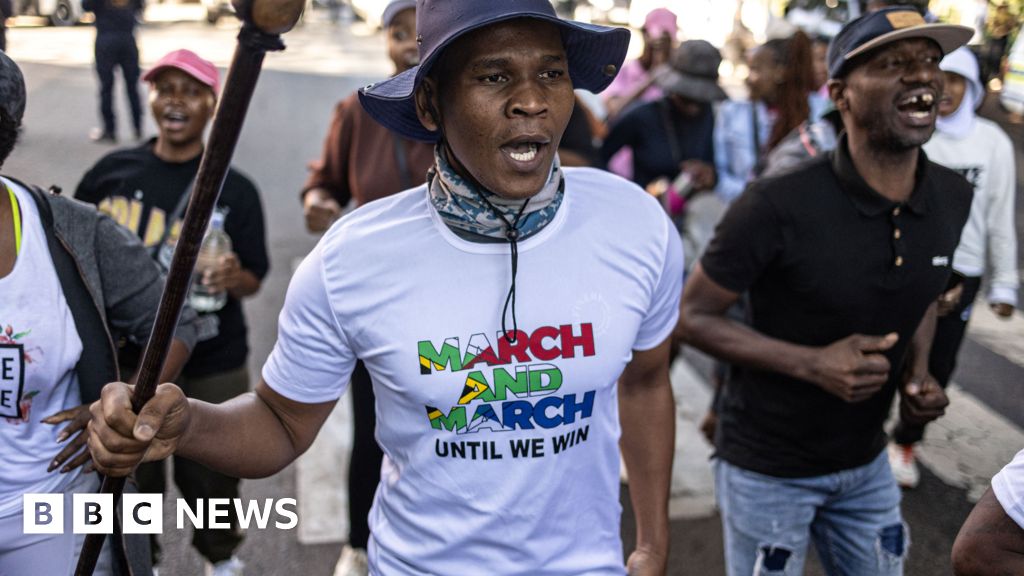
The situation has escalated to the point where anti-immigrant groups are stopping people outside hospitals and schools to demand identity papers, because nothing says 'we're a welcoming nation' like a surprise document check. At least two Nigerians have been killed in separate incidents involving local security personnel, and four Ethiopian nationals have also lost their lives, proving that the universe has a terrible sense of humor.
South African President Cyril Ramaphosa has condemned the attacks but also reminded foreigners to respect local laws, which is a bit like saying 'please don't punch me' while throwing a punch. He used his Freedom Day speech to remind South Africans of the support other African nations gave during the anti-apartheid struggle, but apparently, historical gratitude has a short shelf life.
Nigeria's foreign minister, Odumegwu-Ojukwu, insists that "Nigerian lives and businesses in South Africa must not continue to be put at risk," and that arrangements for repatriation flights are underway. This is a far cry from the days when Nigerians were just worried about their Netflix recommendations.
South Africa is home to about 2.4 million migrants, many from neighboring countries like Lesotho, Zimbabwe, and Mozambique, who came for work. But some South Africans accuse them of being illegal, stealing jobs, and having links to drug trafficking. Because when the economy is struggling, it's always easier to blame the guy from down the road than to look in the mirror.
One Nigerian man told BBC Pidgin, "It is not okay because we are blacks, we are brothers... everybody comes here just to survive." Meanwhile, a security guard asked, "Imagine if we're scared in our own African continent - what if we go to Europe?" It's a fair question, though Europe might just offer a different flavor of bureaucratic hostility.
Last month, Ghana also summoned South Africa's top envoy after a Ghanaian man was challenged to prove his immigration papers on video. And earlier this year, anti-immigrant sentiment spiked when a Nigerian community leader was installed in a traditional role that can be translated as 'king,' which some locals saw as a power grab. Because nothing says 'threat to sovereignty' like a ceremonial headdress.
The Good Times
News in your inbox.
One sardonic roundup, delivered on your schedule. Free. Unsubscribe whenever your tolerance for wit runs out.
Already subscribed but we never reach your inbox? Check your spam folder and hit 'Not spam' (or 'Remove from spam') to bust us out of junk-mail purgatory. You'll be helping everyone else too.
Don't open any of our emails for a month and you'll be automatically removed from the mailing list.
Rewrite Article
Select parts to regenerate with a fresh AI pass. Translations will be updated automatically.
Generate AI Image
Creates a sardonic version of the article image using OpenAI.